AcoustiLift Acoustic Levitation Desk Organizer
An acoustic levitation platform that suspends small objects in mid-air above your desk — functional within a 3-gram payload limit that covers exactly some things.
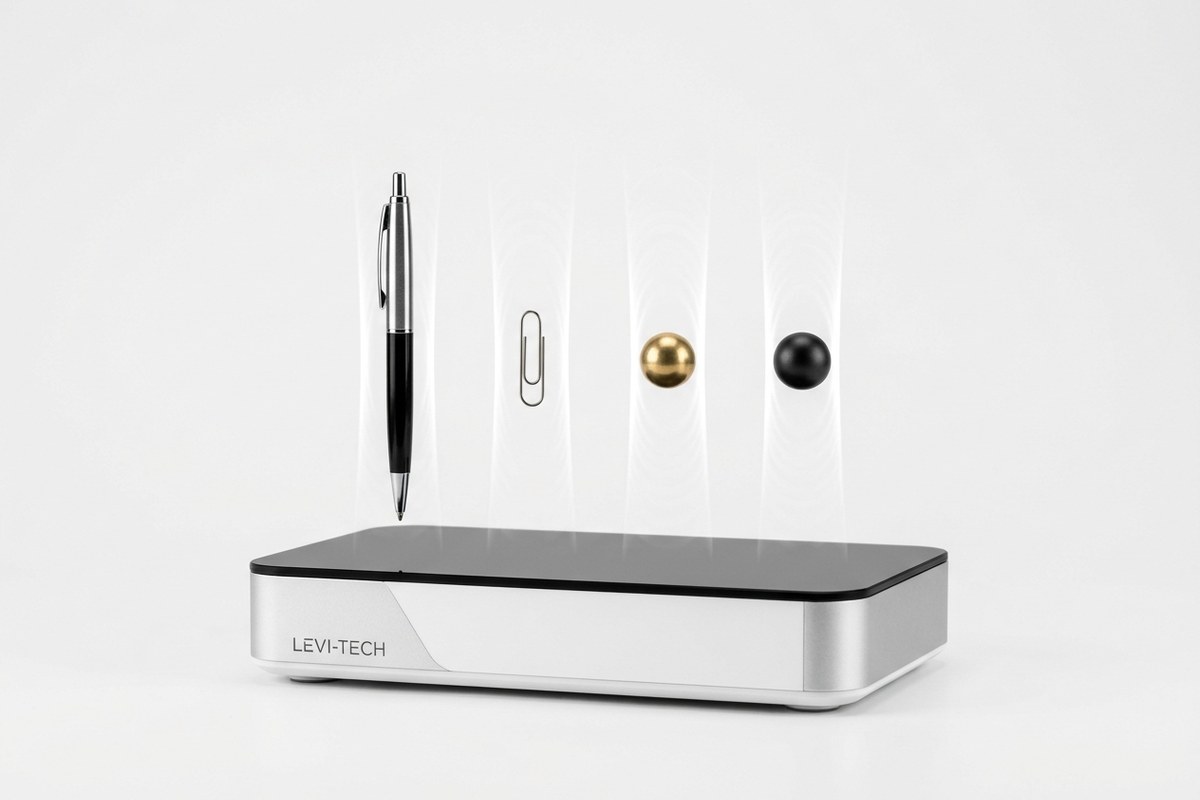
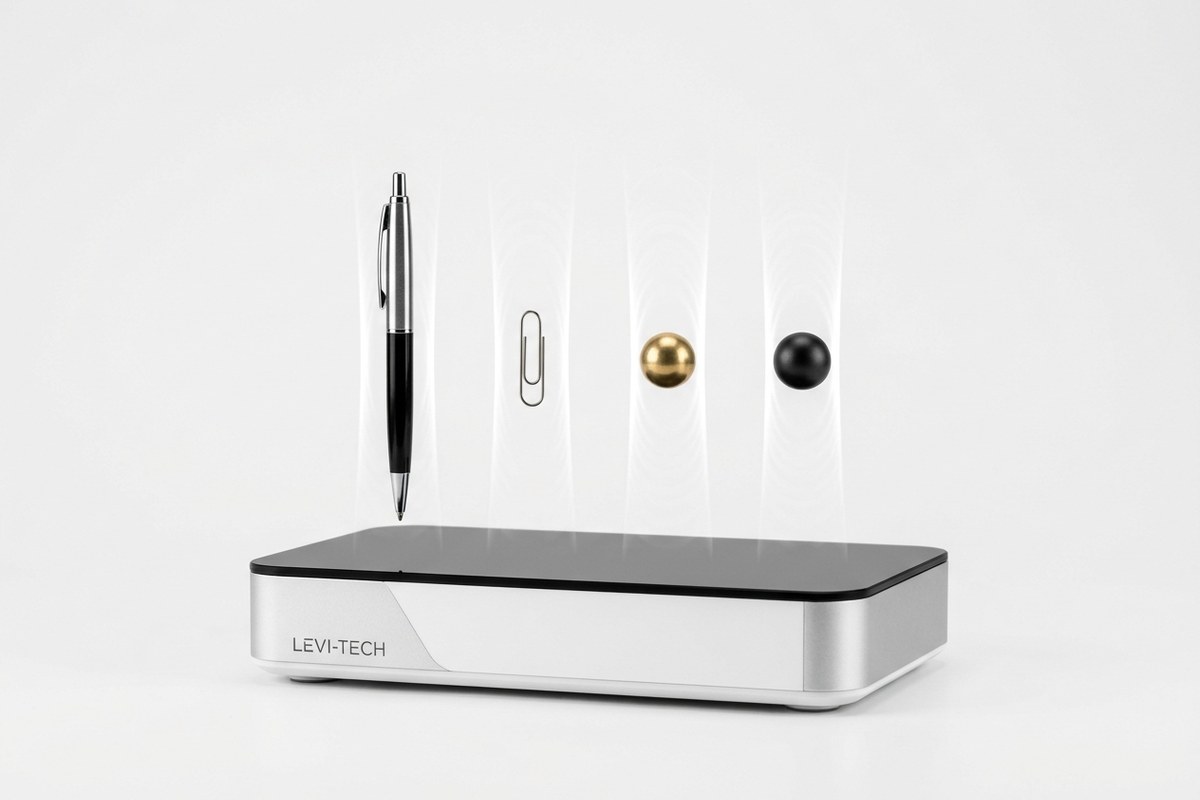
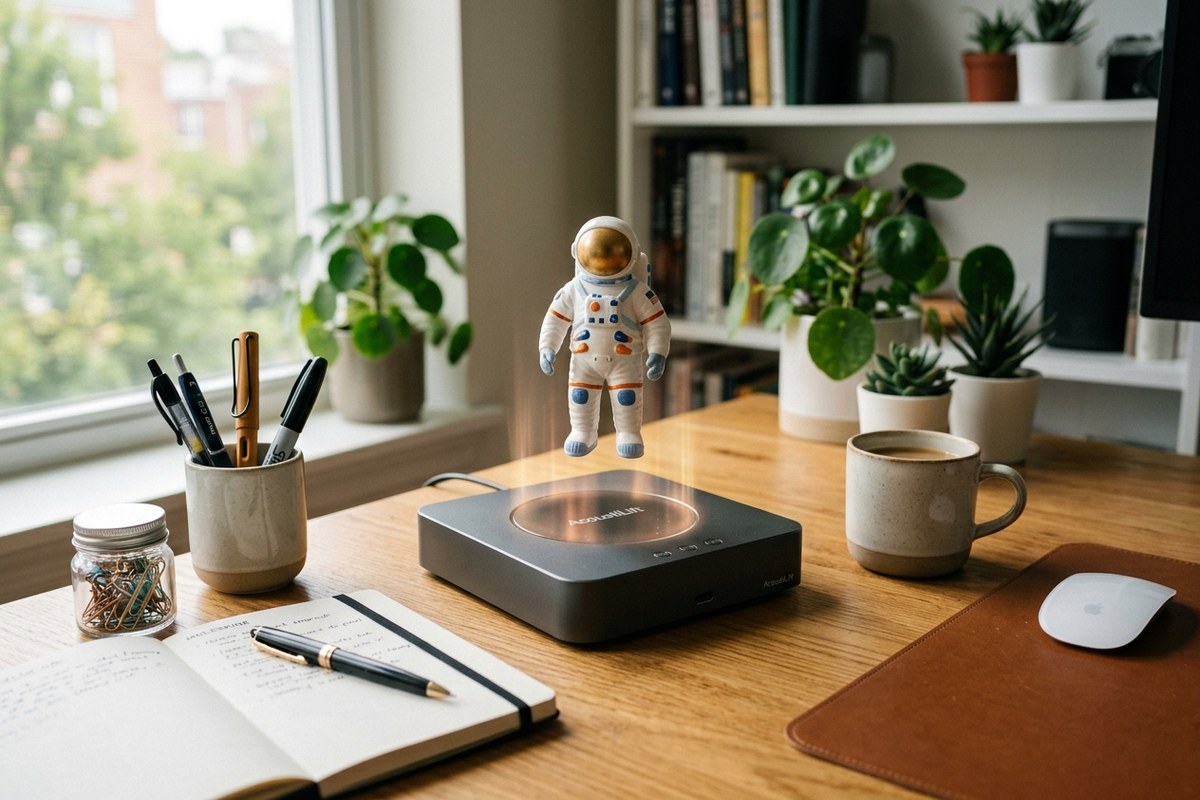
Acoustic levitation is real. This is the first and most important thing to establish about the AcoustiLift Acoustic Levitation Desk Organizer, because the concept sounds like it should not be and the product’s promotional materials make claims that risk undermining confidence in the underlying science. Standing acoustic waves create pressure nodes at regular intervals; objects lighter than the acoustic radiation pressure at those nodes are held in place. Researchers have been demonstrating this in laboratory settings for decades. The technology works.
The 3-gram payload limit is where the desk organizer concept encounters its principal challenge.
What It Is
The AcoustiLift is a 220mm × 220mm × 180mm platform unit housing an array of ultrasonic transducers operating at 22kHz. The transducers generate standing waves above the platform surface, creating pressure nodes at adjustable heights. Node height is controlled via a companion iOS and Android app, which modulates the frequency to shift node positions across a range of approximately 40–80mm above the platform. Multiple simultaneous nodes are supported, allowing up to four objects to be suspended at once within the 15cm × 15cm effective levitation zone directly above the array.
Five 1-gram demonstration spheres are included in the box. They levitate reliably and immediately, which is the intended introduction to the product. They are, as demonstration objects, entirely successful.
The 3-gram maximum payload applies to any object placed in the levitation field. A standard Post-it note weighs approximately 0.4 grams and levitates. A small piece of folded paper weighs approximately 0.5 grams and levitates. A USB drive weighs approximately 15 grams and does not levitate. A pen weighs approximately 12 grams and does not levitate. A paperclip — the standard kind, not a miniature — weighs approximately 1 gram and levitates successfully, though its metallic surface interacts with the acoustic field in a way that causes occasional lateral drift requiring app correction.
In Practice
The 3-gram limit is not hidden. It appears in the specification table on page 4 of the 24-page manual, in the same font size as the other specifications, alongside the platform dimensions, frequency, and power requirements. The preceding three pages contain lifestyle photography showing, in sequence: a pen suspended mid-air above a modern desk; a small collection of paperclips in an organised mid-air cluster; a USB drive hovering at eye level; and what appears to be a small potted succulent plant occupying a levitation node with evident stability. A standard pen weighs 12 grams. A collection of standard paperclips weighs 5–15 grams depending on count. A USB drive weighs 15 grams. A small succulent in a pot weighs, at conservative estimate, 80 grams. None of these objects are within the 3-gram payload limit.
The company’s response to this, when the discrepancy was raised, is that the photographs represent “aspirational use cases reflecting the levitation concept” and that specifications govern actual capability. This is technically accurate.
The 22kHz operating frequency is classified as ultrasonic — above the normal threshold of human hearing at 20kHz — but the AcoustiLift produces a faint overtone in quiet rooms that is audible as a high, thin tone at approximately the pitch of a distant smoke alarm. In open-plan offices with ambient noise above 40dB, this is inaudible. In quiet home offices, it is not. Several reviewers describe it as “fine after a while” and several others describe it as “increasingly notable as the day progresses.” Both reports are consistent with how sustained high-frequency tones are processed.
Airflow is a significant disruptor. The standing wave field that maintains levitation is sensitive to air movement. A ceiling fan, HVAC vent, or open window introducing airflow across the platform will displace levitated objects. The manual recommends “a calm working environment.” This is a constraint that describes, accurately, the conditions under which the product works.
| Maximum payload | 3 grams |
| Levitation zone | 15cm × 15cm |
| Node height range | 40–80mm (app-adjustable) |
| Operating frequency | 22kHz |
| Simultaneous nodes | Up to 4 |
| Included | 5 × 1g demonstration spheres |
| App | iOS / Android |
| Dimensions | 220mm × 220mm × 180mm |
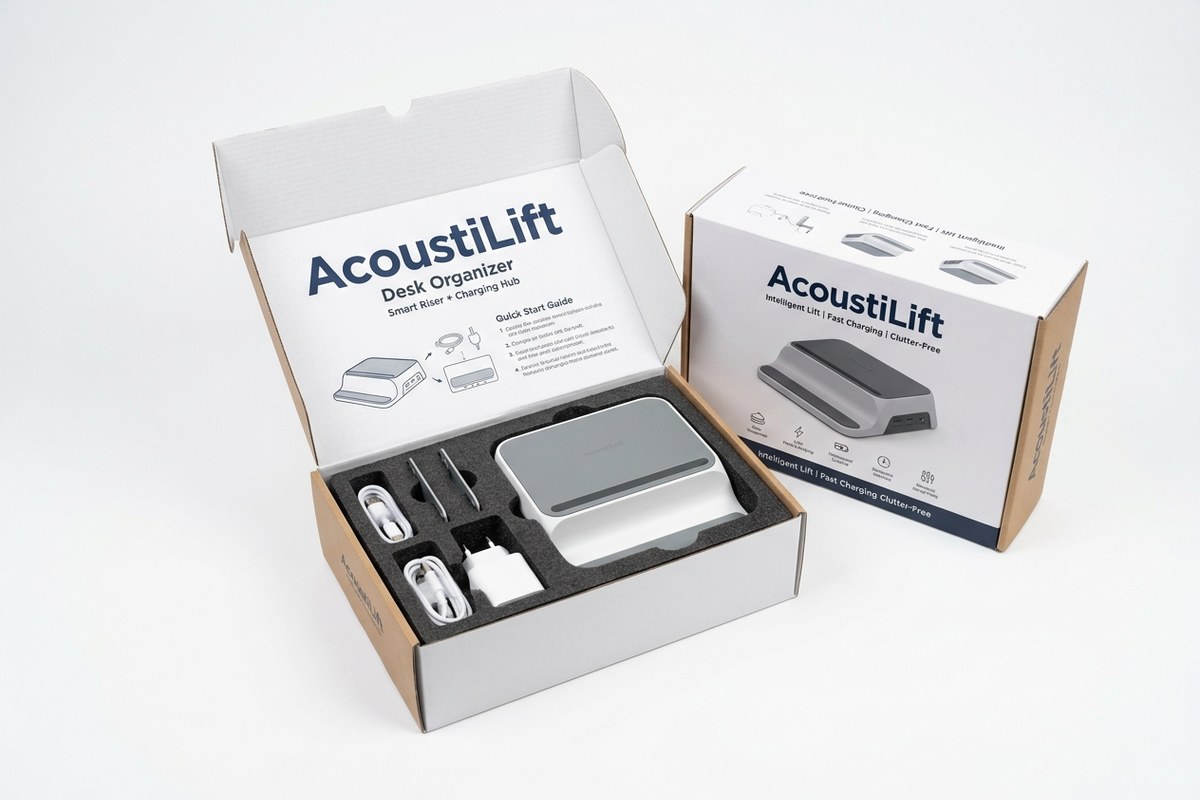
Available through Off-World Imports; ships in a foam-lined box with the demonstration spheres, power adapter, and a printed card noting that the lifestyle photography represents conceptual applications.
- Acoustic levitation is real and functions
- Adjustable node height via app
- Multiple simultaneous nodes supported
- Demonstration spheres work immediately and consistently
- Good build quality
- 3-gram limit covers a very small set of useful office objects
- Ultrasonic tone audible in quiet environments
- Airflow disrupts levitation
- Promotional photography implies capabilities the specification table does not
The AcoustiLift levitates things that weigh less than 3 grams. This is a real thing it does using real physics. What it does not do is levitate the objects shown in its promotional photography, which weigh considerably more than 3 grams and, in the case of the succulent, considerably more than 3 grams by an order of magnitude.
If your desk organisational requirements are met by objects weighing under 3 grams — a paper note, a small pill, a seed, a fragment of something — the AcoustiLift performs exactly as described. The acoustic levitation is genuine, the app control is responsive, and multiple simultaneous nodes create a display of suspended objects that is, in its narrow operational window, exactly what was advertised. The use case is narrow. The physics are not.