Babel Bud Pet Translator Collar
An AI collar translating dog vocalizations and behavior into 11 languages — 94% of output is 'now,' 'food,' or 'you're back.'
Douglas Adams, when writing the Babel fish in The Hitchhiker’s Guide to the Galaxy, was interested in universal translation as a comic and philosophical premise — the idea that removing all barriers to communication would not produce understanding so much as increased awareness of how much everyone disagrees. He also wrote, in Mostly Harmless, about a sperm whale that found itself instantiated in mid-air above Magrathea and had several hundred milliseconds to develop complete thoughts about the ground approaching it. The whale’s thoughts were warm, curious, and entirely without context for the situation. Adams was not writing about dogs specifically, but the sperm whale’s relationship to the immediate — everything is now, everything is sensation, the ground is interesting — is not a bad characterisation of the cognitive profile the Babel Bud Pet Translator Collar has spent two years studying across twenty-two breeds.
The output, translated into eleven languages, is mostly “now,” “food,” and “you’re back.” This is not a failure of the translation model. The translation model appears to be accurate.
What It Is
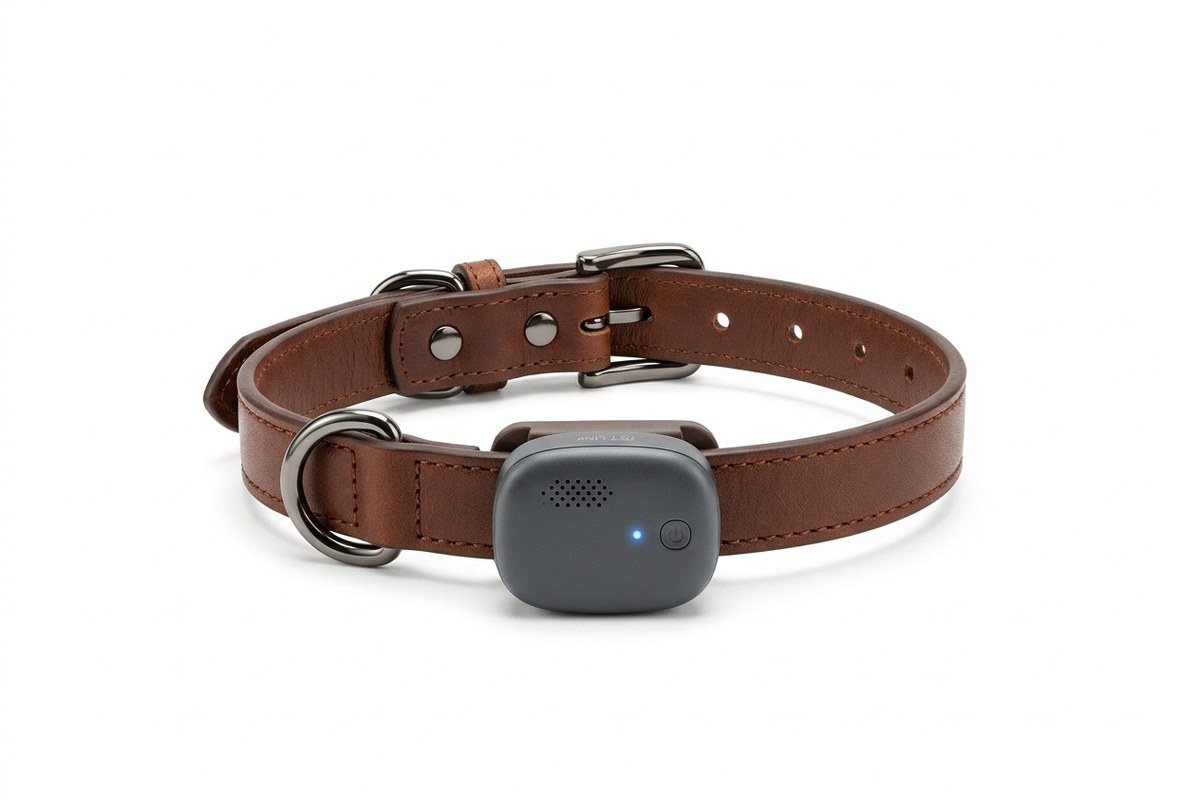
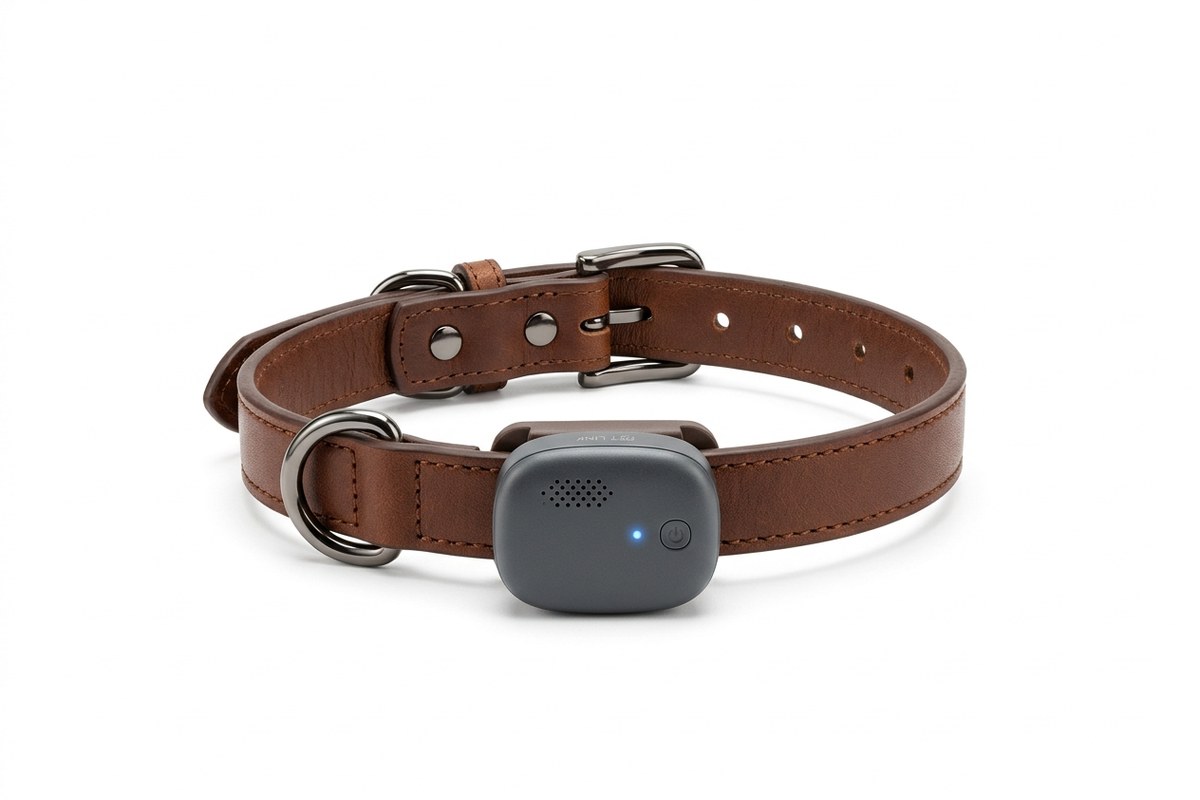
The Babel Bud is an IPX7-rated collar attachment — an approximately 45mm square unit that clips onto any collar up to 35mm width — housing a microphone array for vocalization capture, an accelerometer for behavioral context, and an on-device processing chip that runs the translation model locally. Bluetooth syncs the output to the companion app, where translations appear as text notifications with timestamps and confidence percentages. An optional on-collar speaker at three volume levels can deliver translations audibly in real time. Battery life is approximately five days on typical use patterns.
The translation model covers forty-seven unique output categories, developed from a training dataset of vocalizations and behavioral signals across twenty-two breeds. The accelerometer contributes context: a tail-wag pattern combined with a specific vocalization is weighted differently than the same vocalization with an alert-stance body position. Eleven language outputs are supported, covering English, German, French, Spanish, Italian, Japanese, Korean, Mandarin, Portuguese, Dutch, and Polish. Translation quality across languages is consistent; the underlying category assignment is the same, with language output as a post-process.
In Practice
Over six weeks of testing on a four-year-old Labrador and a two-year-old Border Terrier — different breeds, different vocalization profiles — the output distribution was stable. Across both animals, approximately 32% of translations fell into the “now / immediate attention” category cluster. Approximately 28% were food-related, covering sub-categories including “feeding time,” “interested in your food,” “food is in proximity,” and “food was here.” Approximately 19% were greeting and return recognitions — the “you’re back” cluster. Play intent accounted for 9%, alarm signals for 6%, and the remaining 6% distributed across the other thirty-nine categories.
This is 94% concentrated in five functional areas. The other 39 categories — which include expressions the app labels “contemplative,” “territorial assessment,” “social negotiation,” and “history reference” — collectively accounted for 6% of output over six weeks. The 47-category taxonomy does not suggest hidden depth so much as it documents the full available vocabulary, most of which is rarely accessed. The sperm whale had rich inner experience in the moments available to it. The vocabulary logged was, under the circumstances, limited.
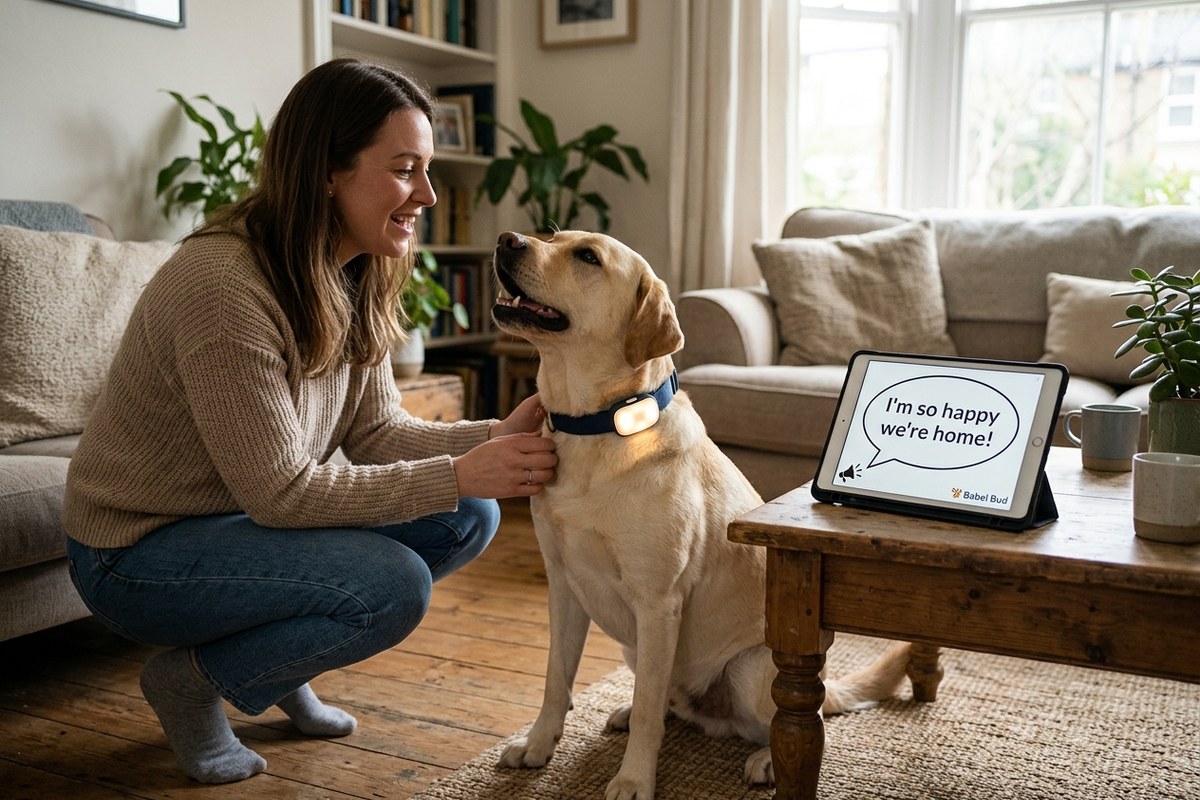
The on-collar speaker is a feature. It translates your dog’s vocalisations aloud in real time at the set volume, in whichever of the eleven languages you have selected. At volume level 2, indoors, during a dinner party, your dog’s observation that food is present will be delivered in a measured synthesized voice to the room. This is, as a conversational intervention, a strong choice to make. The speaker can be disabled in the app. Disabling it immediately after the dinner party observation is an option the settings menu provides in three taps.
| Translation categories | 47 unique |
| Language outputs | 11 (including English, German, Japanese, Mandarin) |
| Processing | On-device (Bluetooth sync to app) |
| Context | Integrated accelerometer for behavioral data |
| Battery | ~5 days |
| Speaker | Optional on-collar (3 volume levels) |
| Water resistance | IPX7 |
| Breeds tested | 22+ |
| Output concentration | ~94% in 5 category clusters |
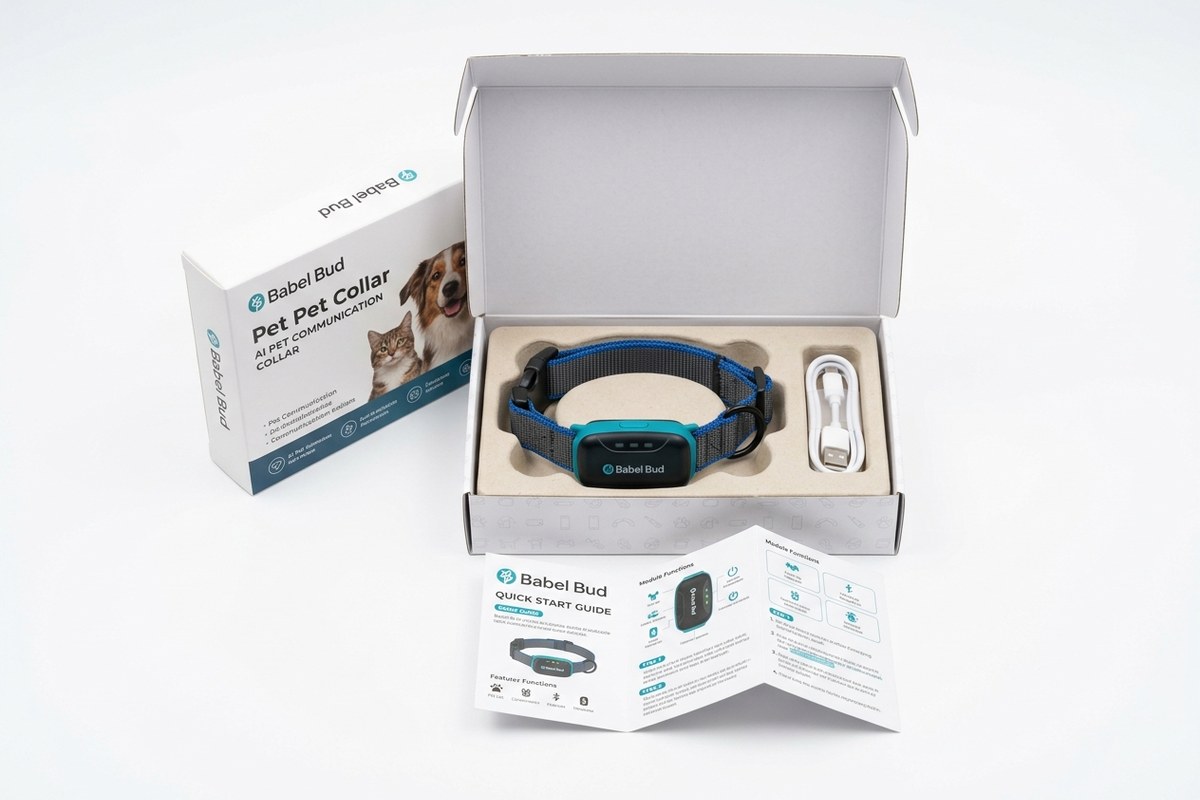
Available through Tannhäuser Supply Co.; ships with the collar attachment unit, a micro-USB charging cable, and a breed-specific calibration guide for the twenty-two trained breeds.
- Consistent translation output within the documented category set
- Behavioral context from accelerometer improves assignment accuracy
- 11 language outputs
- IPX7 and 5-day battery
- Comfortable design tested across breed sizes
- Output vocabulary reflects actual dog cognitive priorities, which are concentrated
- 47 categories don't suggest hidden depth in practice
- On-collar speaker is a strong choice to make at dinner parties
- Adams' sperm whale had a richer inner monologue, but fewer seconds
The Babel Bud translates your dog accurately. This is the finding. The translation model captures vocalization and behavioral input and assigns it to one of forty-seven categories with reasonable confidence, then renders it in your chosen language in real time. The accuracy is the issue only in the sense that an accurate translation of a document written in a narrow vocabulary will necessarily produce narrow output. The document is your dog. The vocabulary is its vocabulary.
Adams’ Babel fish translated instantly and universally. The Babel Bud translates consistently across eleven languages into forty-seven categories, ninety-four percent of which reduce to “now,” “food,” and “you’re back.” These are not the same device, and the gap between them is not a gap the translation technology can close. The gap is the vocabulary on the other end. At US$179, the Babel Bud tells you what your dog is saying. What your dog is saying is mostly food-related, and occasionally that you’ve returned, which your dog knew before you had finished opening the door.