EweMow Robotic Grazing Sheep
A robotic sheep that mows by grazing — a wool-textured chassis, programmable bleating schedule, and a GPS boundary system that keeps it from leaving the property.
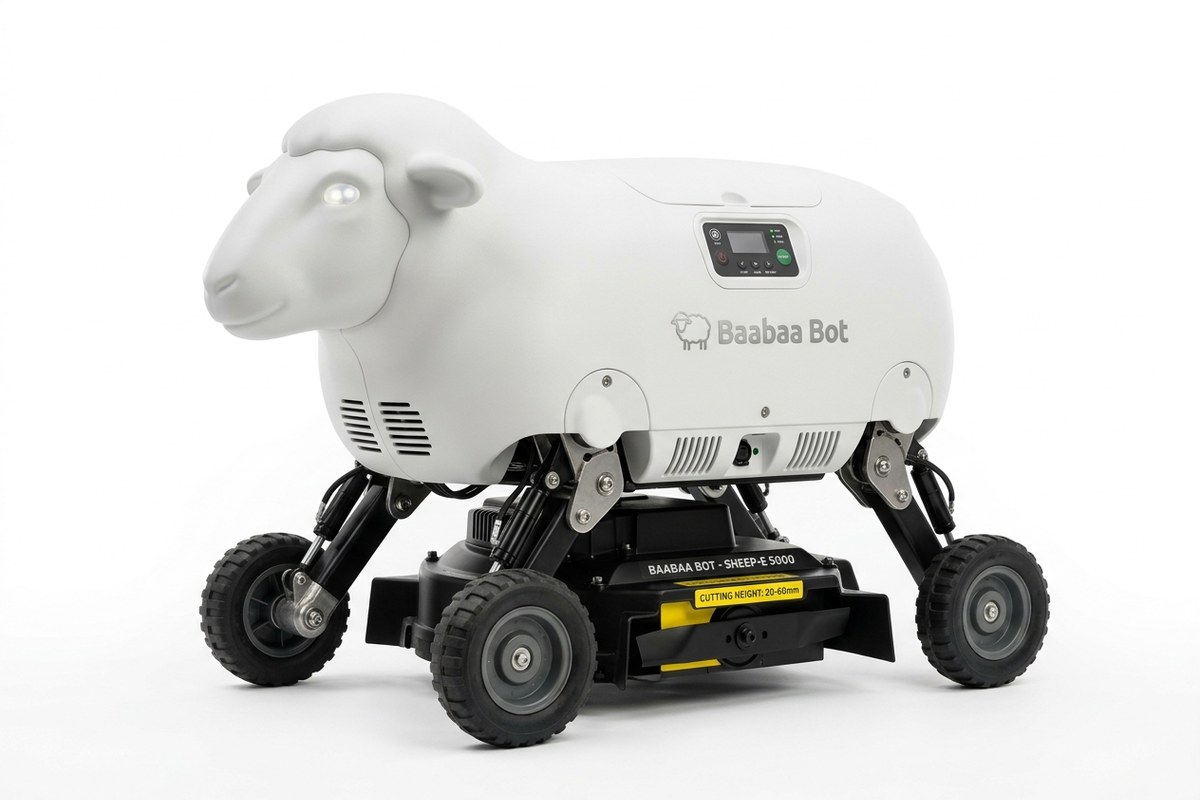
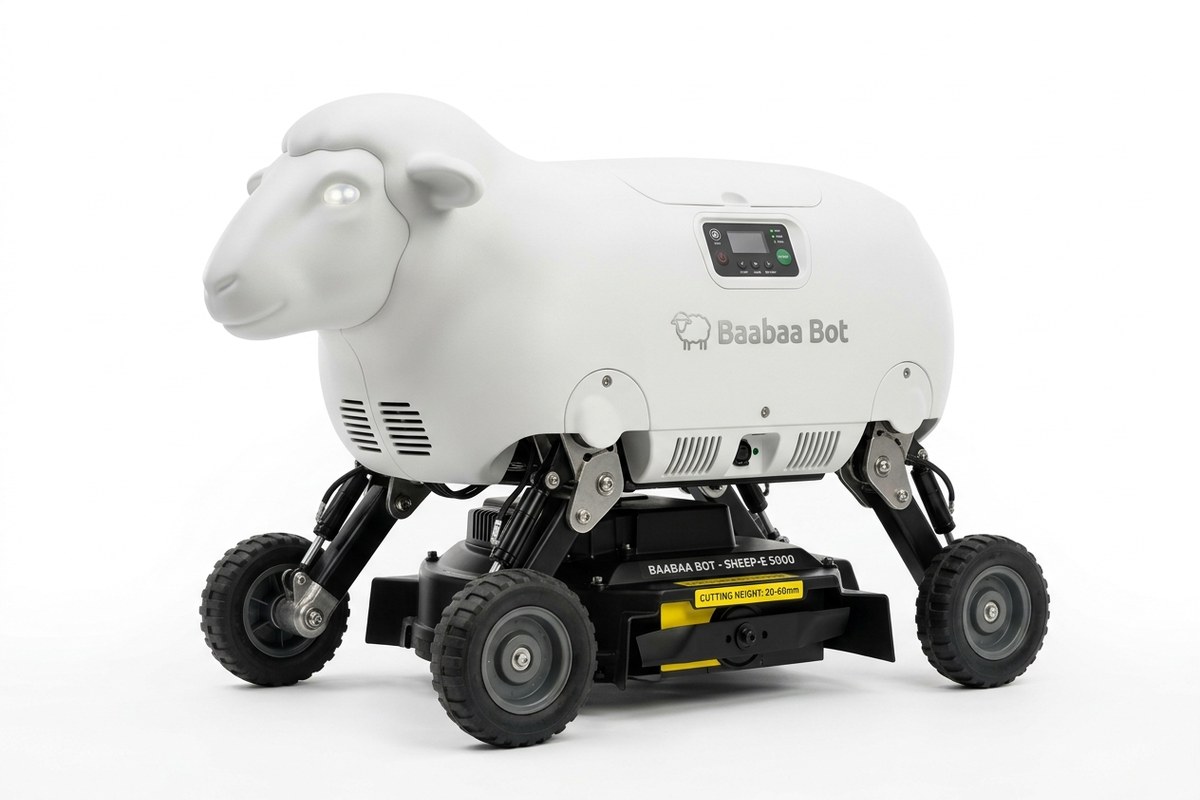
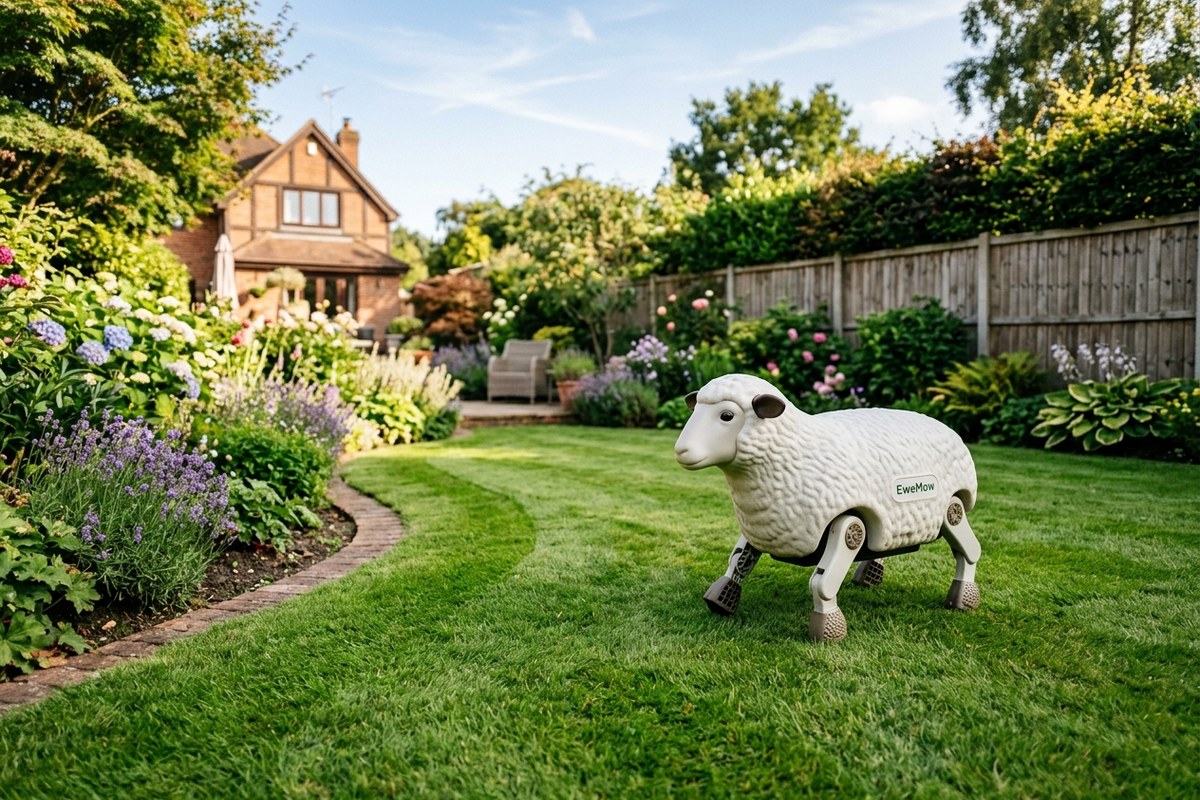
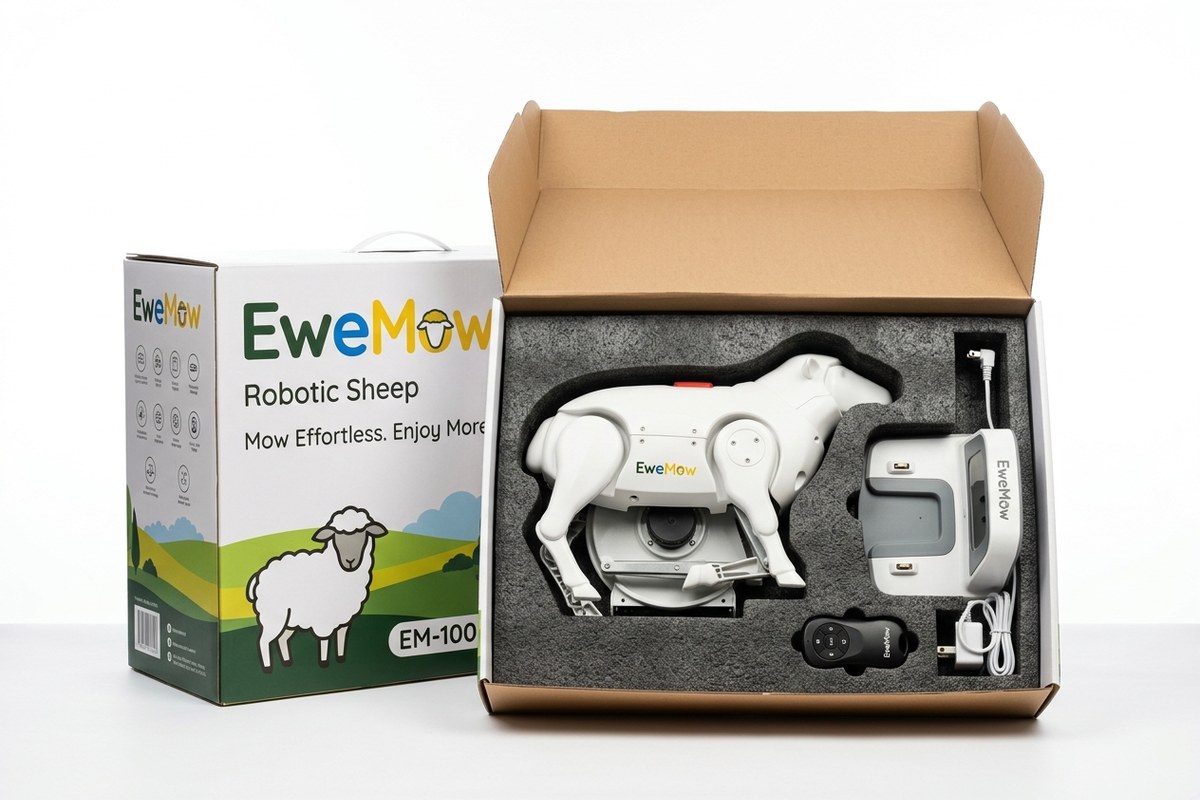
In Do Androids Dream of Electric Sheep? (1968), Philip K. Dick’s characters maintain robotic animals as status symbols in a world where real animals are scarce. The electric sheep of the title is a source of shame — a sign that the owner cannot afford living livestock. The EweMow reverses this valence entirely. There is no living sheep it is substituting for. There is a robotic lawnmower it is decisively replacing, and the replacement involves a wool-textured chassis, a programmable bleating schedule, and a GPS boundary system that means the EweMow — unlike Dick’s electric sheep — will not leave the property.
The EweMow is a robotic lawnmower shaped, textured, and weighted to resemble a sheep. It grazes — at 0.3 metres per second, cutting grass to between 3 and 7 centimetres depending on the configured height setting — across an area of up to 1,000 square metres using GPS positioning and perimeter wire. It does this autonomously, on a schedule, returning to its charging dock when battery runs low. The wool chassis is replaceable and available in three colorways: Natural White, Slate, and Moorland Grey. The product is entirely serious about all of this.
What It Is
The EweMow is a 12-kilogram robotic lawnmower with an 8-hour battery, a 3-hour charge time, and a GPS plus perimeter wire navigation system that the company describes as “reliable in typical suburban lot configurations.” Coverage is up to 1,000 square metres, which accommodates most residential lawns. Mowing height is adjustable between 3 and 7 centimetres via the companion app.
The wool chassis is the EweMow’s primary distinguishing feature. It is a replaceable outer cover made of weatherproof synthetic fibre, textured and shaped to approximate a small sheep at rest or in slow movement. The chassis is rated for outdoor use in all weather conditions — rain, UV exposure, and the normal range of suburban garden conditions. Three colorways are available.
The bleating schedule is configurable through the app. Settings are Off, 15-minute intervals, 30-minute intervals, and 60-minute intervals. The default setting is Off.
In Practice
The mowing function is competent. The GPS and perimeter wire system handles boundary enforcement reliably, the coverage is consistent with the specified area, and the height adjustment produces results comparable to mid-range conventional robotic mowers at a similar coverage specification. On the functional question — does it mow the lawn — the EweMow answers yes, with the commitment to aesthetics adding no detectable performance penalty. The wool chassis does not impede the mower. The sheep shape does not confuse the GPS. The product delivers its functional premise.
The bleating schedule requires extended discussion because the default setting of Off is not, it turns out, a neutral choice. It is a recommendation. This review tested the EweMow at 30-minute intervals, which the app describes as “moderate presence.” At 30-minute intervals, the EweMow is audible from inside the house. Neighbours become aware of the EweMow by day three. By day six, a neighbour had initiated conversation about it. Not a complaint — a conversation, specifically the kind that begins with “I couldn’t help but notice.” The conversation continued for longer than the mowing cycle.
Switching to Off resolved the social dynamic. The manual’s positioning of Off as the default, and the app’s description of other settings as “presence levels” rather than “audibility levels,” represents a clarity of recommendation that the product team appears to have arrived at through experience.
The wool chassis requires periodic cleaning. Grass clippings and garden debris accumulate in the wool fibre over time and require removal with a soft brush on a weekly basis during mowing season. This is manageable. The chassis replacement interval is approximately two years of normal use, at which point the colorway selection becomes relevant again.
| Coverage | Up to 1,000m² |
| Mowing height | 3–7cm (adjustable) |
| Grazing speed | 0.3 m/s |
| Navigation | GPS + perimeter wire |
| Battery | 8 hours |
| Charge time | 3 hours |
| Weight | 12kg |
| Bleating | Off / 15 / 30 / 60 minute intervals |
| Chassis colorways | Natural White, Slate, Moorland Grey |
Available through Meridian Outfitters; perimeter wire installation is a buyer task and the setup guide provides site-specific configuration support for irregular lot shapes.
- Competent robotic mower to 1,000m²
- Wool chassis is genuinely weather-resistant and handles suburban garden conditions
- GPS and perimeter wire navigation is reliable
- Aesthetically committed to the premise in a way that rewards the commitment
- Bleating schedule defaults to Off for reasons that become self-evident on Day 6 of the 30-minute interval test
- Attracts significantly more attention than a conventional robotic mower
- Not superior to comparable robotic mowers on mowing function alone
- Neighbours will have opinions
Philip K. Dick’s electric sheep was a source of shame because it substituted for a living animal that its owner could not afford. The EweMow substitutes for a lawnmower, which is a lower-stakes substitution, and the result is a product that performs the mowing function competently while carrying the full aesthetic commitment of a product that has decided to look like a sheep and will not be talked out of it.
The bleating is Off by default. The wool is weatherproof. The GPS works. These are the facts that matter for the buyer who needs a robotic mower and is prepared to explain, on at least one occasion, why their lawnmower looks like livestock. Dick’s question — whether androids dream of electric sheep — is unanswered by this product. The more relevant question is whether the neighbours dream of the 30-minute bleat interval, and the answer to that is yes, and not fondly.