Gravity Industries Jet Suit
Five arm-mounted turbines producing over 1,000 horsepower. Available for training sessions, occasional racing events, and moments of poor judgment at altitude.
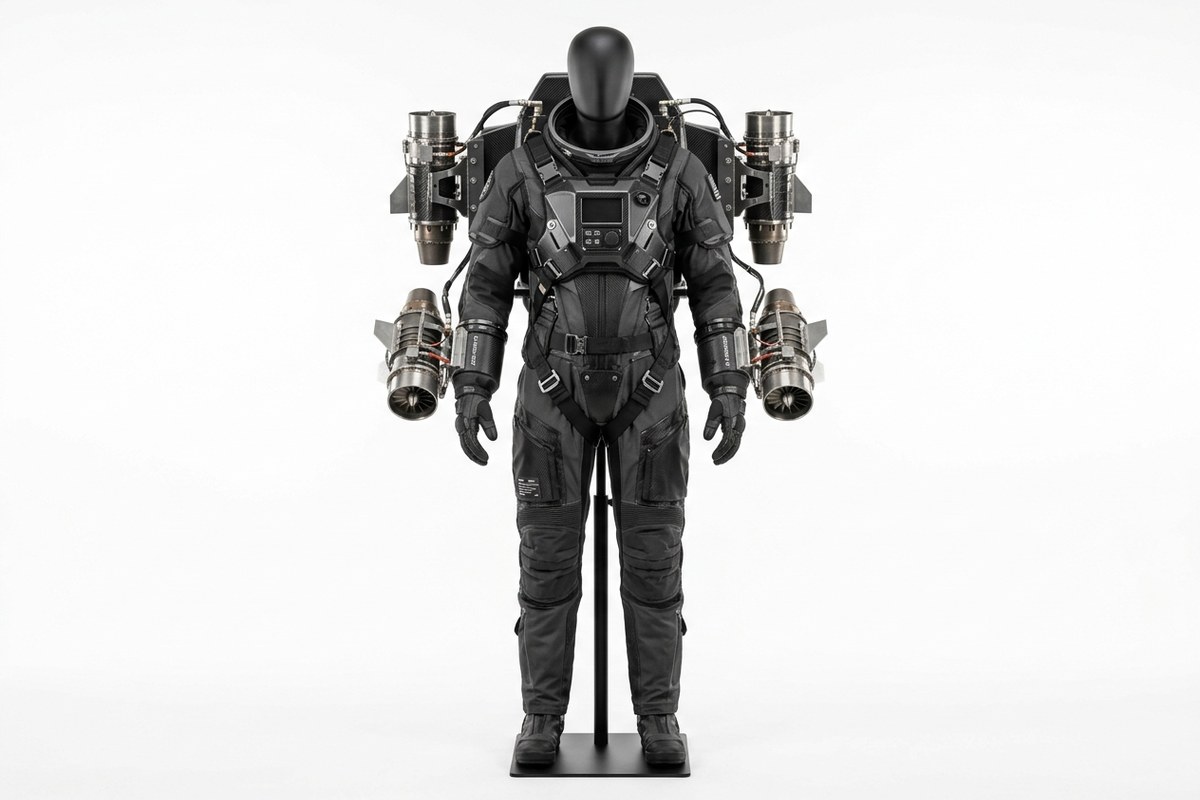
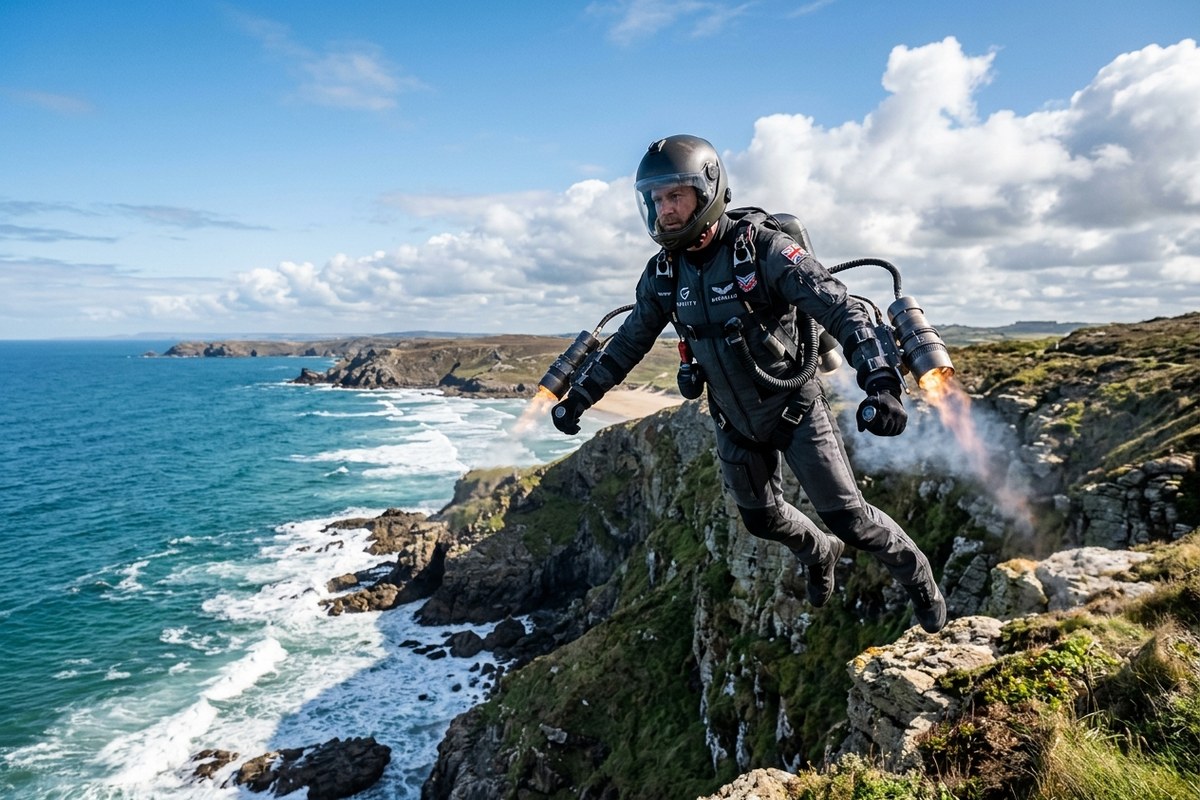
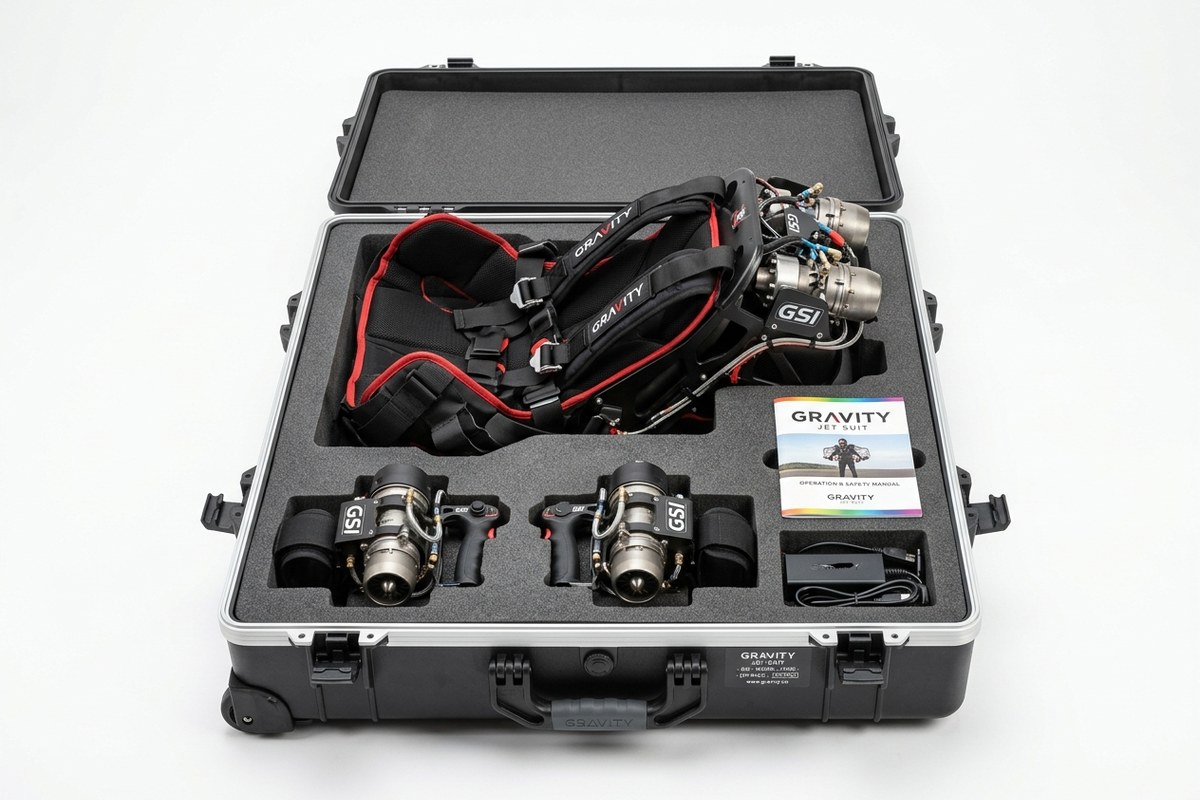
In The Rocketeer (1991), Cliff Secord straps on a helmet and a rocket pack and flies. The physics are generous, the fuel load unspecified, and the flight time considerably longer than current engineering permits. In the same decade, Tony Stark would achieve similar results through a combination of genius, trauma, and a limitless research budget. Neither approach is easily replicated. What Gravity Industries has produced is a working alternative that requires neither a rocket pack nor an unlimited research budget — just five jet turbines, roughly 27 kilograms of hardware strapped to your torso and forearms, and a willingness to trust a considerable volume of kerosene.
The Gravity Jet Suit is a real product. It produces real flight. It is bookable by session at a number of Gravity training venues, and it has been used in Royal Marines selection events, Red Bull competitions, and various demonstrations that have produced significant internet footage. The question this review attempts to answer is whether the experience, at £2,500 per session, is worth the cost, and what the practical limitations are when you are four minutes into your fuel load and still technically in the air.
What It Is
The suit comprises five micro gas turbines — four mounted on the arms (two per forearm) and one on the back — producing a combined output exceeding 1,050 horsepower. Total thrust is sufficient to lift an adult pilot with approximately 15–20kg of control margin, depending on body weight. The pilot steers by arm position: extend the arms to go forward, angle them to turn, vary the balance between arm and back turbine to control altitude. There is no flight computer mediating these inputs. The body learns the geometry, or it does not, and the training protocol is designed around the recognition that most bodies take some time to learn.
The suit weighs approximately 27 kilograms, which is noticeable on the ground and irrelevant in the air. It burns Jet A-1 fuel, which is kerosene, which smells exactly as you might expect, and which limits flight time at full power to approximately four minutes per tank.
In Practice
The first session is ground familiarisation. You do not fly immediately. This is correct. The safety briefing is thorough, the instructors are experienced, and the protocol reflects the accumulated knowledge of a company that has been sending people into the air strapped to turbines since 2017. Gravity’s safety record is, at time of writing, intact, which is more than can be said for several competing approaches to personal flight that have attracted funding but not survivors.
By the second session, most participants are conducting controlled hover. By the third or fourth, translational flight — moving horizontally across a defined course — is achievable with coaching. Progression is real and measurable, which is an underappreciated quality in an experience product.
The four-minute fuel window is the governing constraint of every flight. At full power hover, four minutes is long enough to feel like sufficient time and short enough to leave you wishing for more. The discipline of the exercise is in planning the manoeuvre you want to execute within that window, executing it, and landing before the fuel situation resolves itself for you. Pilots who overshoot their fuel window do not continue flying; they land, which is why the suit includes a structured landing protocol.
The turbine noise is significant. Ear protection is provided and mandatory. The experience of hovering under 1,050 horsepower is not quiet. It is also not easily conveyed in writing.
| Thrust | ~144kg / 1,050+ hp combined |
| Fuel | Jet A-1 (kerosene) |
| Flight time | ~4 minutes at full power |
| Turbines | 5 (4 arm-mounted, 1 back) |
| Suit weight | ~27kg |
| Control | Arm position (no flight computer) |
| Minimum commitment | 1 booked session; training required |
Sessions bookable through Off-World Imports with advance notice; availability is limited and typically requires booking 4–8 weeks ahead.
- Singular physical experience not replicated by any other available product
- Safety protocols are serious, thorough, and built on genuine operational experience
- Skill progression is measurable and meaningful between sessions
- It actually works
- Four-minute flight time per fuel load is a genuine constraint
- Significant training investment before independent operation
- Not available for unsupervised or independent operation
- Kerosene
The Gravity Jet Suit occupies a category with no meaningful competition: things you can do that feel like science fiction and are not. The four minutes is the only real problem — not a dealbreaker for a product in this category, but the thing you will think about as you plan your session. Experienced pilots have described learning to treat the flight window like a sonnet: a fixed form within which you must make all your choices.
At £2,500 per session, with training required before meaningful autonomous operation, this is not a casual purchase. It is also not a casual experience. Whether those two facts balance is a question each buyer will have to answer, ideally from the ground.