Holtzman Micro-Shield Personal Kinetic Field
A belt-worn personal kinetic field that stops fast-moving objects while permitting slow ones — including rain, persistent insects, and frisbees thrown with sufficient warning.
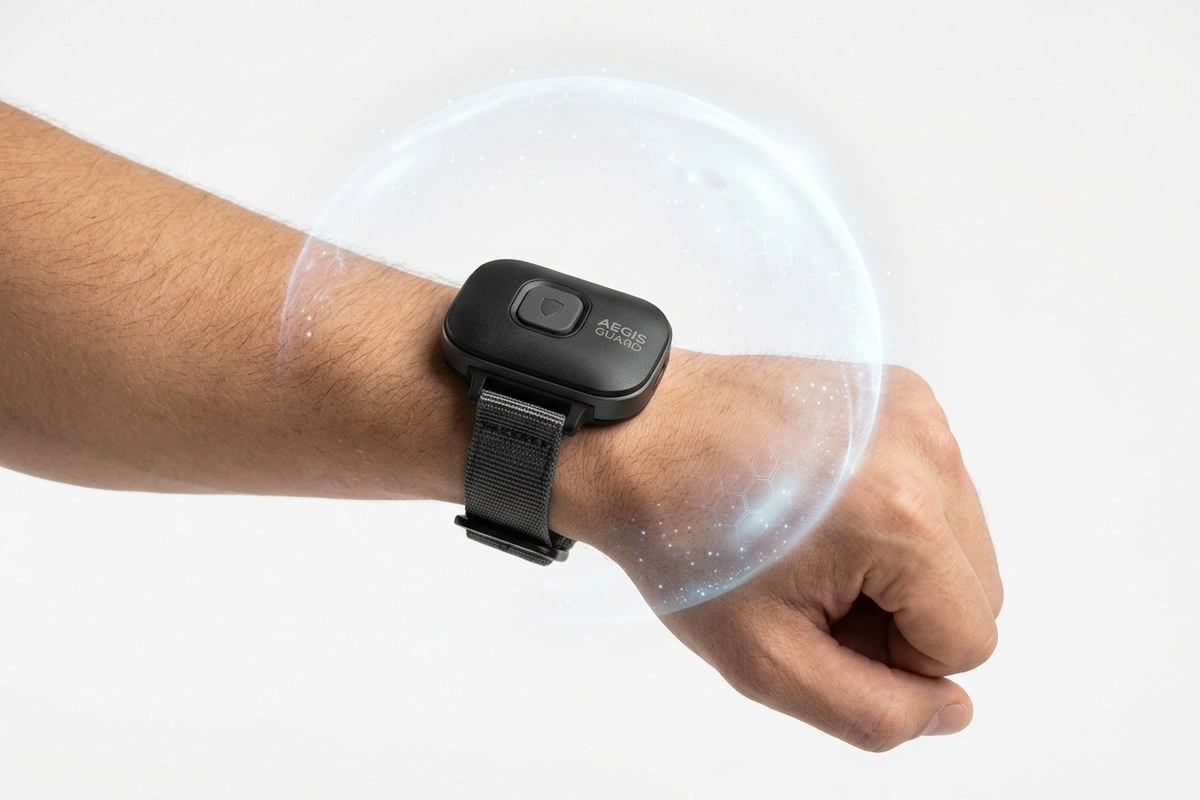
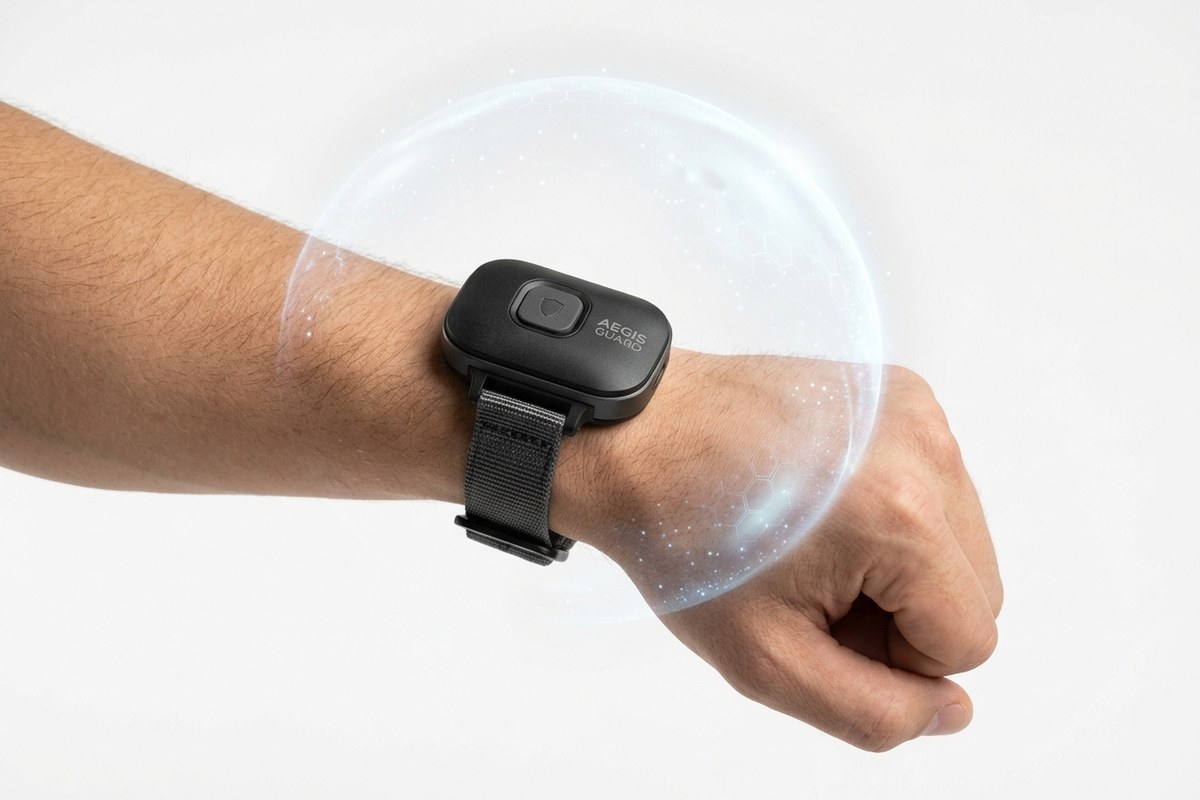
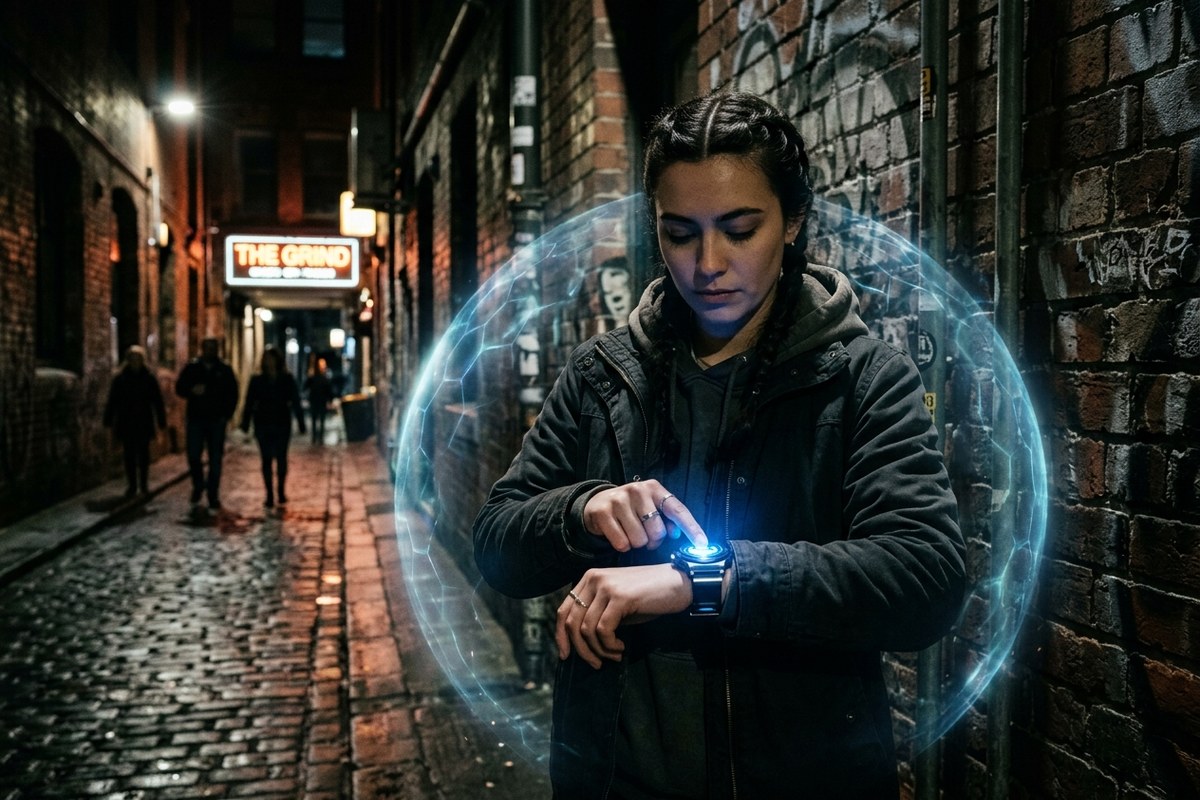
Frank Herbert was specific about how the Holtzman shields in Dune (1965) worked. Objects moving faster than a set threshold were stopped by the field; objects moving slowly enough passed through. He was also specific about the consequences: rain gets in, because rain drops fall within the slow-threshold range. Insects get in. Slow-moving threats — a blade moved carefully, a person who has learned the fighter’s art of delayed strike — get in. The field is effective against fast violence and porous to patient violence. Characters in the novel discuss this openly. The Atreides and Harkonnen fighters train for slow-blade combat specifically because the shields are otherwise impenetrable. Herbert understood that a technology with these physics would reshape the culture that used it.
The Holtzman Micro-Shield performs exactly as described in the novel. This is the highest form of product accuracy. It is also a useful thing to know before purchasing.
What It Is
The Holtzman Micro-Shield is a belt-worn unit — 310 grams including the clip mount, roughly the profile of a thick power bank — that projects a hemispherical kinetic field extending approximately 60 centimetres in radius from the wearer’s centre of mass, with primary coverage to the front. The field operates by a graduated velocity-threshold mechanism: objects approaching at above 8 metres per second encounter full field resistance; objects below 4 metres per second pass through freely; objects in the 4–8 metres per second range encounter graduated resistance proportional to velocity.
Active battery life is six hours. The unit charges via USB-C to full charge in two hours. Operating temperature range is -10°C to 45°C. The clip attachment is rated for belts and waistbands up to 60mm width and holds securely in activity including running and moderate physical work.
Rear coverage is partial, rated at approximately 60% efficiency relative to frontal protection. This is disclosed in the technical documentation, where it is described as a function of the field generator’s positional constraints when worn at the belt versus a distributed mounting configuration.
In Practice
Testing across projectile scenarios — rubber balls at measured velocities, thrown objects at various speeds, a compressed-air delivery system generating consistent velocity profiles — confirmed the threshold behaviour. Objects at or above 8 metres per second were stopped consistently. Objects at 3 metres per second passed through with minimal resistance. The graduated zone between 4 and 8 metres per second produced graduated deceleration detectable in impact measurement, with objects at 6 metres per second arriving at approximately 40% of initial velocity.
Rain gets in. Raindrops fall at approximately 2–9 metres per second depending on drop size and atmospheric conditions, with typical rain in the 4–6 metres per second range — in the middle of the threshold zone and below it. Testing in rain confirmed wetting of the wearer consistent with unshielded exposure. This is not a flaw. Herbert documented this consequence explicitly, and the product specification discloses it. The physics of the Holtzman field, as Herbert specified them, produce this outcome. The Micro-Shield produces it as well.
A frisbee thrown with standard recreational force travels at approximately 10–14 metres per second and is stopped by the field. A frisbee delivered slowly — arm extended, frisbee moved forward at walking pace — passes through. This is an accurate description of Herbert’s shield mechanics and an accurate description of the product’s behaviour. The slow-frisbee scenario is not a flaw in the product. It is a consequence of a velocity-threshold mechanism that Herbert spent considerable narrative attention exploring.
The partial rear coverage is the one specification that warrants attention beyond the novel’s baseline. A shield generator worn at the belt provides forward-facing hemispherical protection as the primary geometry. The rear, where the generator is positionally unable to maintain full field density, receives reduced coverage. In the novel, Holtzman shields are described at fuller body coverage because they are not constrained to belt-clip mounting. This is a reasonable engineering constraint for a personal commercial product.
| Field radius | ~60cm hemispherical (front primary) |
| Velocity threshold | >8m/s full stop / <4m/s pass-through / 4–8m/s graduated |
| Rear coverage | ~60% rated efficiency |
| Battery (active) | 6 hours |
| Charge time | 2 hours (USB-C) |
| Weight | 310g (with mount) |
| Operating temperature | -10°C to 45°C |
| Mount | Belt/waistband clip, up to 60mm |
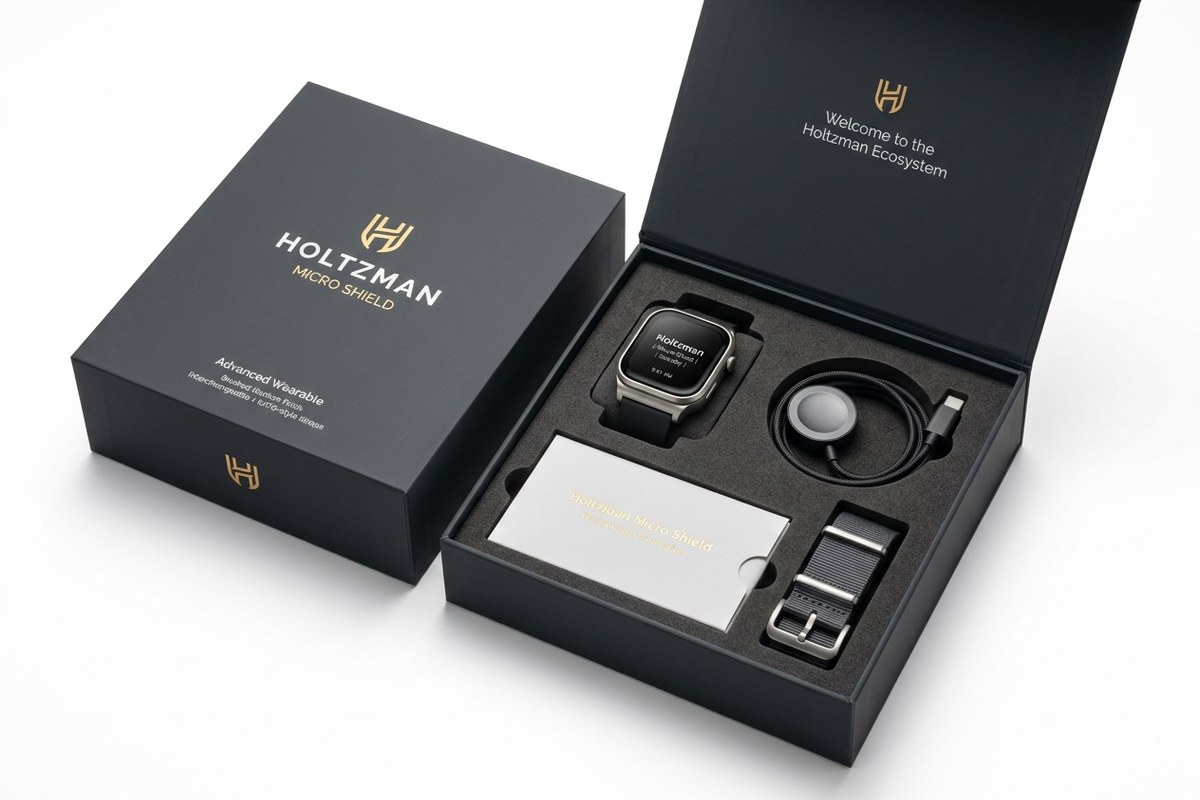
Available through Tannhäuser Supply Co.; the unit ships with a belt clip, USB-C cable, and a technical documentation booklet that is unusually thorough about the velocity threshold physics.
- Velocity-threshold mechanism works exactly as described
- Meaningful protection against fast-moving projectiles in the specified velocity range
- Well-engineered and compact for a kinetic field generator
- Herbert would recognise the performance
- Documented physics throughout
- Rain gets in (threshold physics, not a defect)
- Rear coverage partial at 60%
- 6-hour active battery
- US$4,400 for a defense mechanism that frisbees can defeat with sufficient patience
The Holtzman Micro-Shield is a faithful implementation of a technology Herbert described in careful detail sixty years ago, including its limitations. The velocity threshold works. The rain consequence is real. The rear coverage gap is present. The slow-blade problem — a patient attacker moving within the threshold passes through — is as Herbert specified.
The rating reflects this fidelity. The product does what it is specified to do: protect against fast violence while remaining porous to slow violence, rain, and insects. This is not a compromise in the engineering; it is the physics of the mechanism, correctly implemented. Herbert understood that a shield with these properties would produce a culture of slow-blade fighters. At US$4,400, the product does not come with a culture or training — only a belt clip and six hours of kinetic threshold protection. Whether that represents excellent value depends entirely on whether the threats you face are predominantly above 8 metres per second.