Jetson One Personal eVTOL
A single-seat electric aircraft with eight rotors, 20-minute flight time, and regulatory status that varies significantly by jurisdiction.
The spinners in Blade Runner (1982) are flying cars in the fullest sense — vehicles that transition between road and air, navigate dense urban canyons, and land vertically in confined spaces. They belong to a future in which the infrastructure question has already been solved by some previous generation, leaving the film’s characters free to simply use them. The Jetson One is the more honest version of this: a personal aircraft for people who live somewhere with sufficient airspace, regulatory tolerance, and flat ground to operate one, and who are prepared to plan their journeys in 20-minute increments.
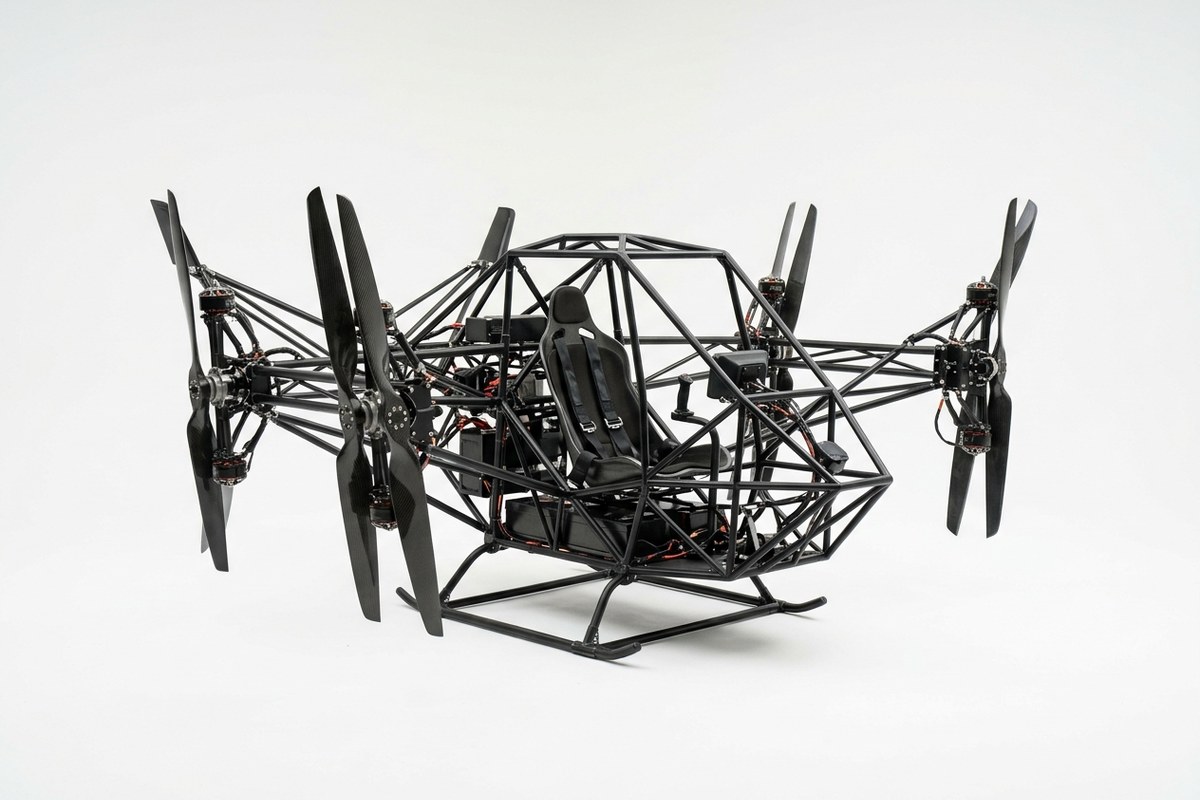
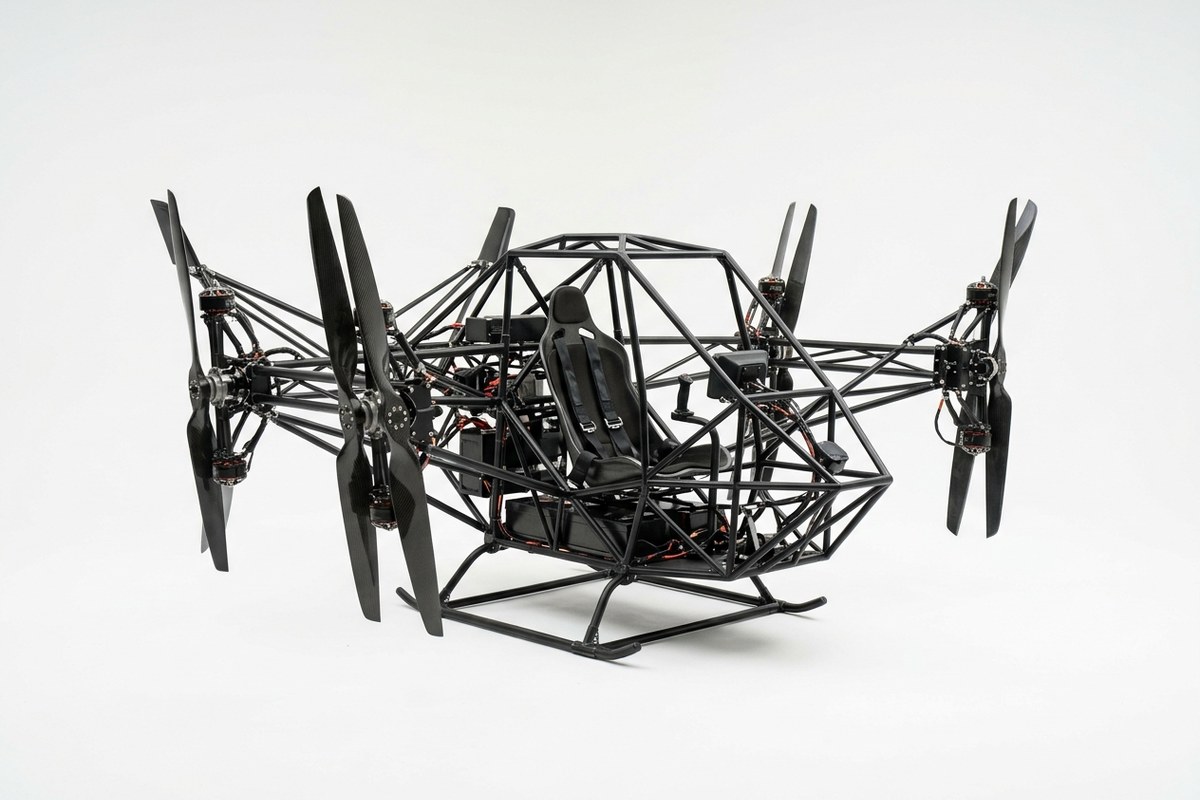
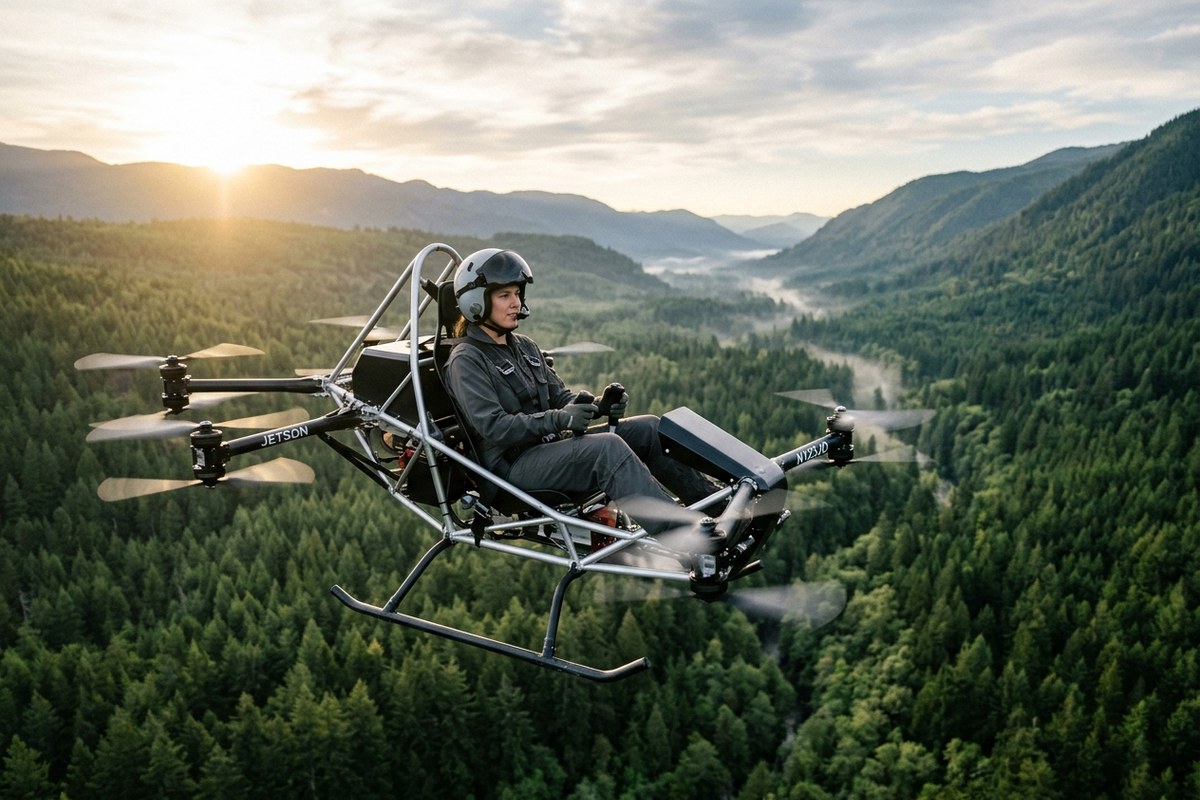
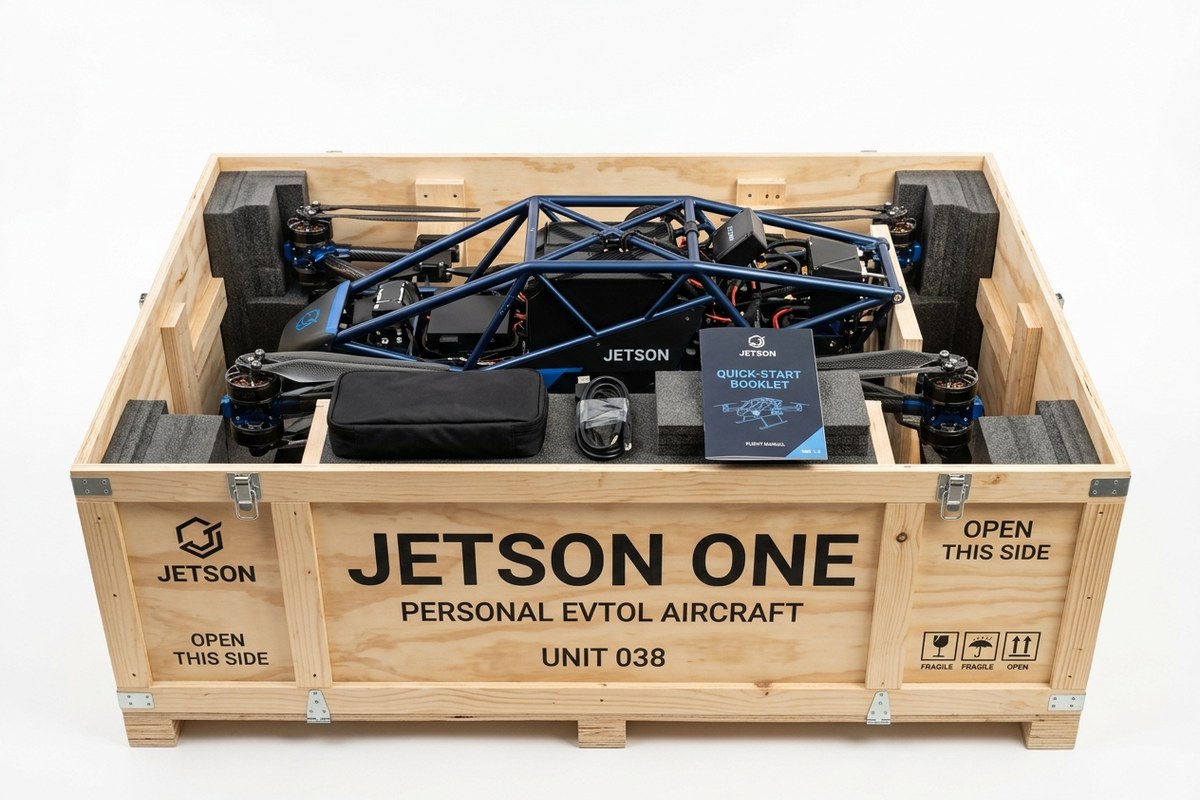
It is not a flying car. It does not have wheels. It is an ultralight electric aircraft — eight rotors arranged in a protective cage, a single seat, a joystick, and an automated emergency parachute system that the company describes, correctly, as a feature rather than an afterthought. Jetson, the Swedish company that makes it, has sold multiple production runs in advance of delivery, which tells you something about the market for personal flight at the intersection of “technically achievable” and “very expensive.”
What It Is
The Jetson One is an electric vertical takeoff and landing aircraft with eight independent electric motors. Maximum speed is 102 km/h, with a recommended operating ceiling of 1,500 metres above ground level. The aircraft weighs 86 kilograms empty and accepts a maximum payload of 95 kilograms — a constraint that factors pilots above that weight out of the cockpit and is stated clearly in the specifications.
Battery capacity supports approximately 20 minutes of flight, depending on conditions, altitude, and how much of the 102 km/h maximum speed you elect to use. Recharge time is approximately three hours from a standard outlet. The automated emergency parachute deploys if the system detects a rotor failure or structural anomaly; this is the kind of feature that belongs on all aircraft and is present on very few consumer ones.
No pilot license is required in some jurisdictions under ultralight classification. This sentence requires immediate annotation: “some jurisdictions” varies enormously. The United States has a framework for ultralight aircraft that accommodates the Jetson One under certain conditions. The European Union has different requirements. The United Kingdom has different requirements again. Buyers must verify local regulatory status independently before purchase and, more importantly, before flight.
In Practice
First flight requires training — Jetson provides a structured onboarding programme — and the control interface is designed to be approachable. The joystick handles pitch and roll; automated systems manage stability and compensate for wind and rotor differential. The learning curve is described as comparable to a drone, which undersells the physical sensation of being aboard rather than operating remotely, but the control simplicity is genuine.
The open cockpit is a design choice worth noting. The Jetson One has no canopy, no windscreen, and minimal weather protection. At 60 km/h into a headwind, the exposure is considerable. At 102 km/h, it is all-consuming. This is not necessarily a problem — ultralight aircraft have always operated without enclosures — but buyers accustomed to the abstracted comfort of ground vehicles may find the sensory reality of personal electric flight at altitude more immediate than anticipated.
The 20-minute battery is the primary operational constraint. In practical terms, this supports a straight-line range of approximately 30 kilometres at cruise speed. A flight from one location to another requires a three-hour recharge before the return trip. Operating multiple units or carrying a second battery pack are the workarounds that Jetson customers with specific operational requirements have developed; neither is elegant.
| Motors | 8 electric |
| Max speed | 102 km/h |
| Operating ceiling | 1,500m AGL (recommended) |
| Flight time | ~20 minutes |
| Charge time | ~3 hours |
| Empty weight | 86kg |
| Max payload | 95kg |
| Safety | Automated emergency parachute |
Available through Meridian Outfitters; delivery requires coordination with local aviation authorities in the destination jurisdiction.
- Genuine unassisted personal flight
- Impressive stability system reduces pilot workload significantly
- Automated emergency parachute is meaningful safety infrastructure
- No pilot license required in several jurisdictions under ultralight classification
- 20-minute flight time demands careful route planning
- Regulatory status requires independent verification per jurisdiction before purchase
- Open cockpit provides no weather protection
- US$128,000
The Jetson One is the most accessible aircraft that has ever existed, and it is accessible only by a definition of the word that has been stretched considerably. The technology works. The flight is real. The rotor cage and parachute system represent serious engineering attention to an activity that has historically punished carelessness. The 20-minute battery and the regulatory patchwork are not problems Jetson has created; they are the current state of the available technology and the current state of global aviation law, neither of which will remain static indefinitely.
In Blade Runner, nobody talks about charging their spinner. Harrison Ford does not circle the block because his battery needs another three hours. The future of the genre is more patient than its depictions suggest. The Jetson One is the current limit of what patience has purchased.