Kameleo Thermoptic Jacket
An e-ink fabric jacket that samples the background and approximates it across the garment surface — most effective against uniform backgrounds, which the manual categorizes as 'urban environments.'
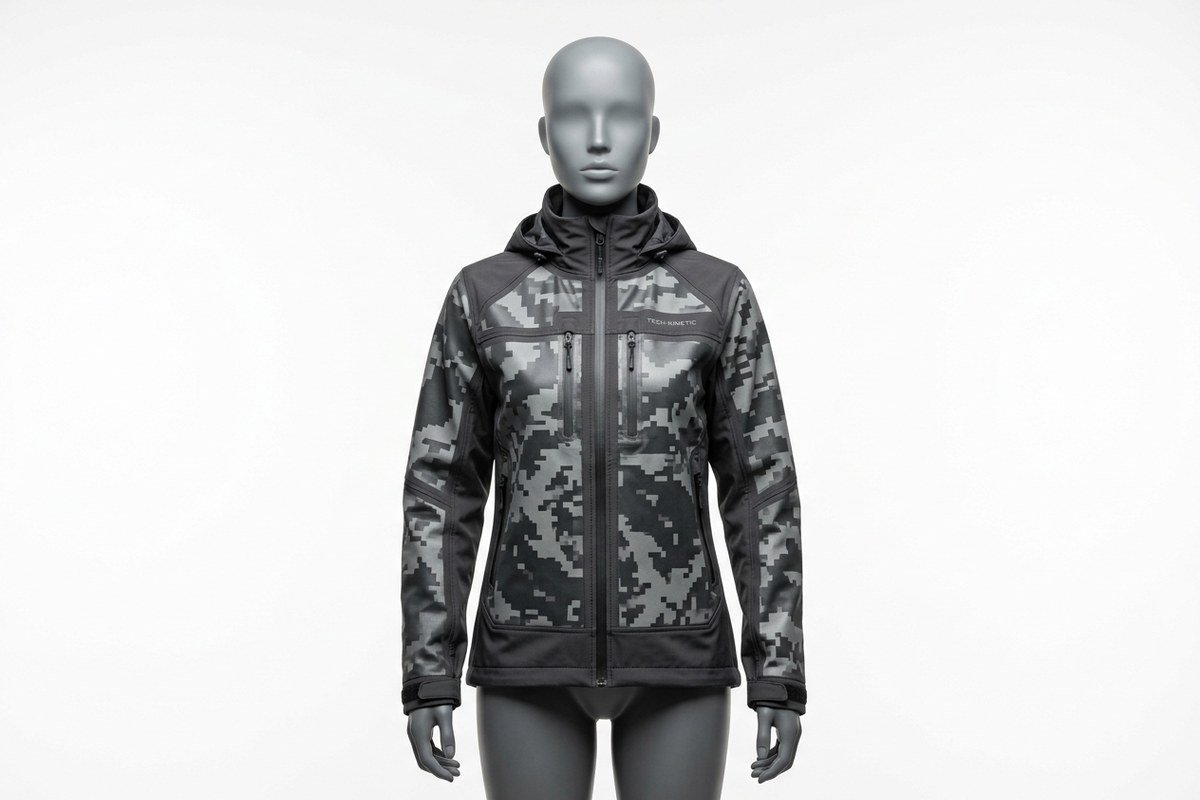
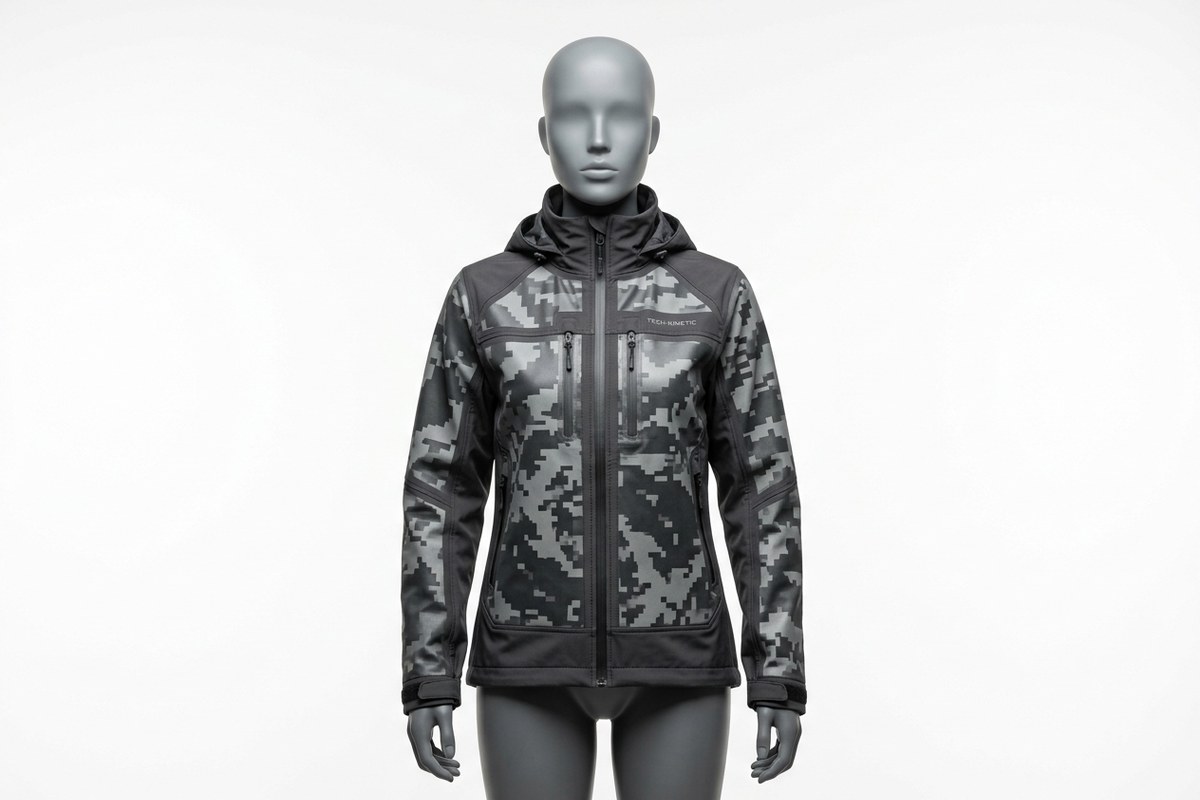
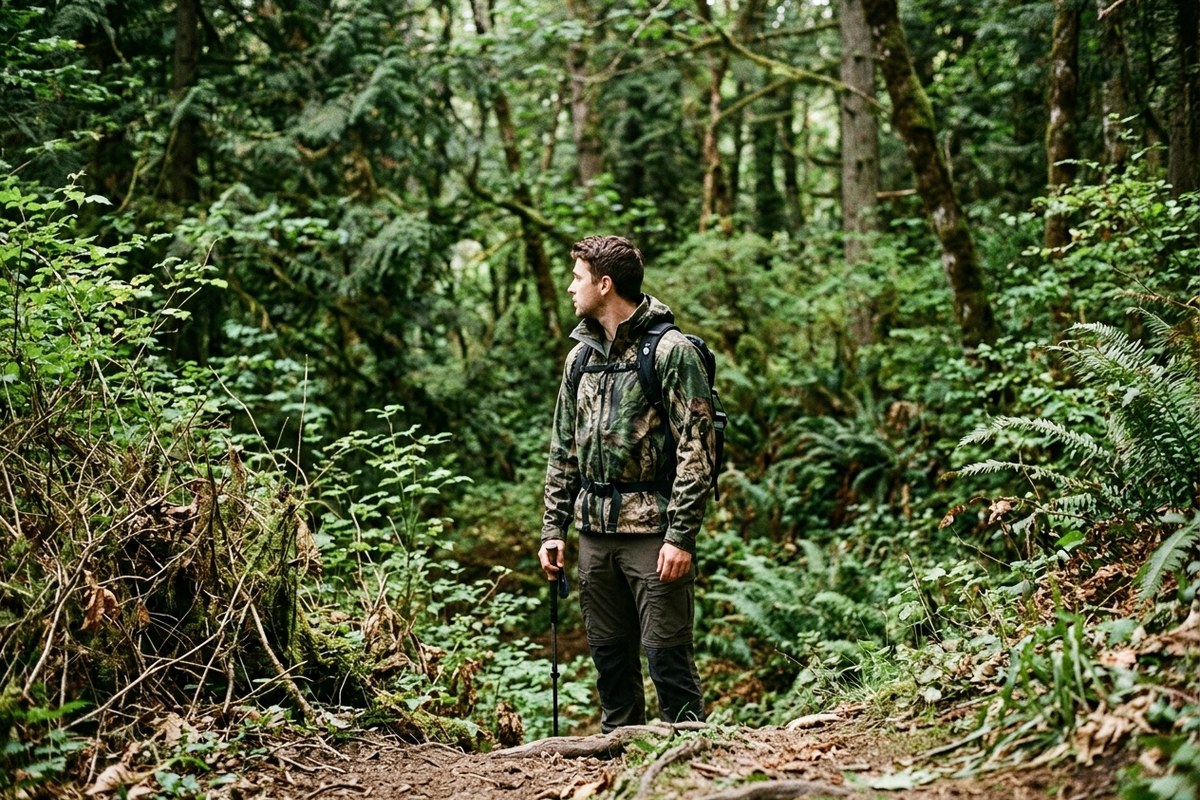
The thermoptic camouflage in Masamune Shirow’s Ghost in the Shell (1989) renders its wearer effectively invisible — the suit samples and reproduces the surrounding environment with sufficient fidelity that a trained operative can move through a scene undetected. The effect is seamless, adaptive, and real-time. This is a baseline against which the Kameleo Thermoptic Jacket compares unfavourably in one specific respect, which is the two-second e-ink refresh rate. Against a static background, the Kameleo performs well. Against a moving background, the Kameleo performs as a wearable display of what was behind you two seconds ago, which is a different thing entirely.
The jacket is, nonetheless, a genuine technical achievement. Flexible e-ink display fabric has been a materials science aspiration for a decade. Kameleo has produced a garment that uses it, integrates four rear-mounted cameras, processes the feed in real time, and displays a continuously updated approximation of the background across the jacket surface. That the two-second refresh rate produces the approximately opposite of camouflage during movement is a significant product limitation. It is not a failure of the e-ink fabric concept. It is an accurate account of what current e-ink refresh rates make possible, worn as outerwear.
What It Is
The Kameleo is an outer jacket in Regular and Extended cuts. The rear and side panels use flexible e-ink display fabric — a material that can render greyscale and colour content at moderate resolution and is sufficiently flexible for garment use without visible panel edges in normal wear configurations. Four cameras are mounted at the rear collar, oriented to capture the background scene behind the wearer, and a processing unit embedded in the collar lining converts the camera feed to a display signal in approximately two seconds.
Battery life in active camouflage mode is four hours. Standby — with the cameras and display inactive — extends to 48 hours. The jacket weighs 1.8 kilograms, which is heavier than a conventional jacket of comparable cut by a margin that becomes apparent on extended wear. USB-C charging is provided; a Bluetooth connection to a companion app allows configuration of display modes, including a static pattern mode for situations where the camouflage function is less relevant than a conversation piece.
IPX4 weather resistance covers the jacket for rain use. The e-ink fabric panels handle moisture at this rating without performance degradation. The wool-blend outer layer is dry-clean only, which is a consideration for a jacket that costs US$1,850 and will presumably be worn outdoors.
In Practice
The two-second refresh rate is the jacket’s defining characteristic and its primary functional limitation, and the relationship between these two facts is the central experience of wearing it. Against a static background — a wall, a parked vehicle, a uniform outdoor surface — the refresh rate is irrelevant. The background does not change; the display catches up within two seconds and maintains accurate correspondence. The camouflage effect in these conditions is genuinely effective, particularly against the uniform backgrounds that the manual recommends and illustrates with photographs of corridors and painted walls in what appears to be a production facility. The manual refers to these as “urban environments.”
Against a dynamic background — any background that includes movement, light change, or the wearer themselves moving — the refresh rate produces a display of what the background looked like two seconds ago. A walking wearer’s jacket shows the background from two seconds prior, meaning the jacket displays the previous position’s environment while the wearer occupies a new one. The effect is not camouflage. It is a wearable record of where you just were, displayed on the back of a jacket, updating every two seconds. Passersby notice this. Several do so audibly.
The 1.8-kilogram weight is noticeable. A conventional jacket in the same cut would weigh approximately 600 to 800 grams. The additional kilogram is distributed across the jacket and does not create a single point of discomfort, but it is present throughout the day in a way that conventional outerwear is not.
| Display | Flexible e-ink fabric (rear + side panels) |
| Cameras | 4 rear-mounted (continuous sampling) |
| Refresh rate | ~2 seconds |
| Battery (active) | 4 hours |
| Battery (standby) | 48 hours |
| Weight | 1.8kg |
| Connectivity | USB-C, Bluetooth (app settings) |
| Weather resistance | IPX4 |
| Cuts | Regular, Extended |
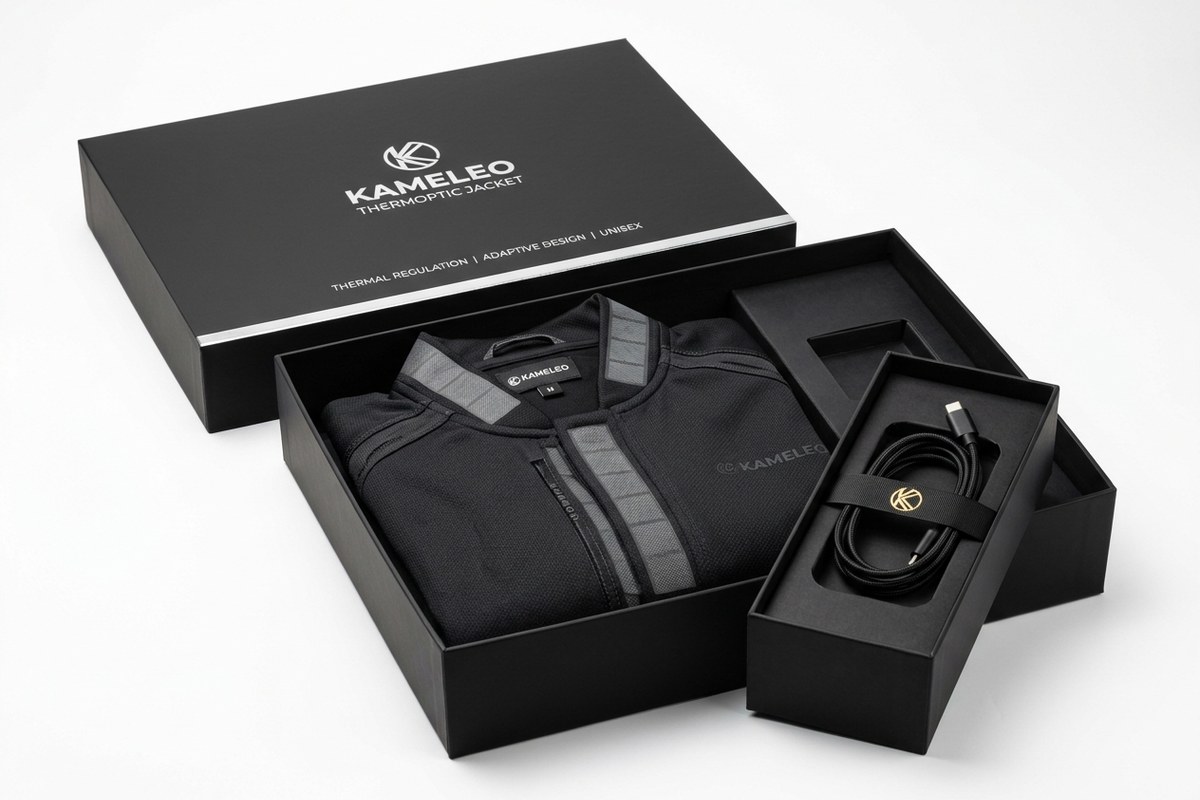
Available through Kessel & Sons Logistics; the jacket ships in a protective carry case and includes a USB-C charging cable and access to the Kameleo configuration app.
- Functionally effective camouflage against stationary uniform backgrounds
- Novel e-ink fabric is well-executed as a garment material
- IPX4 weather resistance for outdoor use
- Impressive technical demonstration of a materials science concept
- 2-second e-ink refresh rate produces the opposite of camouflage during movement
- Most effective against beige walls, which the manual categorises as urban environments
- 4-hour active battery limits operational duration
- 1.8kg noticeably heavier than conventional outerwear
Major Kusanagi’s thermoptic camouflage in Ghost in the Shell renders her invisible during movement, against complex and dynamic backgrounds, at speeds that the plot requires. The Kameleo Thermoptic Jacket renders its wearer’s jacket a moving display of the background from two seconds ago, against backgrounds that have the courtesy to remain still, for four hours before requiring a charge. These are different products serving different operational contexts. The Kameleo’s context is one in which the wearer is standing still, the background is uniform, and the observer is at sufficient distance that a two-second lag is imperceptible.
That context exists. It is narrower than the marketing implies and slightly wider than the manual’s beige-hallway photographs suggest. At US$1,850, the Kameleo is a technically serious product addressing a technically challenging brief, limited by the current state of a display technology that has not yet solved for refresh rate. When it does, the brief becomes achievable. Until then, the jacket works best when nothing is moving — including the person wearing it.