Moley Robotics Automated Kitchen
Ceiling-mounted robotic arms that cook full recipes, clean up afterward, and cost approximately what a two-bedroom flat costs in several European cities.
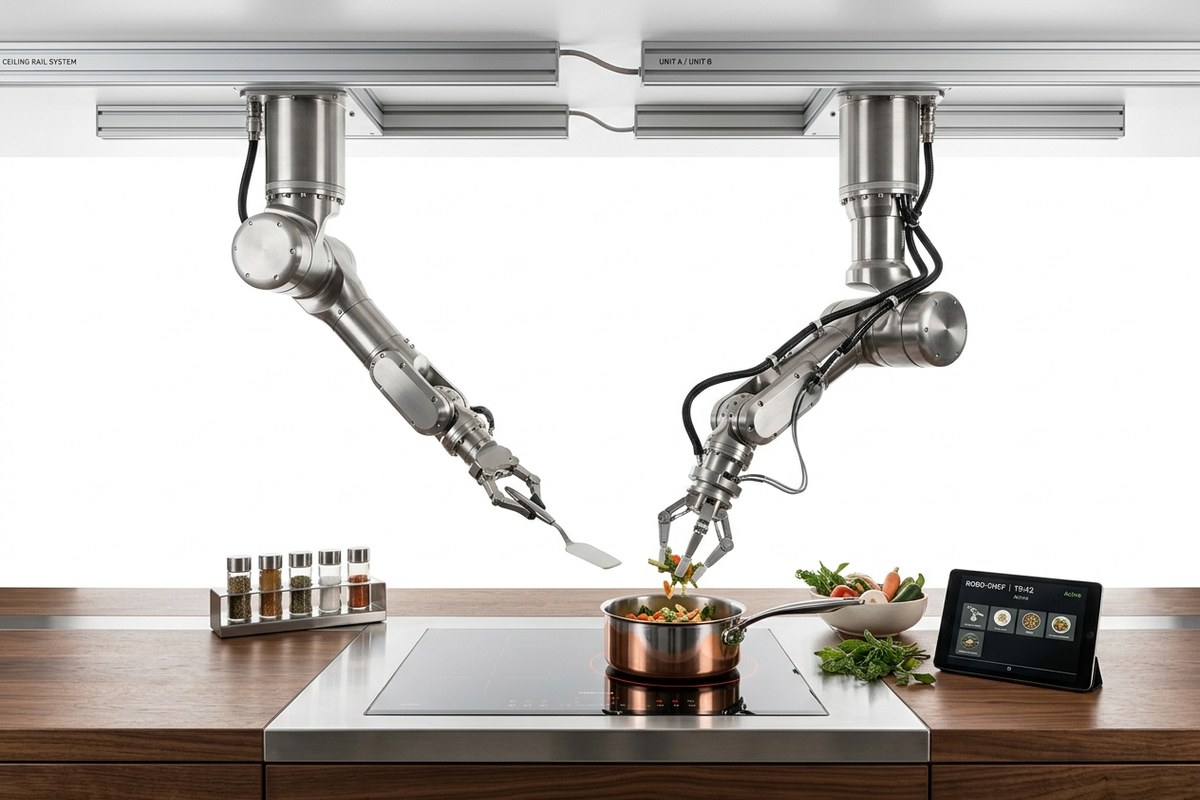
The Jetsons (1962) depicted domestic automation as something the Jetson family simply had, without elaboration on cost, installation timelines, or the question of what Rosie the robot maid actually ran on. The show was not interested in these details. It was interested in the comedic and aspirational potential of a family navigating a future in which the labour of household management had been mechanised out of existence. The kitchen, in that household, just worked.
Moley Robotics has spent a decade attempting to make this specific part of the Jetsons vision real, and the result is a ceiling-mounted robotic kitchen system with 24 degrees of freedom, a library of approximately 5,000 recipes, and a price point that suggests the company’s primary target market is people who own kitchens in buildings where that price point is unremarkable. This review is not aimed at that market exclusively, but it is useful to know going in.
What It Is
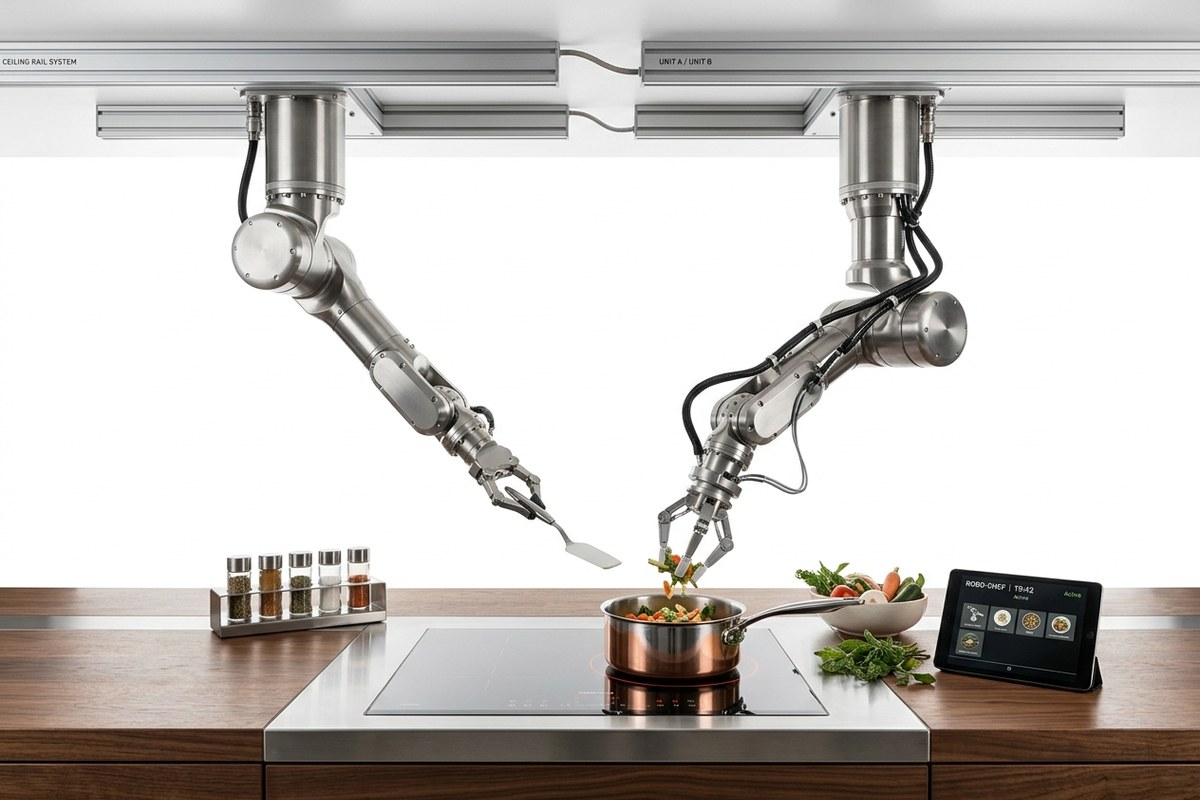
The Moley system replaces the upper reaches of a kitchen with two ceiling-mounted robotic arms, each with 12 degrees of freedom — 24 combined. The arms operate across a purpose-designed workspace incorporating Moley-specified appliances: hob, oven, dishwasher, and storage units whose positions are precisely mapped to the robot’s range of motion. The arms use a combination of force sensing and visual positioning to navigate the workspace, pick up utensils, manage heat settings, and transfer ingredients between preparation and cooking.
The recipe library, accessed via cloud subscription, contains approximately 5,000 dishes captured through motion-capture sessions with professional chefs. The arms replicate these movements, which means the system’s culinary ceiling is bounded by what has been professionally recorded rather than what the arms are mechanically capable of. New recipes are added to the library on a subscription basis.
Post-cooking cleanup is automated. The arms return utensils to the dishwasher, wipe down surfaces, and reset the workspace to a standard state. This is, without qualification, the best feature.
In Practice
The cooking process begins with human ingredient preparation. You load the specific ingredients into designated containers in the specified quantities — the recipe app provides a loading checklist and photographs — and then step back. This is the principal remaining human labour in a Moley-cooked meal, and it is not nothing. Ingredients must be pre-portioned, pre-peeled where required, and positioned correctly. For a dish with significant mise en place, this loading process takes 15 to 20 minutes and requires more precision than casual cooking usually demands.
Once loaded, the arms take over completely. A dish that a skilled home cook would execute in 25 minutes takes approximately 40 to 45 minutes under Moley control. The difference is partly the cautious pace of the motion sequences and partly the system’s lack of intuitive responses to cooking contingencies — the browning that is happening too fast, the sauce that is reducing more aggressively than the recipe anticipated. The arms follow their program. They do not improvise.
The results are consistent. This is the trade: you exchange speed and improvisation for repeatability. The carbonara the system produced on the third test was identical to the carbonara produced on the first, which is either comforting or alarming depending on your philosophy of food.
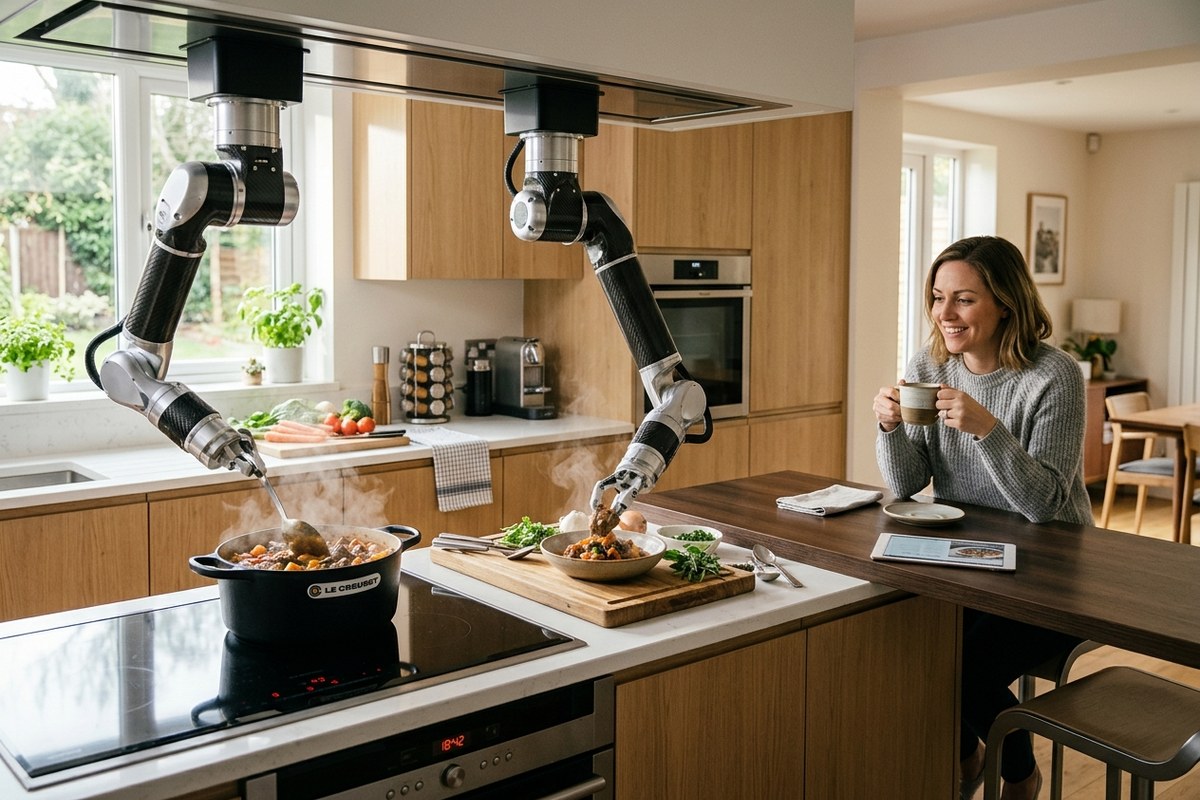
The arms are quiet, which is the first surprise. The second is how quickly you stop watching. Within a few sessions, having the kitchen cook autonomously while you sit six feet away reading feels normal in a way that was not predictable from the specification sheet.
| Degrees of freedom | 24 (12 per arm) |
| Recipe library | ~5,000 dishes (cloud subscription) |
| Ingredient loading | Manual (human-assisted) |
| Post-cooking cleanup | Automated |
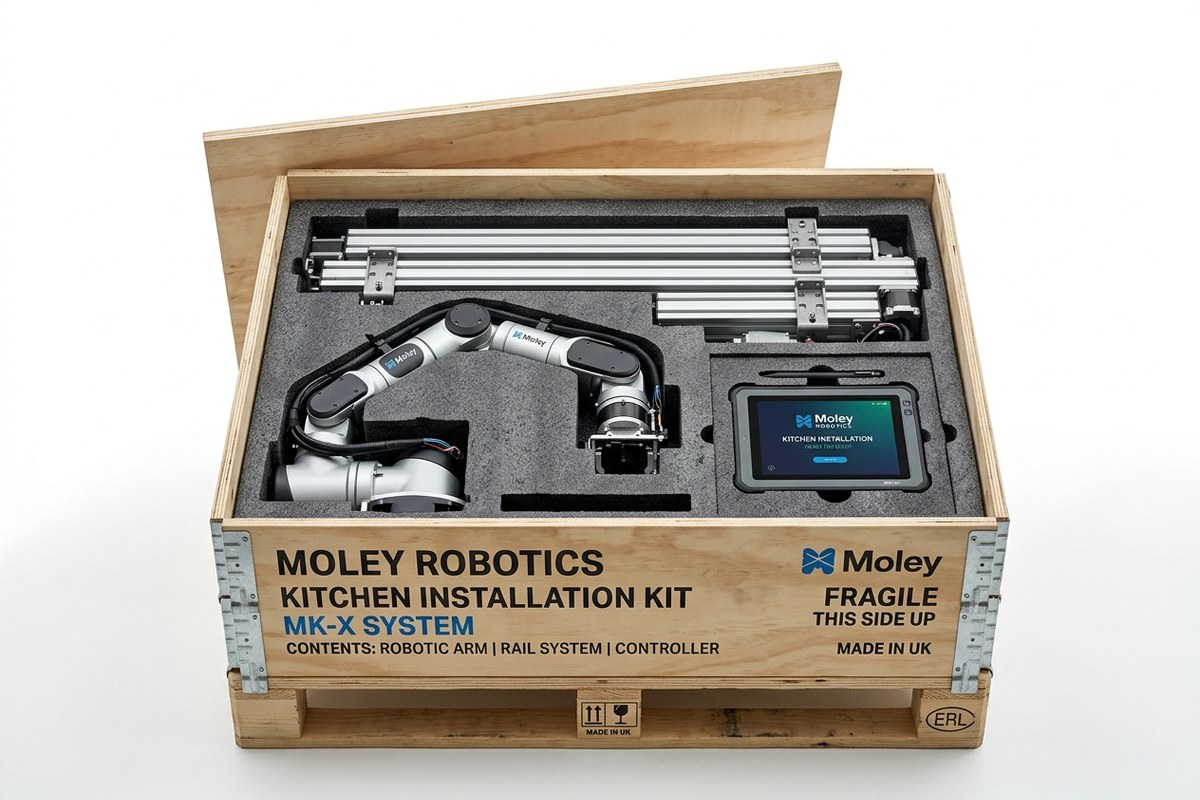
| Installation | Bespoke (Moley-specified appliances required) |
| Control | App-based recipe selection |
Available through Kessel & Sons Logistics; installation requires a site survey and typically a 4–6 month project timeline.
- Technical execution is genuinely impressive at scale
- Cooking results are consistent and repeatable across sessions
- Post-cooking cleanup automation is thorough and reliable
- The system is a working product, not a concept or prototype
- £250,000+ excludes the substantial majority of potential buyers
- Ingredient loading remains human and requires precision
- Slower than a skilled human cook for equivalent dishes
- Bespoke installation ties buyer to Moley appliance ecosystem
The Moley kitchen does what it claims to do. That statement is rarer than it should be in this category, where a decade of concept videos and promotional materials have accumulated around products that have not shipped. This one has shipped. The arms cook food. The food is good. The cleanup happens without your involvement. The recipe library is large and growing.
The price is the conversation, and the price is not this review’s problem to solve. What can be said is that at £250,000, the system delivers a working version of something that has been depicted in science fiction for sixty years, with constraints that are real and limitations that are clearly documented. The Jetsons never worried about whether Rosie charged by the hour. Buyers of the Moley system will find the analogous question is whether the installation cost amortises over time. The system works well enough that it might.