Muse S Brain-Sensing Headband
A consumer EEG headband providing real-time brainwave feedback during meditation and sleep, in the remote lineage of the neural interfaces William Gibson imagined in 1984.
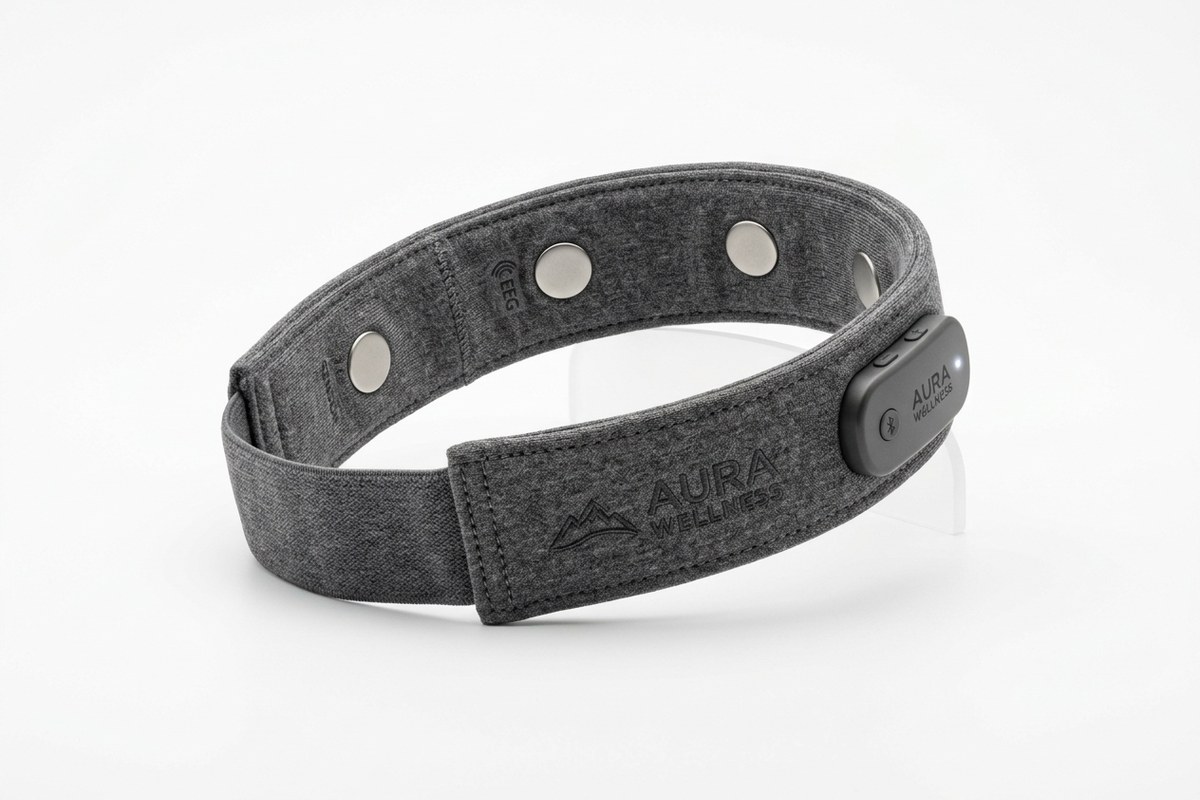
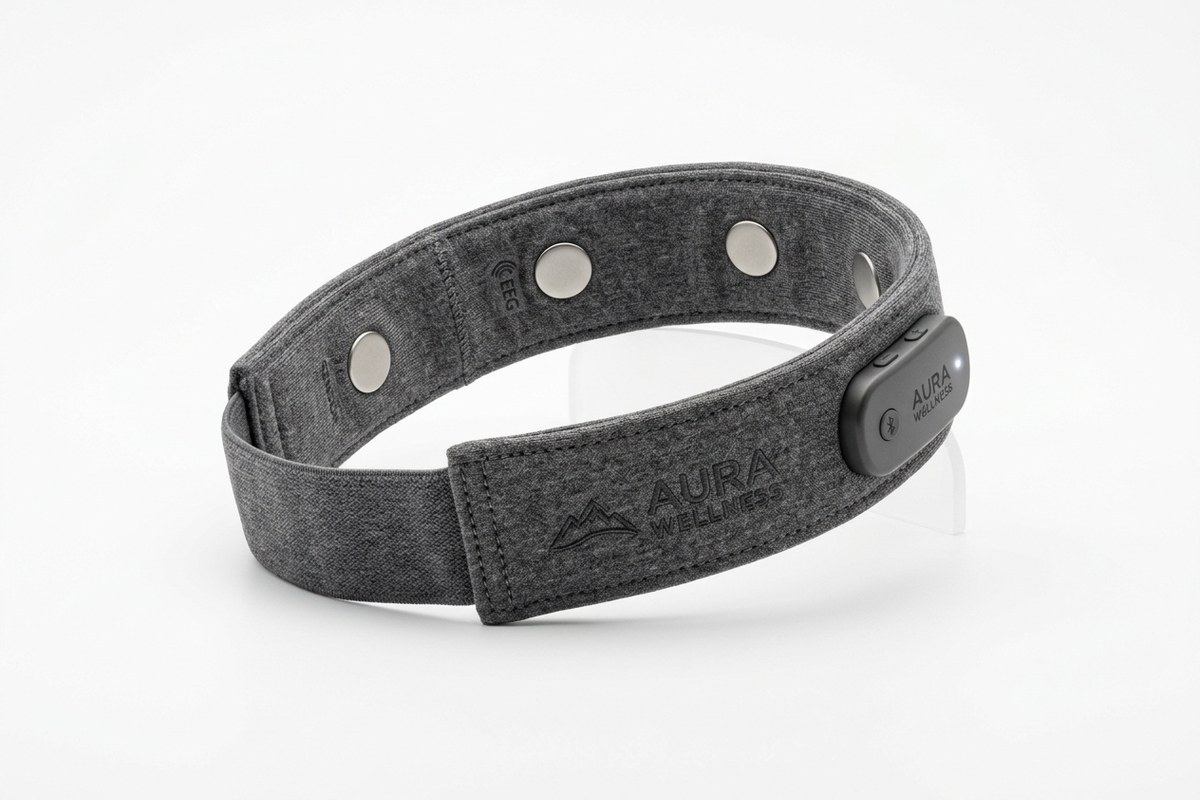
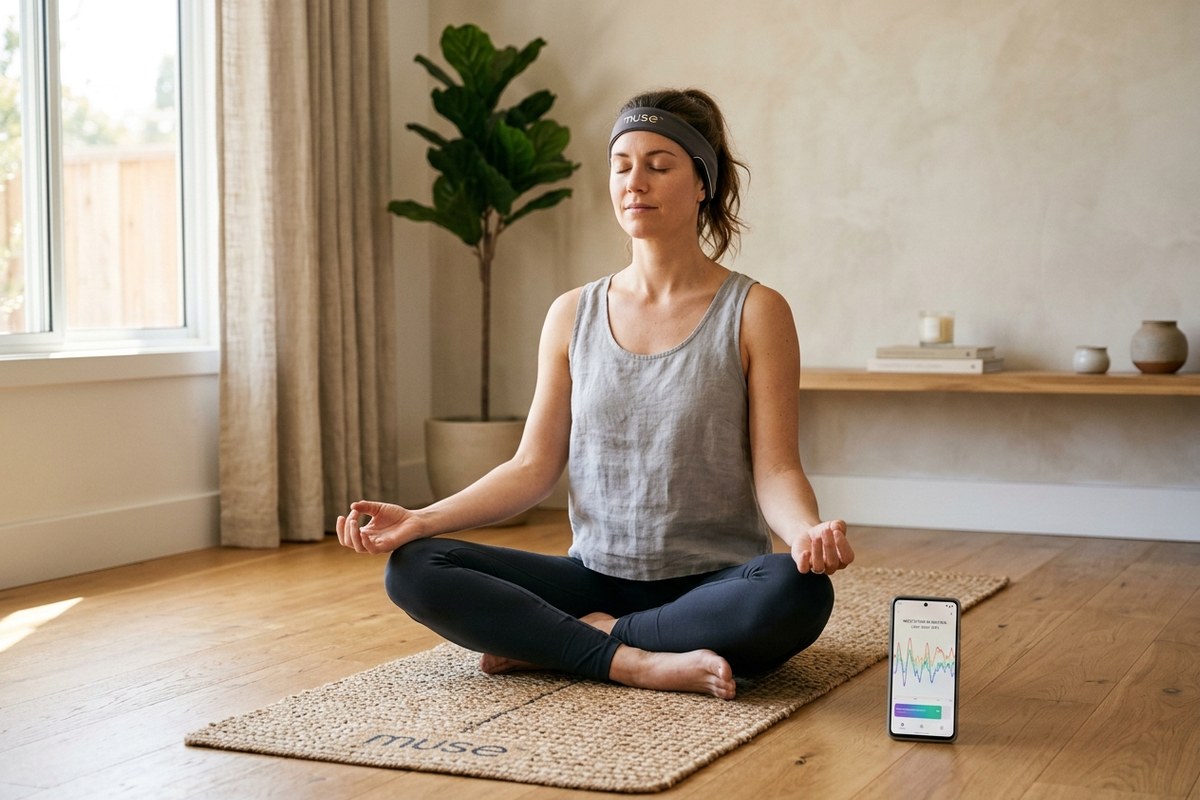
In Neuromancer (1984), William Gibson’s characters interface with the matrix through jacks implanted at the base of the skull — a direct neural connection that translates consciousness into data and data back into sensory experience. The technology is violent in its intimacy, and the genre of neural interface fiction it inaugurated has largely maintained that aesthetic: direct, surgical, consequential. The Muse S sits at the opposite end of that spectrum. It is a fabric headband with seven EEG sensors. You put it on your head. It measures electrical activity. It makes sounds at you during meditation. None of this involves surgery.
The lineage is real even if the distance is enormous. Gibson was describing a world in which brainwave activity could be read, processed, and acted upon in real time. The Muse S does this, within the constraints of consumer hardware, dry electrodes, and the current state of what EEG signals can tell you when processed by an algorithm calibrated to distinguish calm from active mental states. This is not the matrix. It is a useful biofeedback tool with a genuine EEG core and a metric — the Calm Score — that is doing more interpretive work than the underlying signal strictly supports.
What It Is
The Muse S has seven EEG sensors: four positioned across the forehead and three behind the ears via padded reference points. The headband is soft and flexible — designed for overnight sleep tracking as well as seated meditation, which distinguishes it from earlier Muse models that prioritised electrode contact over comfort and were less suited to horizontal use.
Two primary modes are offered. Meditation mode delivers real-time audio feedback — typically nature sounds that respond to measured brain activity, growing louder and more turbulent when mental activity is high, quieter as it settles. The system’s proprietary algorithm translates the EEG signal into a Calm Score, displayed in the companion app after each session with session-by-session trend tracking. Sleep mode tracks sleep stages using the EEG signal alongside movement data, producing a sleep report each morning. Battery life is approximately ten hours, with a full charge taking approximately two hours.
In Practice
The Calm Score deserves the direct statement that the app’s framing does not always supply: it is a proxy metric, not a clinical measurement. The underlying EEG signal is real — the Muse S is collecting genuine brainwave data from dry consumer electrodes, which is technically meaningful. What “calm” means in the context of that signal is the result of an algorithm trained on a dataset and validated against criteria that are not fully disclosed. The Calm Score tells you something about your measured brain activity relative to a baseline. It does not tell you what a clinical EEG would tell a neurologist, and it should not be used as if it does.
That said, the biofeedback loop is behaviorally useful. Users who meditate consistently with the Muse S report that the audio feedback — the shift from turbulent soundscape to settled calm — provides a real-time signal that interrupts mind-wandering and returns attention to the breath in a way that a timer does not. Whether the mechanism is strictly the EEG data or the behavioural structure the device imposes around meditation practice is difficult to disentangle, and possibly unimportant.
The thermal issue is worth a brief note. Under extended meditation sessions — thirty minutes or more — the headband becomes warm at the forehead sensors. Under sleep tracking overnight use, this is less noticeable because users are horizontal and the air around the forehead circulates differently. In seated use, it is the main physical discomfort, and in warm environments it registers before the session ends.
| EEG sensors | 7 (4 forehead, 3 behind ears) |
| Modes | Meditation, sleep tracking |
| Feedback | Real-time audio (meditation mode) |
| Battery | ~10 hours |
| Charge time | ~2 hours |
| Compatibility | iOS, Android |
| Weight | 66g |
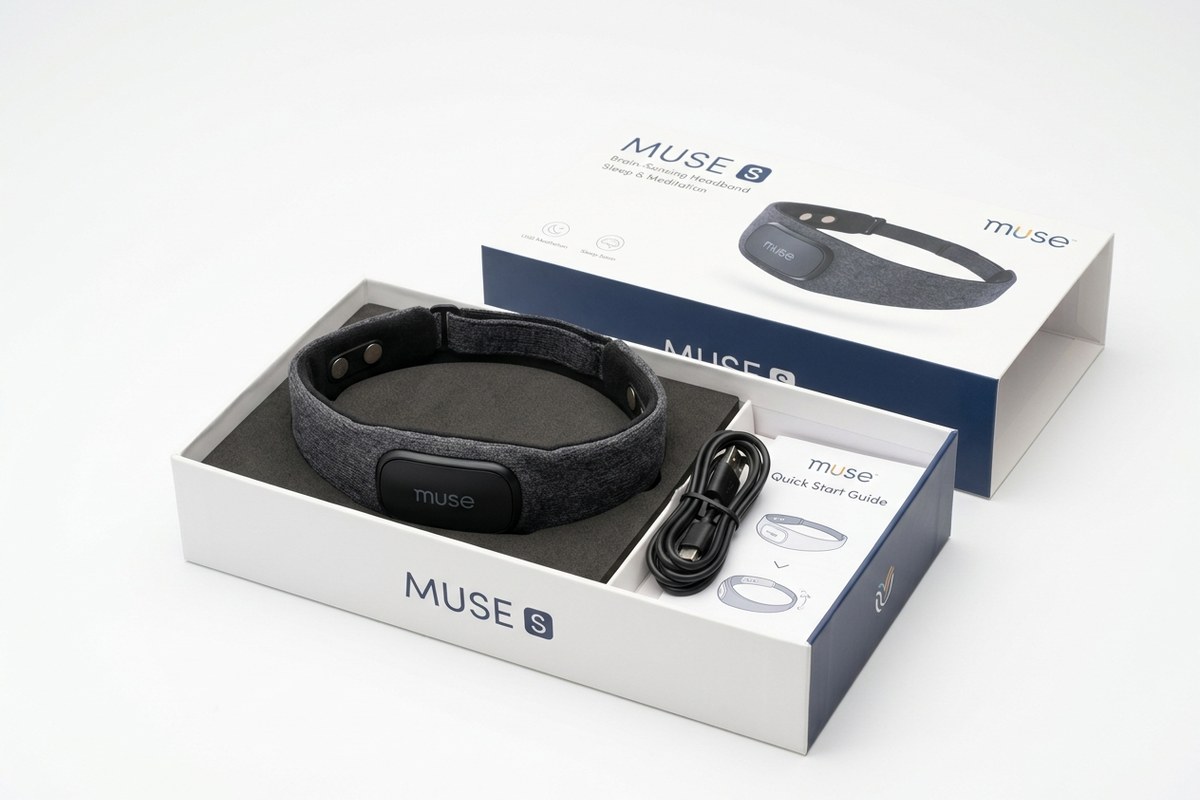
Available through Off-World Imports; the headband ships with a USB-C cable and access to the Muse meditation app, which is required for all functions.
- Legitimate EEG hardware, not a simulated measurement
- Biofeedback loop behaviorally useful for meditation practice
- Sleep tracking plausible with overnight comfort
- Soft design suitable for extended and overnight wear
- Not clinical grade
- Calm Score is a proxy metric, not a direct measurement
- Runs warm under extended meditation use
- All functions require the app, no standalone display
William Gibson’s neural interfaces did not produce Calm Scores. They produced sensory experiences indistinguishable from physical reality, withdrawal symptoms, and, in some cases, death. The Muse S produces a graph of recent meditation sessions and a gentle soundscape. The gap between those two outcomes is approximately forty years of consumer electronics development and several assumptions about what the market for brain-reading hardware actually wants. What it wants, it turns out, is not to be jacked into a global data network. It wants to meditate more consistently and sleep better. The Muse S addresses these wants directly, with hardware that is genuine and a metric that is approximate, at a price that is not.