Nike Adapt BB 2.0 Self-Lacing Sneakers
Self-lacing sneakers with app-controlled fit — the promise of 1989, delivered at last, with one significant caveat about charging.
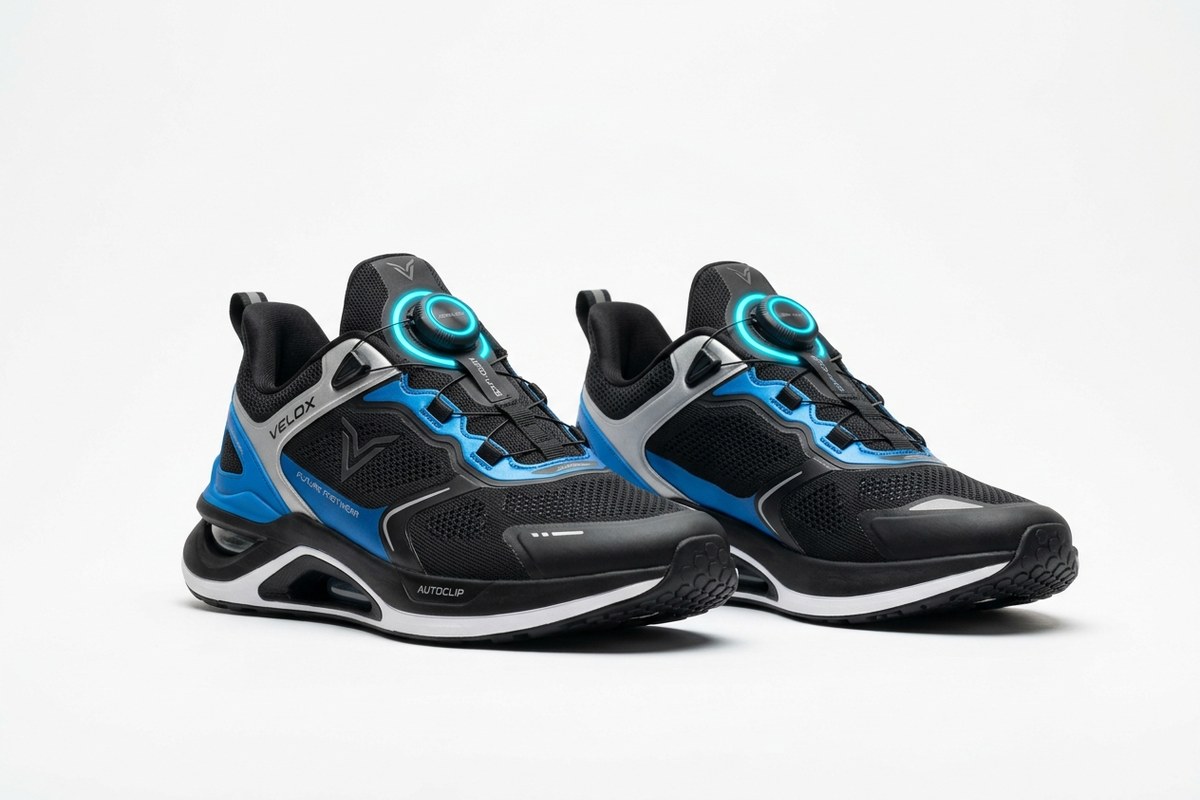
When Marty McFly pulled on a pair of self-lacing Nikes in Back to the Future Part II, the joke was that the technology felt simultaneously plausible and ridiculous — a small miracle nested inside a comedy about a time-traveling DeLorean. That was 1989. Nike eventually got around to building the actual shoe, which tells you something about the persistence of the idea, if not necessarily about its urgency.
The Adapt BB 2.0 is the second generation of Nike’s self-lacing platform, and it represents a meaningful improvement over the original Adapt BB released in 2019. The motor is quieter, the app is marginally more stable, and the shoe — in theory — knows when to tighten and when to ease off. In practice, the experience is mostly as promised. Mostly.
What It Is
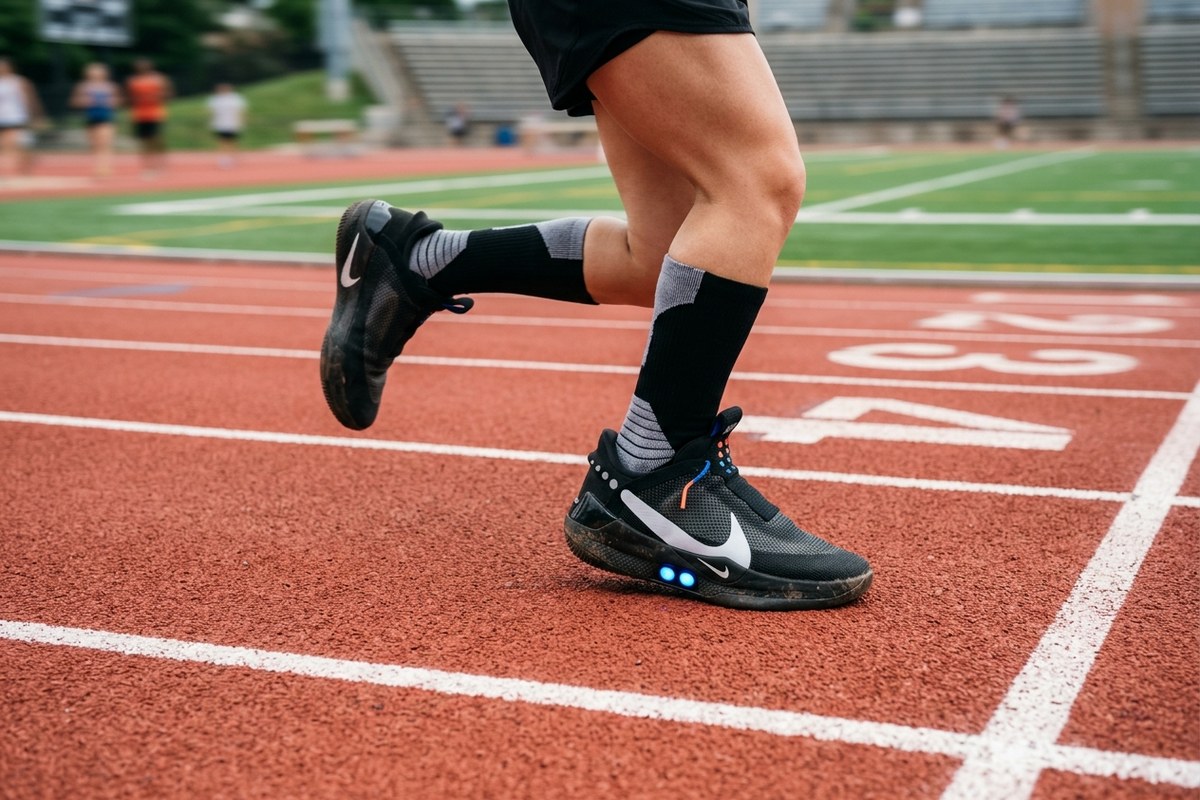
The Adapt BB 2.0 houses a small motorised cable system inside the midsole. When you step in, pressure sensors trigger the motor to tension the cables, drawing the shoe snug around your foot. The Nike Adapt app — available on iOS and Android — lets you fine-tune that tension, save fit profiles for different activities, and adjust on the fly without bending down. A physical button on the side of the shoe provides manual override if you prefer to operate without a phone, or if your phone battery has outlasted your shoe battery, which is a sentence that deserves a moment to sit with.
The fit, when it works, is genuinely good. The cable system distributes tension across the upper more evenly than a conventional lace, and the ability to save a “game mode” versus “walking around” profile is more useful than it sounds. Athletes who rotate between different tension levels during warmups will find actual value here.
In Practice
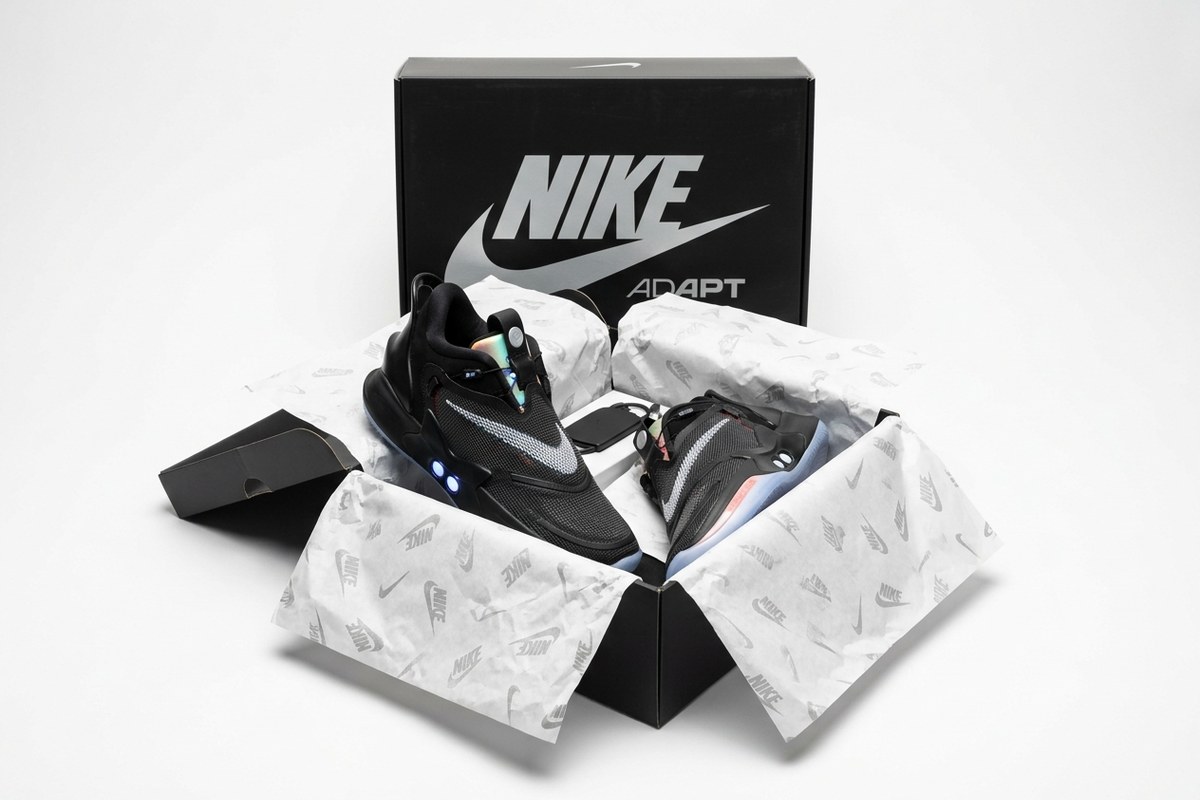
The self-lacing mechanism performs reliably under normal conditions — indoors, moderate temperatures, app connected. The friction point arrives when conditions deviate from that baseline. Cold weather degrades the battery faster than the documentation implies; in temperatures below 5°C, expect substantially fewer cycles than the rated ten. The proprietary inductive charging pad — a flat oval that the shoe sits on — is functional but fragile in a way that an accessory carrying a US$60 replacement cost has no right to be.
The more persistent irritant is firmware. The Adapt BB 2.0 updates its firmware via the app, which sounds reasonable until the update interrupts you mid-session, bricks the Bluetooth pairing, and requires twenty-five minutes of re-pairing to restore. This happened once during testing. It will happen again. Nike has not made firmware updates optional, which is a product decision that warrants more scrutiny than it typically receives.
Android users face additional friction. The app works, but synchronisation between shoe and handset is noticeably less consistent than on iOS — occasional drops, occasional delays, a general sense that Android was not the primary development target. Nike does not say this. The behaviour suggests it.
| Lacing system | Self-tensioning cable motor |
| App | Nike Adapt (iOS/Android) |
| Battery | ~10 charges per full cycle |
| Charging | Proprietary inductive pad |
| Weight | 390g (US 10) |
| Sizes | US 7–15 |
Available through Tannhäuser Supply Co. with standard shipping, though the charging pad ships separately and is easy to omit from the cart by accident.
- App-controlled fit profiles useful for different activities
- Physical button backup removes phone dependency
- Self-lacing mechanism reliable under standard conditions
- Battery depletes faster than advertised in cold weather
- Proprietary charging pad is a single-point failure
- Firmware updates are involuntary and occasionally disruptive
- Android app synchronisation inconsistent
- Price difficult to justify on shoe performance alone
The Adapt BB 2.0 is a working product, which is a higher bar than it sounds given the provenance. The self-lacing works. The fit system provides real utility for the intended use case. The problems — the cold-weather battery, the forced firmware updates, the charging pad’s fragility — are not fatal, but they are the kinds of problems that compound over months of ownership. At US$350, you are paying a premium for the technology. The technology is real. It is also, at this price point and with these maintenance demands, a shoe that requires more patience than a shoe should.
If you need a reason to buy it, the physical button is a thoughtful concession to practicality. If you need a reason to pause, the charging pad is right there.