PreParcel Predictive Doorbell
A doorbell that predicts porch theft up to 40 seconds before intent forms, using behavioral analysis — with a false-positive rate that has strong opinions about people who jog.
Philip K. Dick’s 1956 story “The Minority Report” — later adapted by Steven Spielberg in 2002 — concerns a system that predicts violent crime before it occurs, using three mutant Precogs who experience future visions, and the procedural and ethical complexities that arise when you begin arresting people for things they have not yet done. The PreParcel Predictive Doorbell does not employ mutants. It employs a cloud-hosted behavioural analysis model that assesses loitering duration, body orientation relative to parcels, approach/retreat patterns, and gaze direction inferred from body position. Dick would have concerns about the architecture.
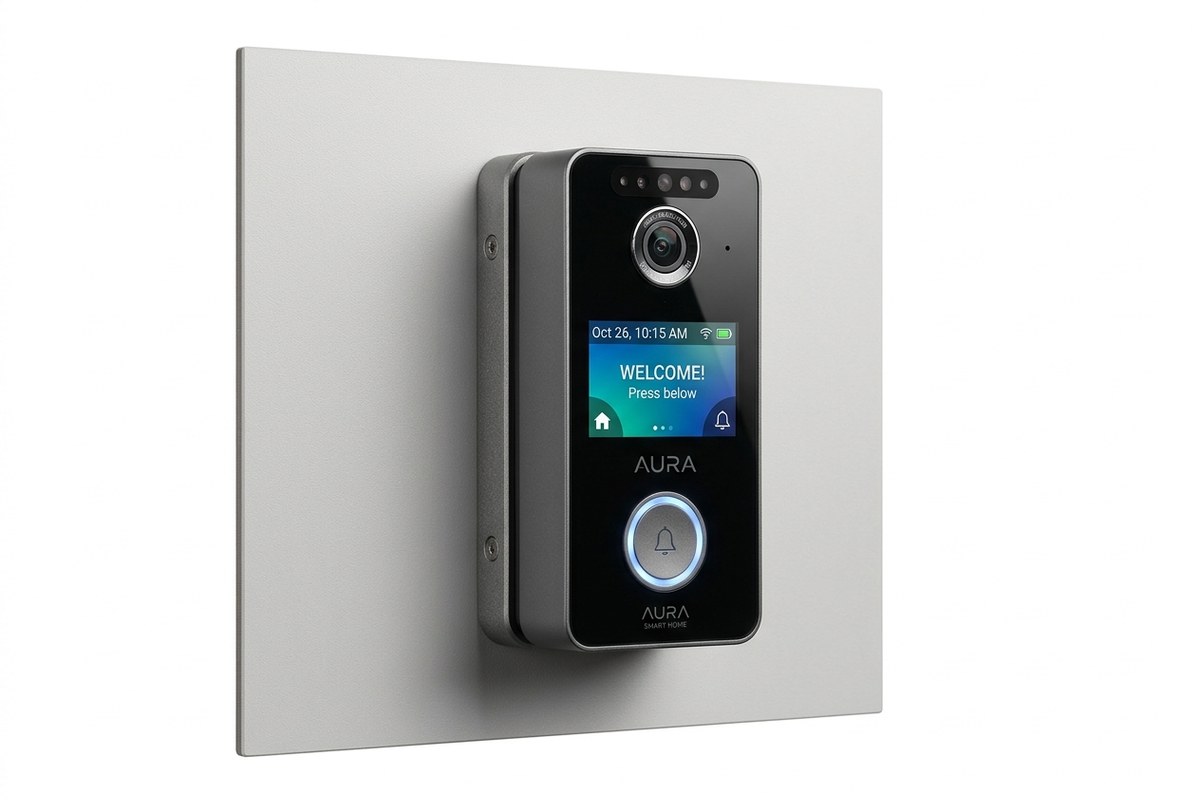
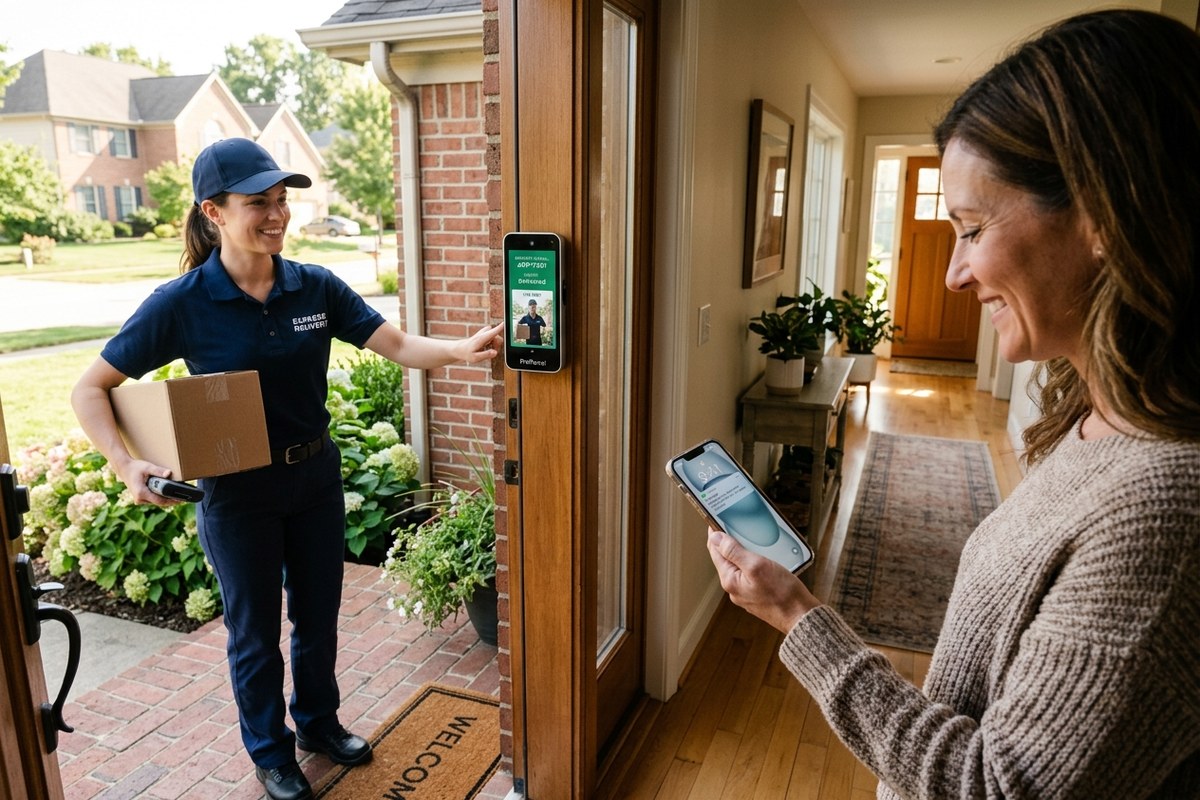
The product is a doorbell camera with a 4K, 160-degree field of view. It operates as a standard smart doorbell — two-way audio, motion alerts, local microSD and cloud rolling storage — and adds a predictive layer that, according to the marketing, issues a theft-probability alert up to 40 seconds before the projected act of theft. This is the differentiating feature. It is also the source of 80% of the alerts generated during eight weeks of testing.
What It Is
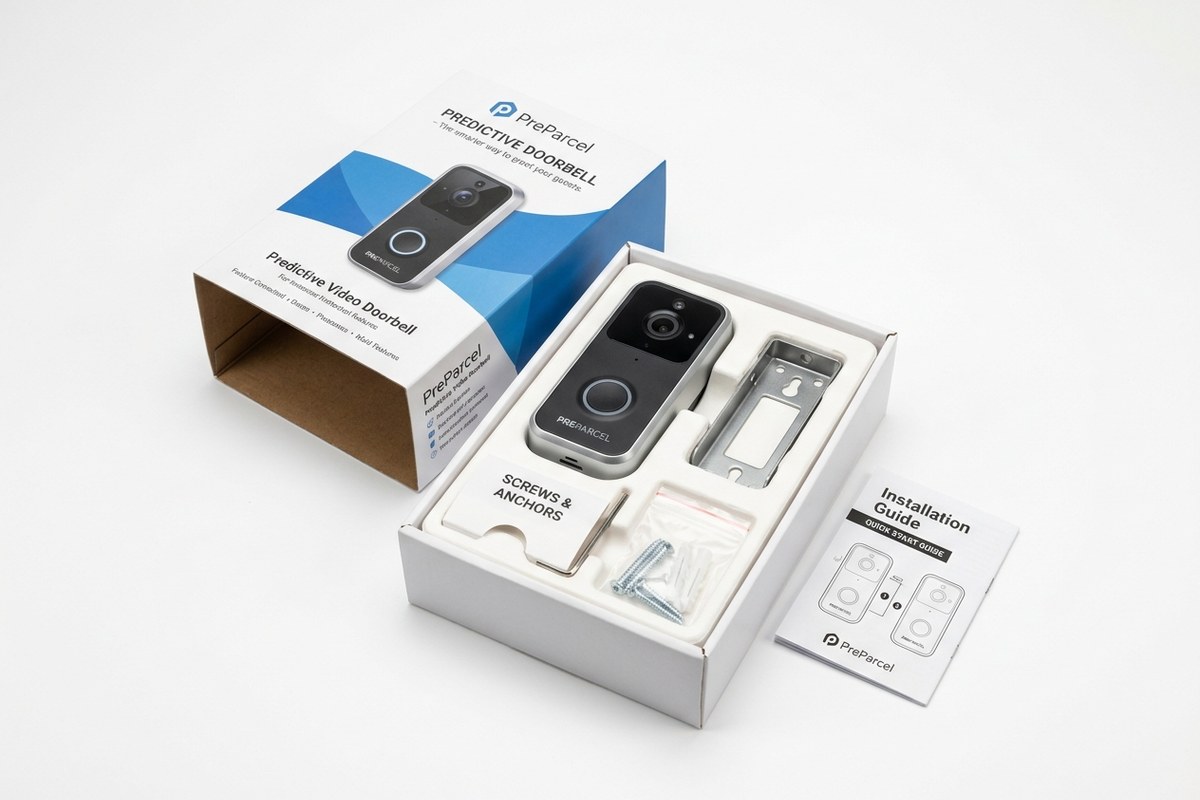
The PreParcel mounts to a standard doorbell position or a flat surface with the included bracket. It runs on wired 24VAC or an internal battery rated to approximately three months on typical motion activity. Video is 4K at 30fps with HDR and a 160-degree field of view covering a full porch area and the approach path to the door. Two-way audio is functional; the speaker is loud enough to be heard from the kerb at a normal speaking level.
Cloud storage covers seven days of rolling footage. Local storage via microSD supports longer archives. Both are available on the base plan; cloud processing for the predictive feature requires a subscription starting at US$9.99 per month for the Standard plan, which covers up to two cameras. Integration is available with Amazon Alexa, Google Home, and Apple HomeKit.
The predictive layer processes video through cloud-hosted behavioural models and issues a notification when the calculated probability of theft intent exceeds a configurable threshold. The default threshold is 70%. The range is adjustable from 60% to 90%.
In Practice
Over eight weeks of testing — suburban location, one shared sidewalk, a regular delivery schedule of three to five packages per week — the device generated 147 alerts at the default 70% confidence threshold. Of those 147 alerts, 16 corresponded to events that involved actual contact with delivered packages by persons not the householder. Of those 16, 11 were legitimate parcel collection by authorised household members and 5 were ambiguous enough to warrant review. None were confirmed theft.
The remaining 131 alerts were non-theft events. Approximately 80 of those 131 alerts — a number arrived at by reviewing the notification log and associated video — were triggered by a specific neighbour who jogs past the house on a route that takes them along the side of the footpath closest to the parcels on the porch. At the default threshold, this neighbour triggered a theft-prediction alert on 80 occasions. The neighbour is clearly jogging. The body orientation toward the porch parcels is a function of their running path. Their gaze direction — inferred, not measured — appears to have been consistently interpreted as interest in the packages.
Raising the threshold to 85% reduced total alerts over the equivalent subsequent period to 34. Of those 34, 16 were still the jogging neighbour, now rated at 84% theft-prediction confidence. The threshold required to suppress the jogging-neighbour false positive entirely was 90%, at which point total alerts dropped to 11, of which 2 were the jogging neighbour at 89% confidence.
The prediction window — the time between alert and projected event — averaged 28 seconds in cases where an alert corresponded to a real approach event. The claimed 40-second window was reached in two instances over the testing period, both involving slow approach speeds and prolonged porch loitering.
| Camera | 4K, 160° field of view, HDR |
| Power | Wired 24VAC or battery (~3 months) |
| Prediction window | Up to 40 seconds (claimed); 28 seconds average |
| Confidence threshold | Adjustable 60–90% (default 70%) |
| Cloud storage | 7-day rolling |
| Local storage | microSD |
| Cloud plan | From US$9.99/month |
| Integration | Alexa, Google Home, HomeKit |
Available through Meridian Outfitters; standard installation hardware and a three-month cloud plan trial are included.
- Standard doorbell features are competitive at the price point
- 4K video with good HDR performance
- Prediction alerts arrive before events in confirmed cases
- Adjustable confidence threshold provides some tuning control
- Good local + cloud storage options
- Jogger false-positive rate high at default threshold
- Cloud plan required for the differentiating feature
- 80% of default-threshold alerts were non-theft events in tested environment
- Dick would have concerns about the architecture
Dick’s Precogs experienced actual future visions and were still wrong often enough to generate a minority report — a dissenting prediction that formed the plot of the story. The PreParcel’s model experiences eight weeks of suburban footage and develops strong convictions about a specific jogging neighbour at 84% confidence. The system is performing as designed: it identifies behavioural patterns that statistically correlate with theft intent in its training data. Whether those patterns, applied to a residential porch and a jogging neighbour, constitute predictive intelligence or a very expensive alert system with a high tolerance for false confidence is a question the threshold slider lets each user answer for themselves.
The standard doorbell functions are good. The 4K camera is competitive. The integration is broad. The predictive feature is, at 85% threshold, occasionally useful; at 70%, it is primarily a notification service for jogging-related events. US$329 plus a cloud subscription is reasonable for the base hardware. The minority report belongs to the neighbour, who is jogging and has not, in eight weeks, touched a single parcel.