RePoly Screen Serum
A self-healing polymer coating for phone screens that closes micro-scratches overnight — slower than the T-1000 and notably non-threatening.
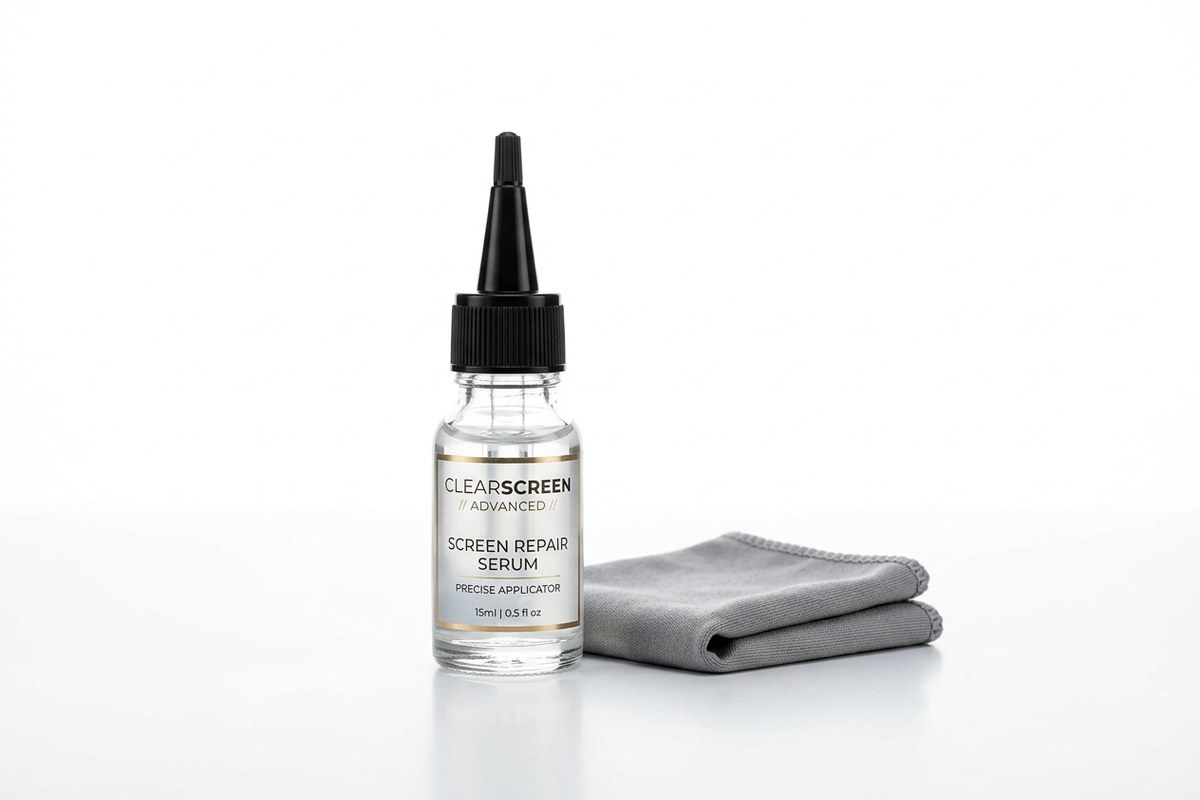
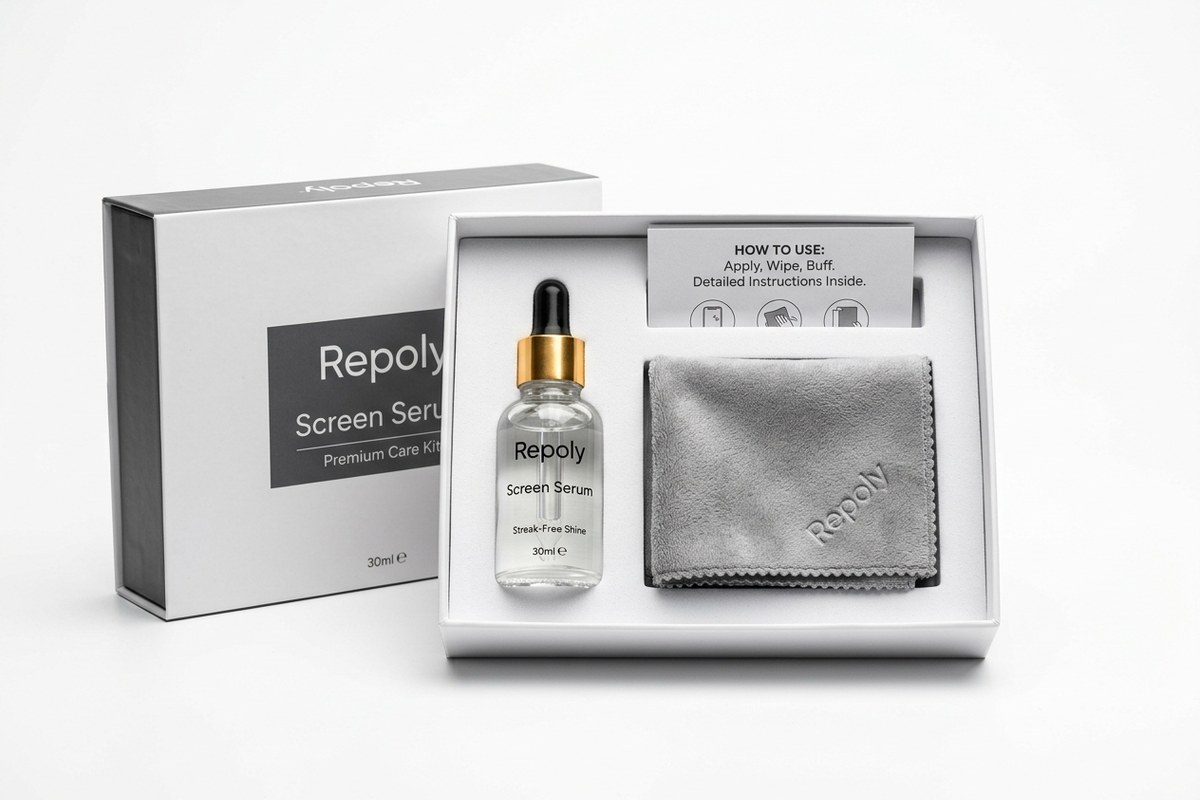
The T-1000 in Terminator 2: Judgment Day (1991) is made of liquid metal and recovers from gunshot wounds, freezing, and partial detonation in a matter of seconds. Its self-healing mechanism is immediate, autonomous, and total: the material flows back into place without prompting, without delay, and without leaving evidence of the prior damage. The RePoly Screen Serum takes the self-healing polymer concept and applies it to phone screens, with a 6–8 hour healing window, a 50-micrometre depth limit, and a 24-hour initial cure time. Recovery is neither immediate, autonomous in the T-1000 sense, nor total. It is, however, real, and at US$39 per vial it costs significantly less than a new phone screen and considerably less than a liquid metal assassin.
The comparison to the T-1000 appears in the product marketing as “inspired by the self-healing materials of science fiction.” This is accurate in the same sense that all self-healing polymer research is inspired by the concept of materials that repair themselves. The T-1000’s recovery was immediate and based on unclear physics. RePoly’s recovery is thermally driven thermoplastic polyurethane responding to ambient temperature, and the physics are well-established.
What It Is
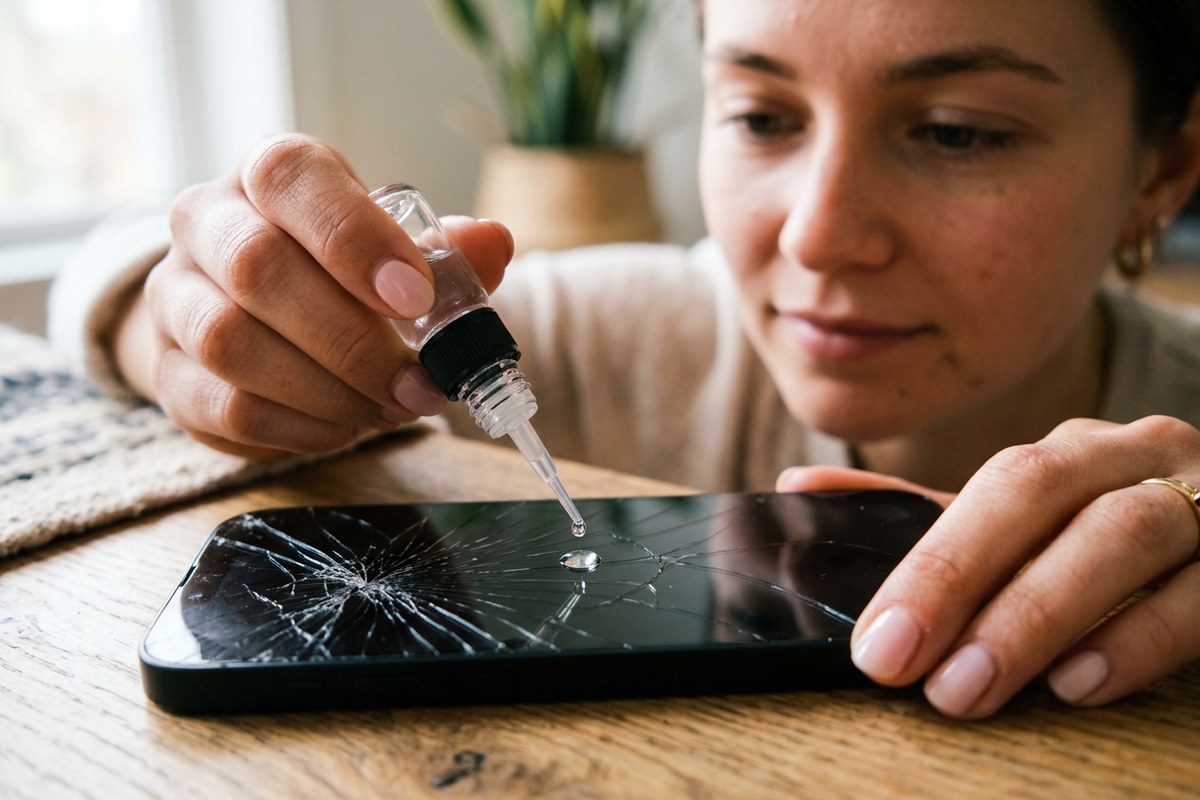
RePoly Screen Serum is a thermoplastic polyurethane coating applied in liquid form to a phone screen. The coating bonds to glass and polycarbonate surfaces during the 24-hour initial cure period and thereafter functions as a sacrificial layer sitting above the screen surface. When the coating sustains a scratch within its operational depth — up to approximately 50 micrometres — the thermoplastic polyurethane’s molecular structure, at room temperature, gradually realigns and closes the scratch channel over 6–8 hours. The scratch is addressed in the coating, not in the screen beneath.
One vial covers two to three phone screens depending on screen size. The coating lasts approximately 3–4 months before the healing capacity diminishes through repeated use and material fatigue, at which point reapplication is required. Application is performed with the included lint-free cloth in a wipe-on process that takes approximately three minutes per device.
The serum is compatible with glass and polycarbonate screens. It is not compatible with matte anti-glare coatings, which it will alter.
In Practice
The healing mechanism works for scratches within the depth specification. Fine scratches from pocket lint, fabric, and light surface contact — the category of wear that accumulates on a screen over weeks of normal use — are addressed consistently overnight at room temperature. A screen with a week’s worth of light surface scratches, treated and left overnight, shows meaningful reduction in scratch visibility the following morning. This is the product’s primary use case and it performs well within it.
The 50-micrometre depth limit excludes scratches from keys, concrete, and metal surfaces, which consistently penetrate beyond the coating layer. A key scratch typically runs 100–200 micrometres in depth; the RePoly coating addresses its own surface layer above the key scratch but does not reach the underlying screen damage. Testing a screen with a key scratch and applying RePoly produced a result where the coating layer smoothed over the scratch’s edges, marginally reducing visual prominence, but did not close or remove the scratch. This is accurate to the specification: the serum addresses the coating layer, not the screen beneath it.
The product also does not address scratches that pre-exist the initial application — the coating can only heal damage sustained to itself after cure. Applying RePoly to a scratched screen does not retroactively remove existing scratches; it provides a healing surface for future damage at the coating layer. The marketing copy on this point is accurate, though it is presented in the second paragraph rather than the first.
The T-1000 did not have reapplication intervals. This is noted.
| Material | Thermoplastic polyurethane (TPU) |
| Healing depth | Up to ~50 micrometres |
| Healing time | 6–8 hours |
| Initial cure | 24 hours |
| Coverage | 2–3 phone screens per vial |
| Durability | 3–4 months per application |
| Compatibility | Glass, polycarbonate screens |
| Incompatible with | Matte / anti-glare coatings |
Available through Off-World Imports; vials are sold individually and in three-packs at a modest volume discount. The lint-free applicator cloth is included.
- Self-healing mechanism works within specified parameters
- Honest about depth limitations in the specification table
- Affordable for ongoing screen protection
- Simple three-minute application
- Does not address pre-existing scratches
- 50-micrometre depth limit excludes key and concrete damage
- Requires reapplication every 3–4 months
- T-1000 did not have reapplication intervals
The RePoly Screen Serum occupies a reasonable position in the market for screen protection products. It does something other screen protectors do not: it actively repairs light surface damage rather than simply adding a sacrificial layer that does not recover. Within the 50-micrometre window, it performs as described. Outside that window — the key in your pocket, the phone face-down on pavement — the coating does not help, and neither does the marketing’s T-1000 framing.
At US$39 per vial covering two to three screens for 3–4 months, the cost is modest. The expectation management required is also modest: this is a coating that heals light scratches overnight, not a liquid metal recovery system. The distinction matters primarily to people who approach a US$39 product expecting T-1000 performance, which is a category of expectation the marketing has worked to cultivate and the specification table has worked, with somewhat less emphasis, to correct.