Somnigraph S1 Dream Recorder
An EEG headband that reconstructs low-resolution visual 'dream stills' from REM sleep brainwave data — reviewable each morning in the companion app.
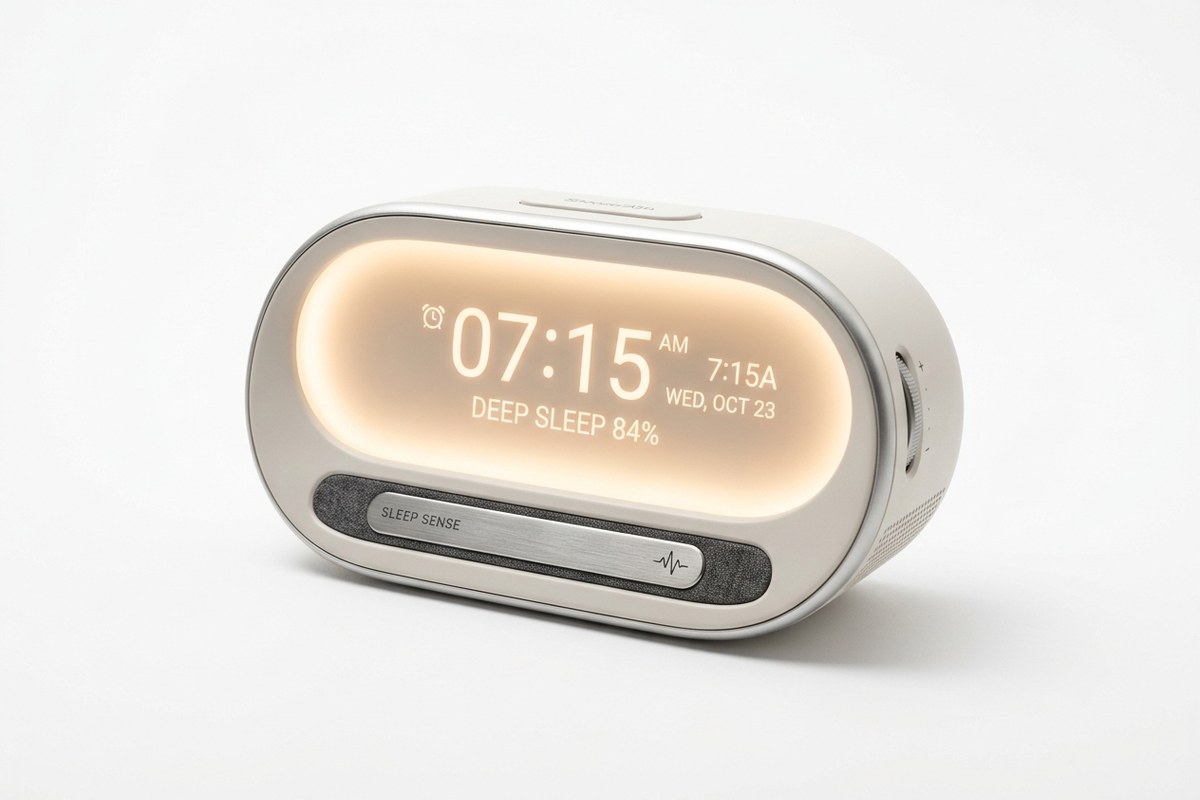
In Wim Wenders’ Until the End of the World (1991), a scientist develops a device that records visual neural signals — first for a blind woman to experience sight, then repurposed so that the characters can record and watch their own dreams. The second use proves to be the problem. The characters become addicted to their own dream recordings, unable to function in waking life, retreating entirely into a loop of self-referential subconscious footage. Wenders presents this as a cautionary tale about technology, solipsism, and the seductive quality of one’s own inner life when it becomes a watchable product. The Somnigraph S1 is aware of this precedent in the same way that a product named after a dystopian film is aware of its literary context: fully, and without apparent concern.
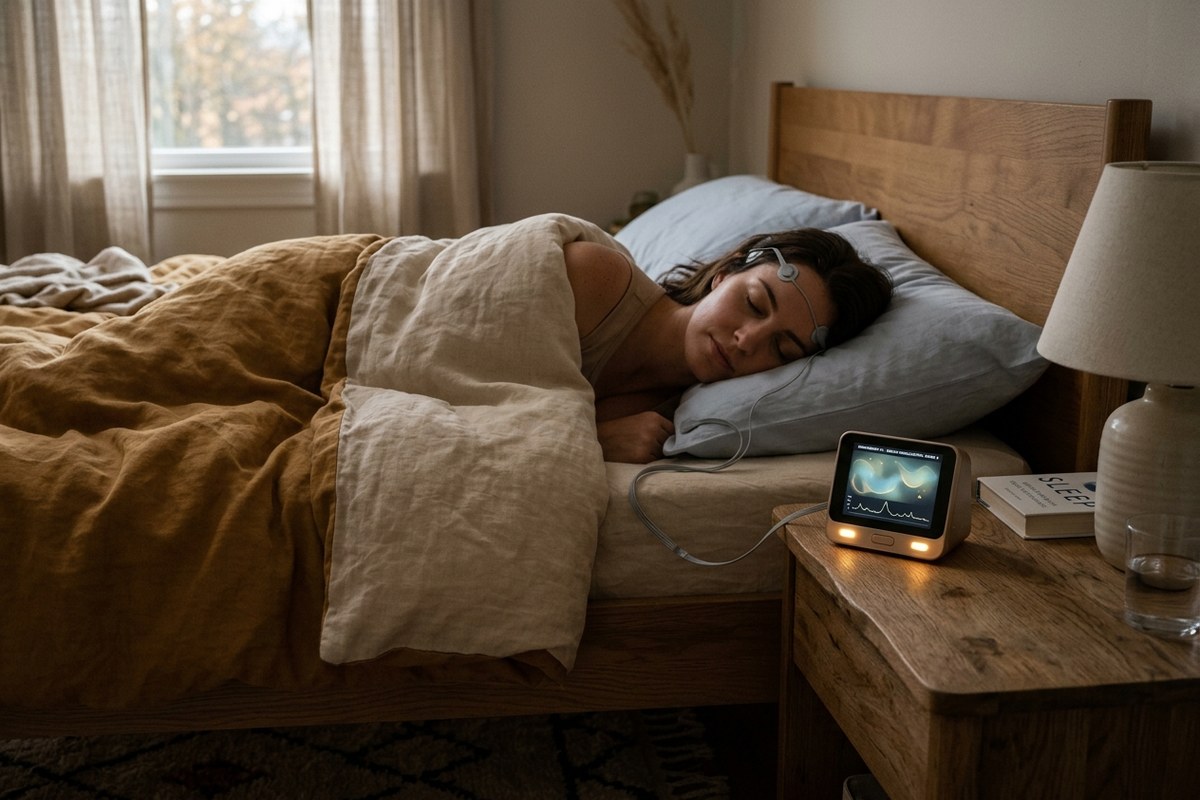
The S1 is an EEG headband that detects REM sleep and, during those periods, uses the recorded brainwave data to reconstruct low-resolution visual stills. These stills — four to ten per night, on average — are generated by cloud processing through the companion app and available each morning for review. The resolution is 240 by 160 pixels as of firmware 2.4. Wenders warned us.
What It Is
The S1 uses seven dry EEG electrodes positioned across the forehead and temporal regions via a soft overnight headband. Automatic REM detection identifies the relevant sleep phases and captures brainwave data during those windows. The data is transmitted to Somnigraph’s cloud servers, where processing converts the electrical signal into visual reconstructions using a neural network trained on a dataset of EEG recordings paired with self-reported dream imagery. The reconstructed stills are rendered at 240×160 pixels and stored in the companion app as a browsable archive.
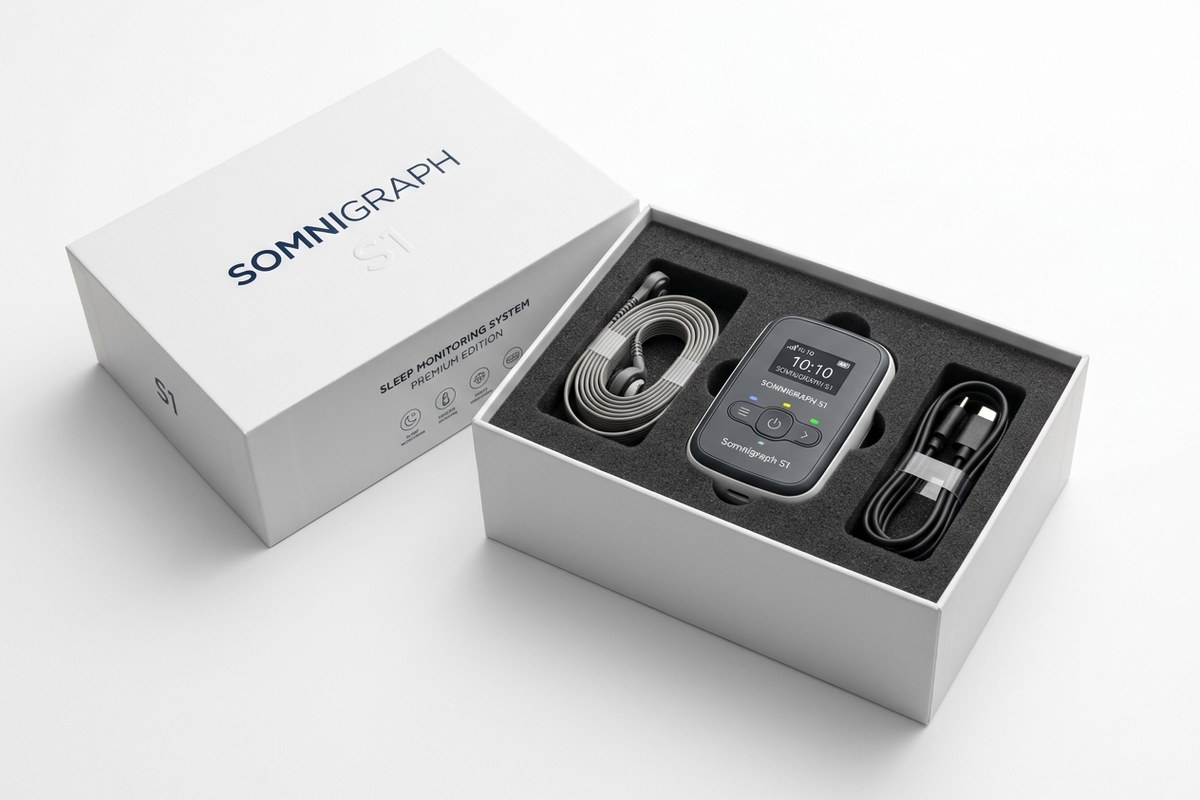
The subscription at US$9 per month covers cloud processing and storage. Archive export is included — a JPEG batch download is available, which means the dream record is not permanently dependent on the subscription’s continuation. The headband itself is sold at US$549, and the subscription is required for the cloud processing that produces the stills; without it, the device functions only as a basic sleep tracker.
Battery life is twelve hours, sufficient for a full night’s sleep with margin. The headband is soft enough for overnight wear on most sleeping positions.
In Practice
The resolution limitation is the most significant functional constraint, and it is worth dwelling on. At 240×160 pixels, the stills are impressionistic rather than representational. Shapes are present; features are not. Colour is present; detail is not. The experience of reviewing a set of dream stills each morning is closer to looking at a blurred watercolour of something vaguely familiar than it is to watching footage of your own mind.
The correspondence question is separate from the resolution question. Internal testing and independent reviews broadly agree that approximately 40% of stills have unclear correspondence to any recalled dream content from the night in question. This is a failure rate that the company’s documentation describes as “reconstruction confidence variance” and that users describe as opening the morning gallery and occasionally finding a grey-green smear with no obvious relationship to anything they can remember experiencing. The remaining 60% ranges from plausibly recognisable to strikingly accurate, depending on the night and the user.
The Wenders problem — the addictive quality of one’s own recorded dreams — has not, in practice, manifested as a widespread user complaint. The 240p resolution is a reasonable prophylactic against excessive self-absorption. It is difficult to lose yourself in footage that resembles a very old CCTV still of something underwater.
| EEG electrodes | 7 dry |
| REM detection | Automatic |
| Reconstruction resolution | 240×160px (firmware 2.4) |
| Stills per night | 4–10 average |
| Battery | 12 hours |
| Compatibility | iOS, Android |
| Subscription | US$9/month (cloud processing + storage) |
| Archive export | Yes (JPEG batch) |
Available through Kessel & Sons Logistics; the device ships with a USB-C charging cable and a one-month trial subscription.
- Core function works — produces visual output from EEG data
- Comfortable enough for overnight wear
- Archive exportable without loss of data if subscription lapses
- Regular firmware updates have improved reconstruction accuracy
- 240p resolution significantly limits interpretive value
- ~40% of stills have unclear correspondence to recalled dream content
- Subscription required for cloud processing
- Wenders warned us
The Somnigraph S1 exists in the space between two questions: whether dream content can be extracted from EEG signals at all, and whether extracted content at 240×160 pixels is worth the extraction. The first question has a qualified yes as its answer, qualified by the 40% non-correspondence figure and the lossy nature of the reconstruction model. The second question is answered differently by different users, and the answer appears to correlate with whether the user’s dreams are interesting enough at 240p to warrant the subscription.
Wim Wenders’ characters found their dream recordings irresistible and it destroyed them. The S1’s users find their dream stills mildly interesting and check them most mornings before coffee. The resolution, it turns out, makes a significant difference to the scale of the existential problem involved.