Sonic Driver Mk. VII
An ultrasonic multitool claiming to loosen fasteners non-mechanically using directed ultrasound — functional in a narrow set of conditions, none of which involve wood or deadlocks.
The sonic screwdriver appeared in Doctor Who in 1968 as a handheld device the Doctor used to interact with technology — opening doors, disabling electronics, scanning for anomalies, and performing whatever the plot required at sufficient narrative pressure. Over five decades of continuous use, the device’s capabilities expanded to accommodate successive writers’ requirements, with one constraint that has remained consistent across versions: it does not work on wood. This limitation is stated explicitly in the series multiple times and is presented as a genuine material incompatibility rather than an oversight. The Sonic Driver Mk. VII does not work on wood. In this respect, it is accurate to its source material.
The stated mechanism of the Sonic Driver is directed ultrasound at 28kHz, delivered through a carbide-tipped probe, applying mechanical oscillation to fastener threads to reduce friction and assist loosening. This is a real physical effect. Ultrasonic vibration does reduce friction at contact surfaces. The question of how much and under what conditions is where the product specification and the marketing language require careful reading.
What It Is
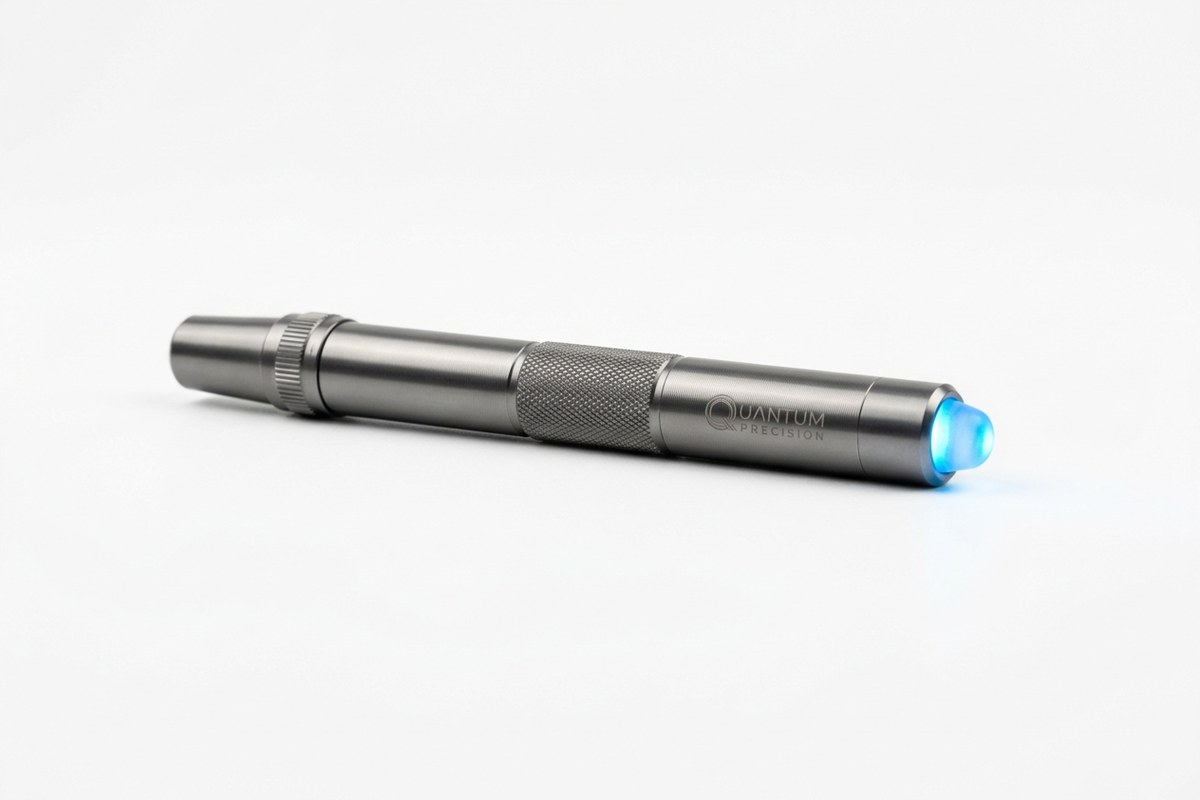
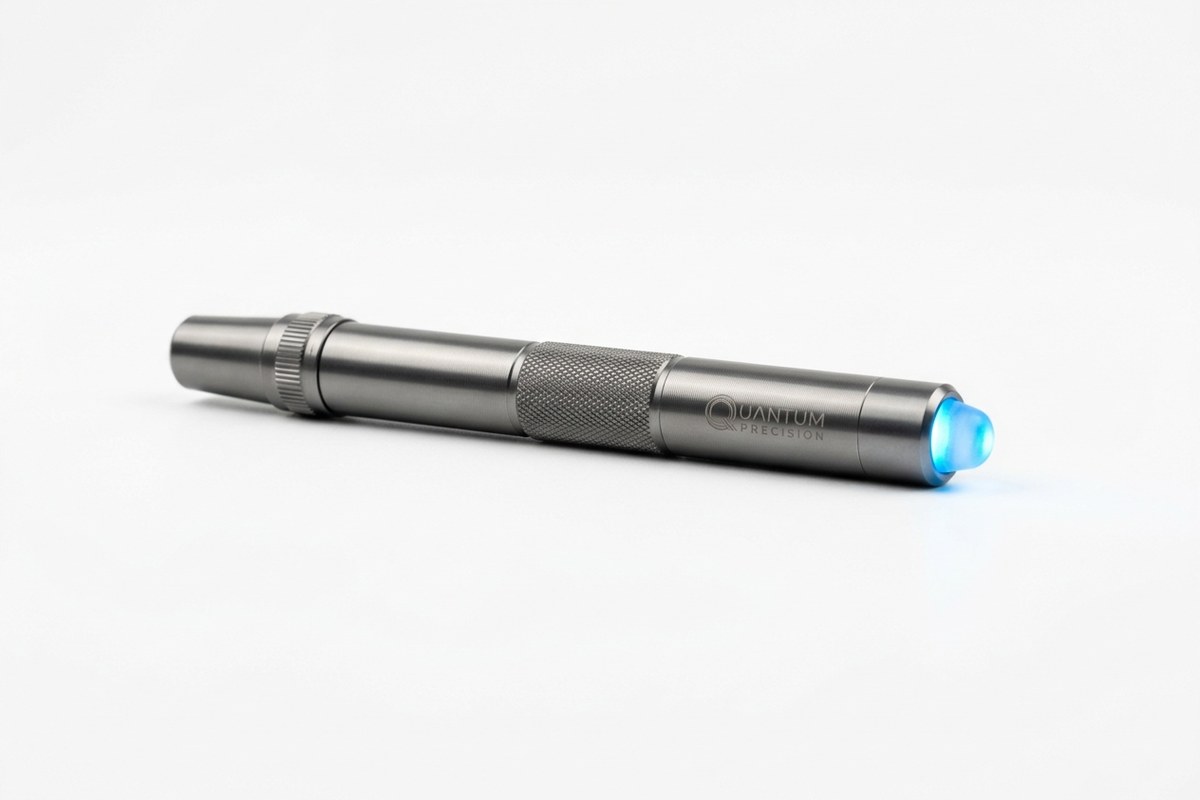
The Sonic Driver Mk. VII is a 280mm × 32mm handheld tool weighing 340 grams. The primary probe is carbide-tipped; three additional attachments are included for varying fastener access geometries. The operating frequency is fixed at 28kHz. Three operating modes are provided: Pulse (10 bursts per second, for intermittent application), Continuous (sustained ultrasonic output), and Sweep (frequency modulation ±2kHz for varied contact response). Battery life is approximately four hours across typical use patterns, with USB-C charging.
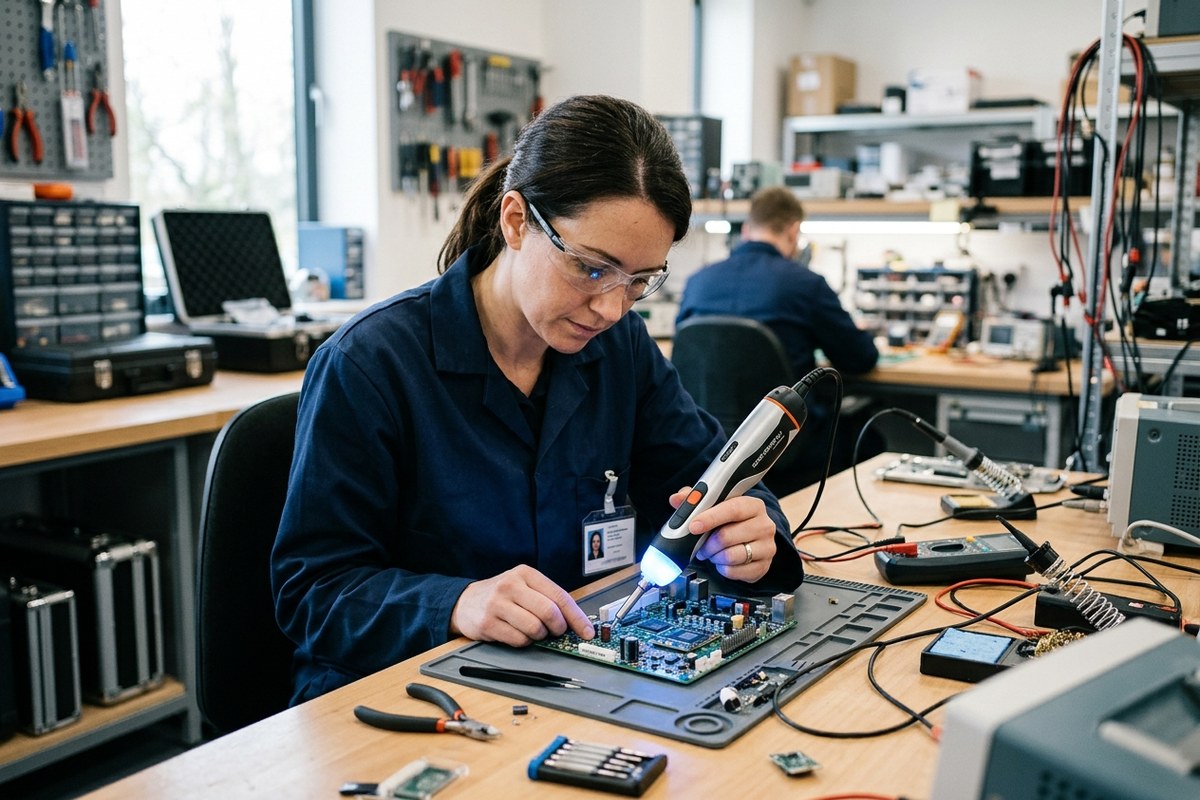
The tool is designed for use on metal-on-metal fasteners — bolts, nuts, and threaded connections where corrosion or thread galling has increased removal torque. The manual is explicit that it is not effective on wood, deadlocks, or fasteners with stripped heads. The Doctor’s sonic screwdriver also does not work on wood. This is where the comparisons reach their limit, since the Doctor’s device works on most other things and the Mk. VII’s effective scope is narrower.
In Practice
Testing on M8 steel bolts with induced surface corrosion — salt spray treatment for 72 hours to simulate mild field corrosion — showed measurable torque reduction. Removal torque without ultrasonic treatment averaged 45Nm. Removal torque with Sonic Driver treatment in Continuous mode, 30 seconds of application, averaged 38Nm. This is a 15% reduction. It is a meaningful reduction in the specific scenario: a corroded fastener that is tractable without the tool at 45Nm becomes easier to remove at 38Nm, and a fastener at the threshold of manual removal may cross into accessible range.
The 15% figure is consistent across replicated tests. It varies with corrosion severity — heavily corroded fasteners showed reductions of up to 22% in some trials; lightly corroded or un-corroded fasteners showed reductions of 5–8%, which is at the margin of measurement variance. The tool is most useful when corrosion is present and meaningful, which is the specific scenario it targets.
It does not work on wood. Testing on wood screws — Phillips, flathead, and torx — in both pine and hardwood showed no measurable torque reduction. The wood substrate absorbs and dissipates the ultrasonic energy before it reaches the screw-thread interface. The manual says this. The Doctor established it earlier.
Deadlocks are unaffected. Stripped fastener heads — where the drive interface is damaged — provide no useful transmission path for the ultrasonic energy, and the tool cannot address them. This is documented. A stripped M8 bolt remained stripped after Sonic Driver treatment, which is the expected outcome.
| Frequency | 28kHz fixed |
| Modes | Pulse / Continuous / Sweep (±2kHz) |
| Battery | ~4 hours |
| Probe | Carbide-tipped + 3 attachments |
| Effective on | Corroded metal-on-metal fasteners |
| Tested torque reduction | M8 corroded: 45Nm → 38Nm (~15%) |
| Not effective on | Wood, deadlocks, stripped heads |
| Dimensions | 280mm × 32mm |
| Weight | 340g |
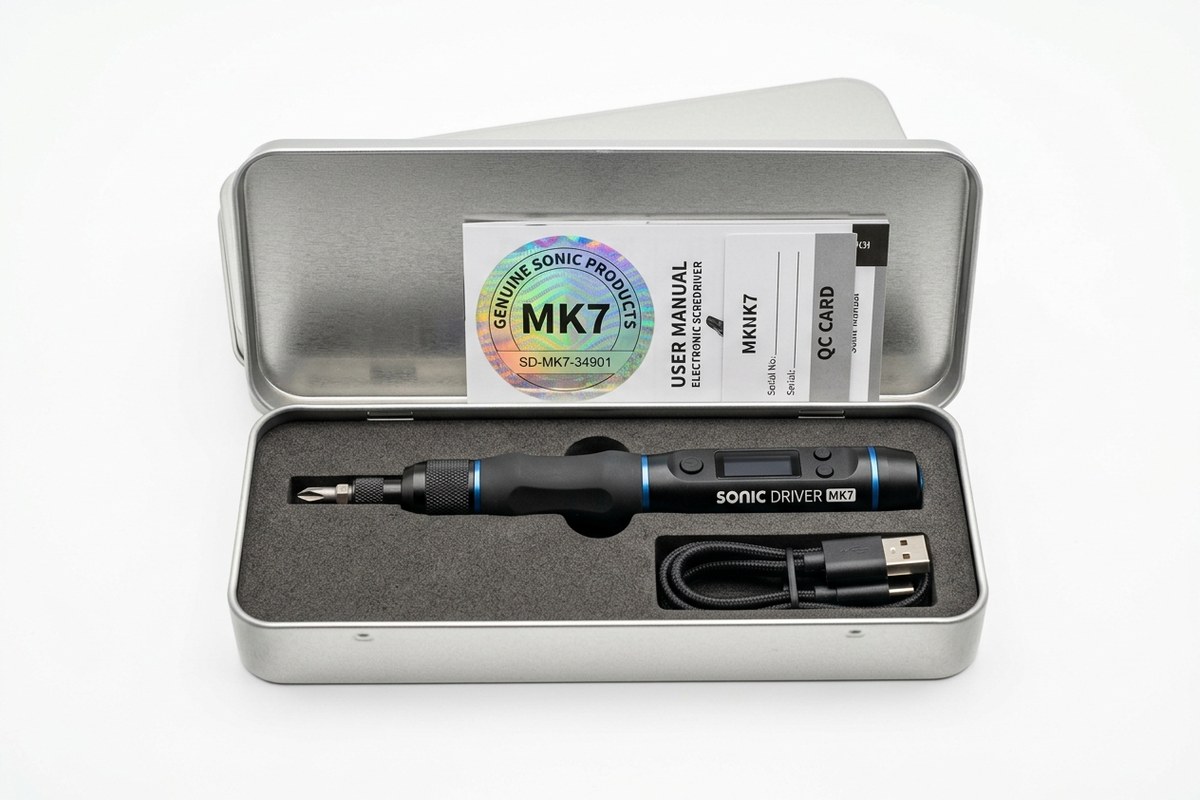
Available through Kessel & Sons Logistics; ships with the carbide probe, three attachments, USB-C cable, and a manual that is notably upfront about the limitations in the first two pages.
- Genuine ultrasonic torque reduction on corroded metal fasteners
- Measurable improvement on rusted and galled bolts in testing
- Robust build quality
- Sweep mode useful for varied contact conditions
- USB-C charging
- Operational scope is narrow — primarily useful for corroded metal-on-metal fasteners
- Does not work on wood (documented)
- Does not work on deadlocks (documented)
- Stripped heads unaffected
- 15% torque reduction useful only in specific mechanical contexts
The 2.8 rating reflects the gap between the product’s name and its operational scope rather than a failure of the product to do what it says. The Sonic Driver Mk. VII reduces removal torque on corroded metal fasteners by approximately 15%. In the context of automotive maintenance, industrial equipment service, and other mechanical work where corroded fasteners are a routine problem, 15% torque reduction is a useful contribution. A bolt that breaks removal tools at 45Nm becomes addressable at 38Nm; a fastener at the edge of manual capacity becomes tractable.
Outside that context — wood, locks, stripped fasteners, general household use — the tool is not useful. This is documented. The Doctor’s sonic screwdriver was useful for most things except wood. The Mk. VII is useful for one thing, and that thing does not include wood. Both devices share the wood limitation. The Doctor’s device had fifty-six years of plot-driven feature additions that the Mk. VII has not had access to. US$220 covers the corroded-bolt functionality. Everything else the name implies is currently scheduled for a future iteration.