Timekettle WT2 Edge Translator Earbuds
Real-time bidirectional translation earbuds covering 40 languages — the Babel fish made manufacturable, with a two-second lag that Douglas Adams did not specify.
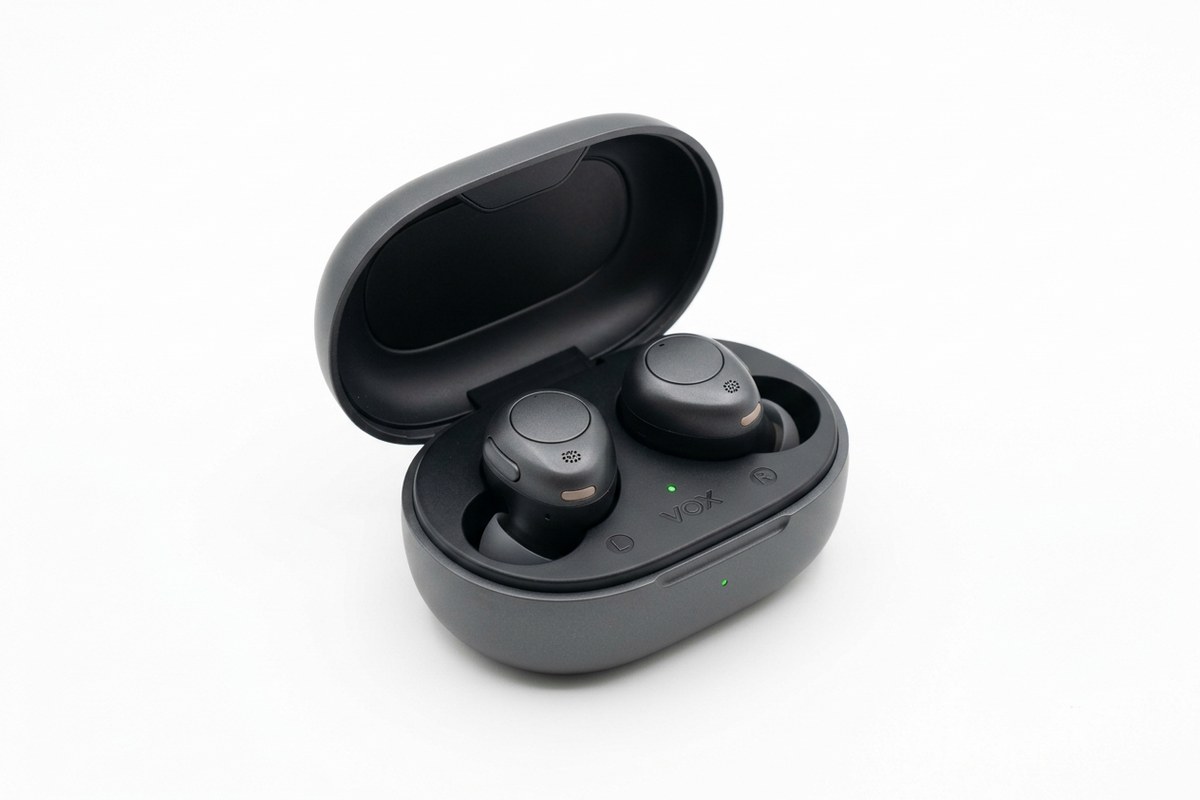
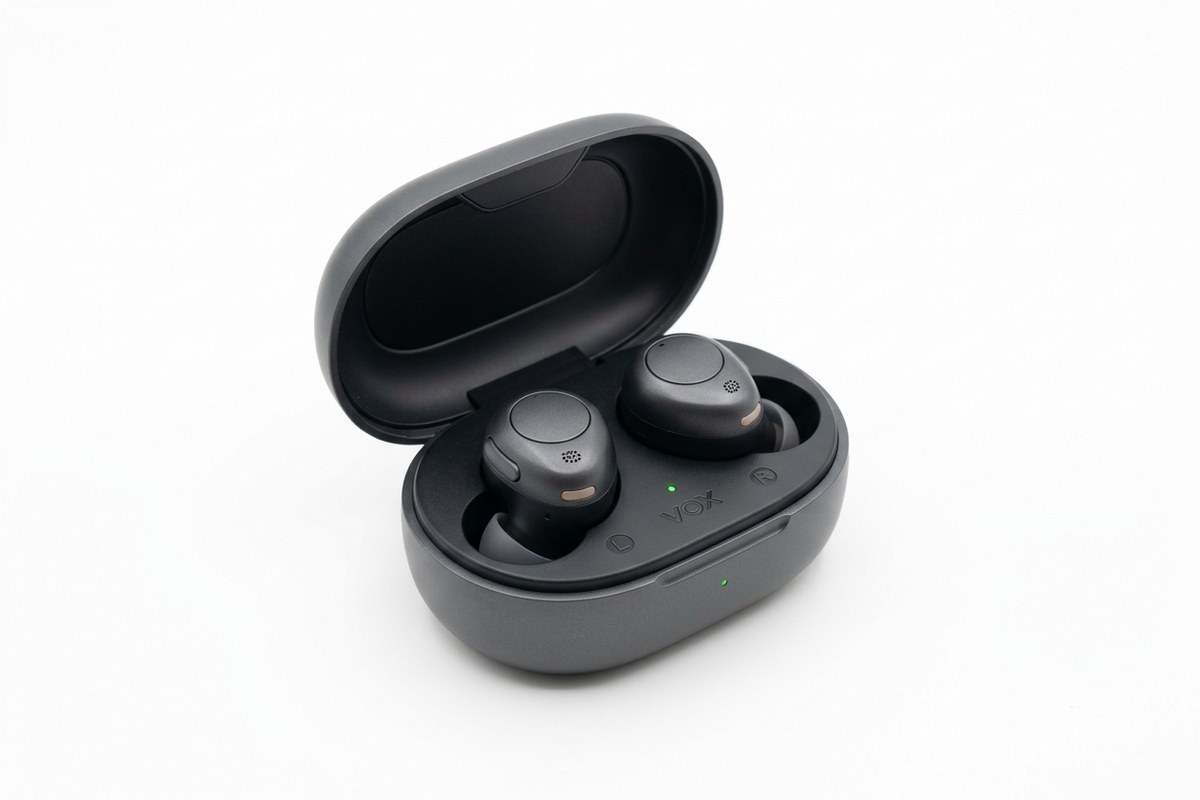

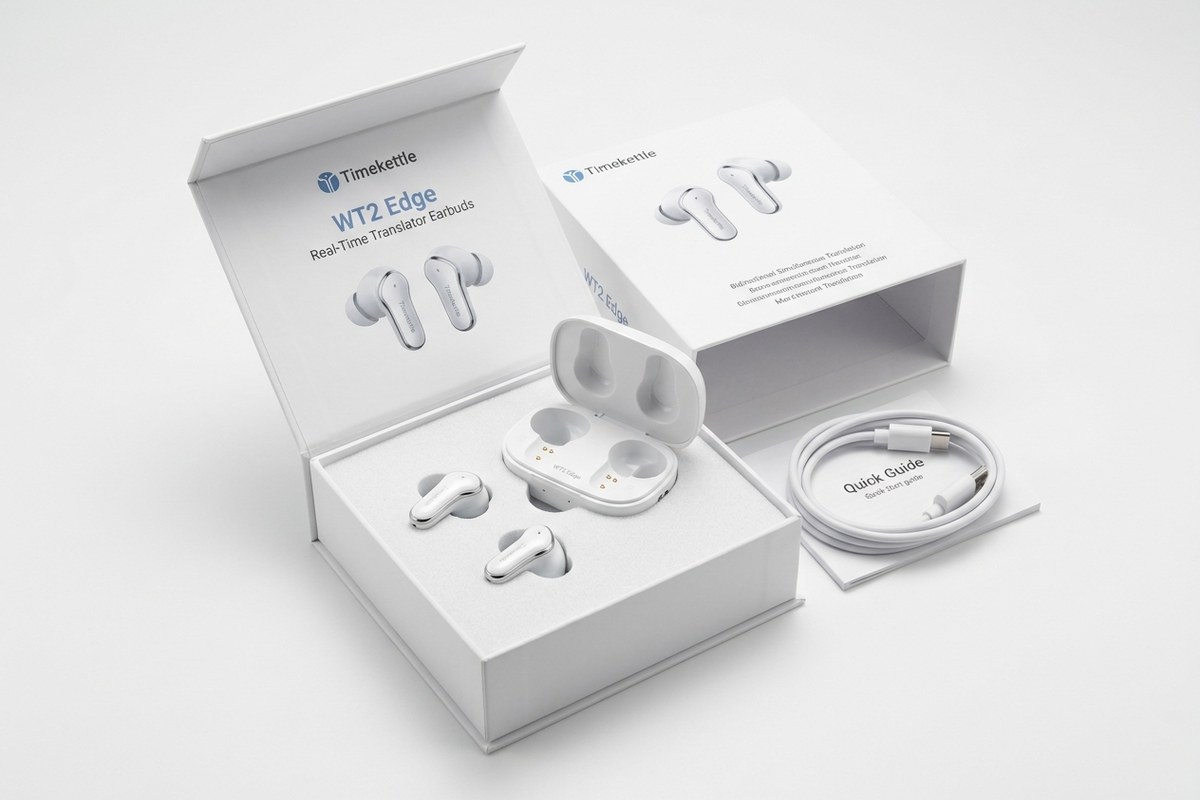
The Babel fish, as described in Douglas Adams’ The Hitchhiker’s Guide to the Galaxy (1979), is a small yellow creature that feeds on brainwave energy and excretes a telepathic matrix capable of translating any language in the universe directly into your inner ear. Adams observed that its existence had caused more and bloodier wars than anything else in history, by removing the last remaining barrier to communication between cultures. The Timekettle WT2 Edge is not a small yellow creature and does not excrete anything, but the underlying ambition — put one in each ear, speak freely across language boundaries — is recognisably the same.
The WT2 Edge operates as a split-earbud system: one person wears the left unit, their conversation partner wears the right, and translation happens bidirectionally in near-real-time. No interpreter required. No phone held awkwardly between two people. Just earbuds, a paired app, and a two-second lag that Adams, in his infinite prescience, elected not to specify.
What It Is
The WT2 Edge covers 40 languages in online mode, with 8 available offline via downloaded language packs. The translation engine uses a combination of on-device processing and cloud inference, depending on connectivity. In online mode, accuracy across major European and East Asian languages is high enough to conduct substantive conversations — not just pleasantries, but negotiations, directions, medical queries, and other exchanges where precision matters.
The earbuds weigh 7.2 grams each, which is less than most comparable audio hardware, and sit comfortably for sessions up to around three hours before the fit becomes notable. Battery life is four hours per charge from the earbuds themselves, with the charging case providing approximately 12 additional hours. For a day of intermittent use, the case covers the gap; for a full day of back-to-back multilingual meetings, you will be watching the indicator.
In Practice
The two-second latency is real and consistent. In English-to-Mandarin testing over three days, the lag was approximately 1.8 seconds on a stable connection, rising to 2.5 seconds during network congestion. This interval sounds brief in description and feels longer in practice. Natural conversation operates in rhythms, and a two-second gap between statement and translation falls exactly where a speaker would ordinarily receive a cue — a nod, a frown, a laugh — that tells them whether they’ve been understood. Both parties adapt. You learn to speak in slightly shorter bursts. You learn to wait. After roughly thirty minutes of use, the timing starts to feel less unnatural.
Regional accent accuracy is the second limitation. Standard Mandarin, French, Spanish, and German perform well. Regional variants — Sicilian, Cantonese, Swiss German — showed meaningful accuracy degradation in testing, sometimes substituting a plausible-sounding wrong phrase for the correct one in a way that was detectable only in hindsight. The offline mode is noticeably less accurate across all languages, which is worth knowing before booking a trip to somewhere with unreliable data.
The app is serviceable. Pairing is straightforward. The language selection interface could be quicker, particularly in situations where you need to switch languages mid-conversation and three menus stand between you and the change.
| Languages (online) | 40 |
| Languages (offline) | 8 |
| Latency | ~2 seconds |
| Battery | 4h (earbuds) + 12h (case) |
| Connectivity | Bluetooth 5.0 |
| Weight | 7.2g per earbud |
Available through Meridian Outfitters. Offline language packs require a separate download before departure and are not small.
- Functionally accurate translation for practical conversations
- Wide language coverage across 40 languages
- Comfortable for extended wear
- Offline mode provides basic functionality without connectivity
- Two-second lag disrupts natural conversational rhythm
- Accuracy degrades noticeably with regional accents
- Four-hour earbud battery requires discipline on long travel days
- App interface slows mid-conversation language switching
The WT2 Edge does the thing it claims to do, which in the translation earbuds category remains less universal than you might expect. The lag is a genuine constraint — not a dealbreaker for considered conversation, but a meaningful limitation for anything that requires quick back-and-forth. At US$299 and with 40 languages covered, the calculus is favourable for regular international travellers who currently rely on phone-based translation apps held awkwardly between parties. The shift from holding a phone to wearing an earbud is not a small one. The two seconds is the price of that convenience, and the price is reasonable if you enter the purchase knowing it is there.
Douglas Adams’ original fish had no lag. It also caused more bloodshed than any other organism in history, so perhaps the tradeoff holds.