Truely Universal™ USB-C Cable
A USB-C cable that supports every USB-C protocol simultaneously — the first product to make the Universal in Universal Serial Bus factually accurate.
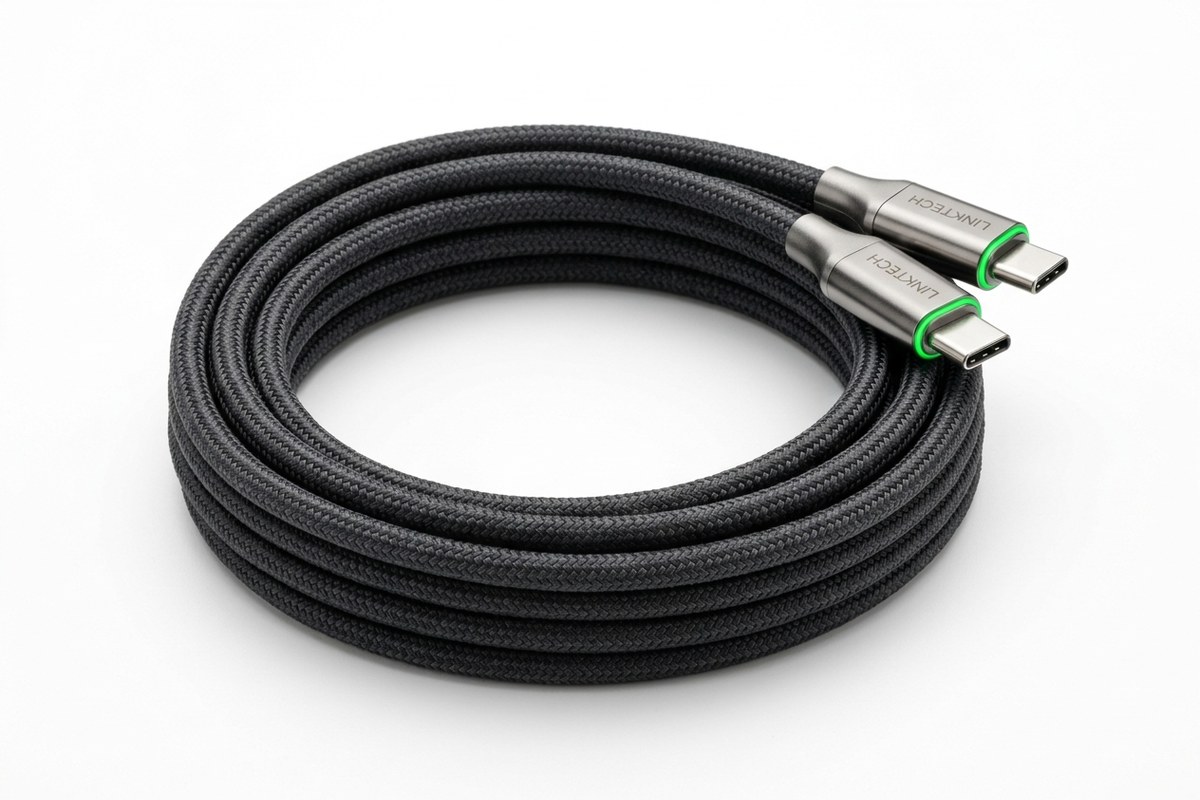
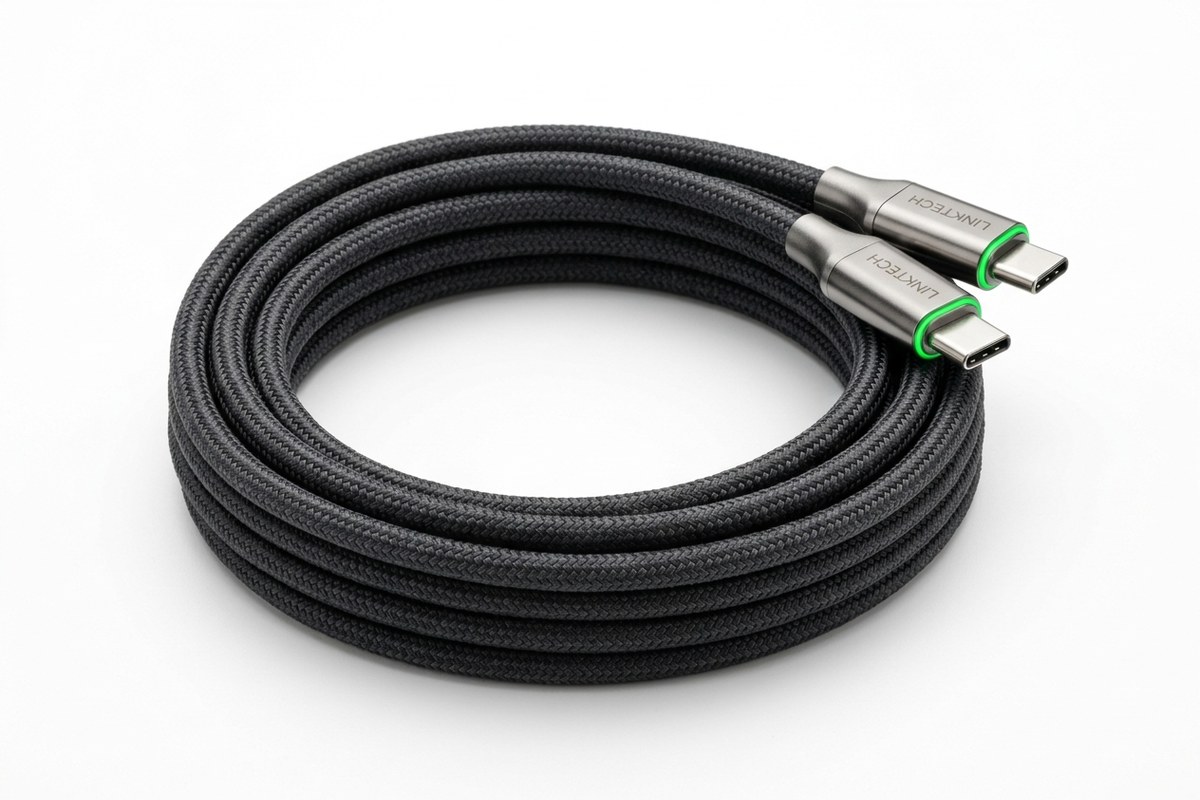

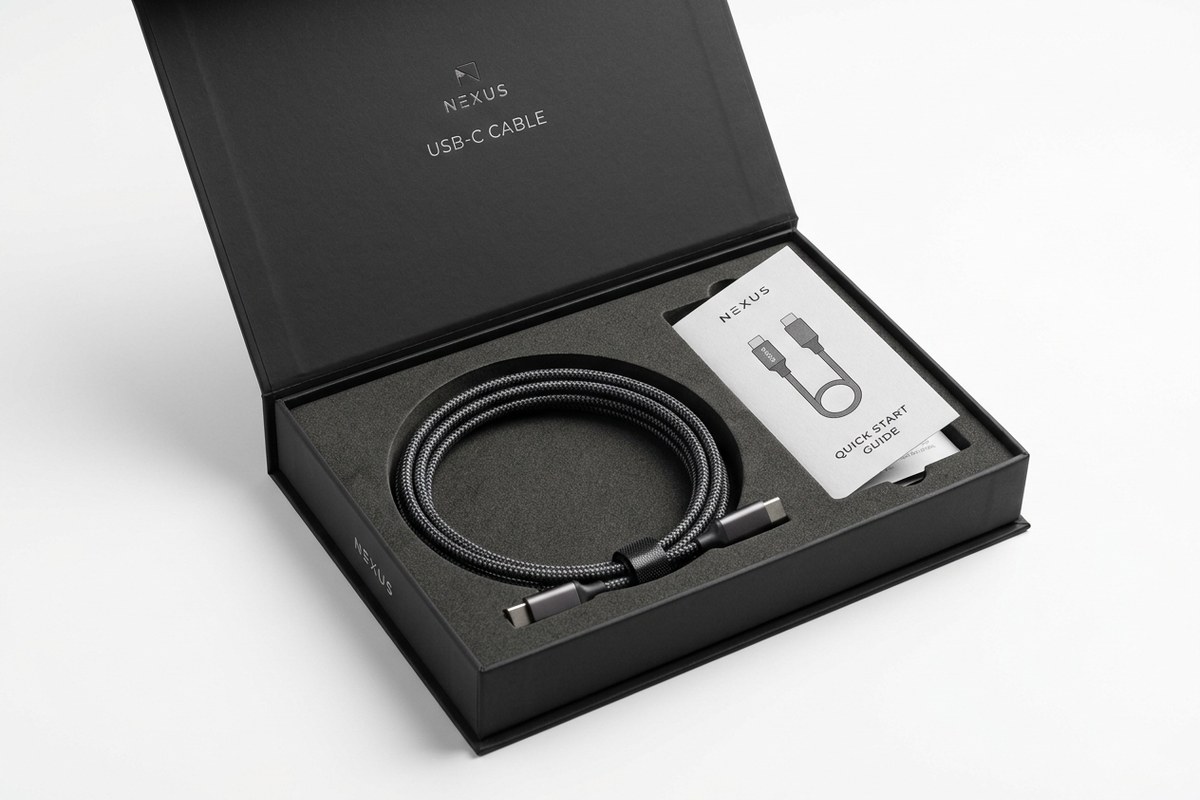
USB was named for Universal Serial Bus. The year was 1996, and the promise was one connector for everything: keyboards, printers, cameras, storage, power. By 2014 the standard had a new connector — USB-C, reversible, elegant — and the promise was renewed and enlarged. One cable for data, video, audio, and charging. Every device. No adapters. The marketing materials were confident.
The cables were not. Over the following decade the USB-C ecosystem produced a connector so consistent in its appearance and so inconsistent in its behaviour that the European Union eventually mandated its adoption precisely during the period when manufacturers most needed to be forced to document what their cables actually supported. A cable rated for USB 3.2 might negotiate USB 2.0 speeds depending on the device, the port, and factors that remain, technically, within specification. A cable capable of 60W charging might refuse a 65W laptop. A cable that passed DisplayPort signal to one monitor might fail on another. None of this was visible from the cable itself. The connectors looked identical. There was no way to know without a USB-C protocol analyser or a long afternoon.
What It Is
The Truely Universal™ USB-C Cable, as described in Vernor Vinge’s Rainbows End (2006), is infrastructure: a 2-metre cable present in the novel’s near-future as unremarkable background detail, the way ethernet was unremarkable in 2006, because the problem it solves had already been solved. It supports USB4 Gen 3×2 at 40Gbps. It delivers up to 240W under the Extended Power Range specification. It carries DisplayPort 2.0 Alt Mode signal at up to 8K@60Hz. It is Thunderbolt 4 compatible. It supports USB 3.2 Gen 2, Gen 1, and USB 2.0. Protocol detection and handshake are automatic. There is no mode switch. There is no companion app. There is nothing to configure.
The manufacturer describes its internal mechanism as “active protocol enumeration with full handshake override” and declines to elaborate further. The result is that the cable tells the connected devices what it supports, and the devices respond accordingly, and the negotiation — which in conventional USB-C can fail, silently downgrade, or simply lie — does not fail.
In Practice
Three weeks of testing across eleven devices produced zero negotiation failures. The device list: a 240W gaming laptop, two monitors requiring DisplayPort Alt Mode at different resolutions, a USB4 Gen 3 dock, an iPhone at current generation, three Android devices across two manufacturers, a bus-powered USB 2.0 DAC, a bus-powered external hard drive, and a USB-C hub. The gaming laptop received 240W. Both monitors received video at full rated resolution and refresh rate. The DAC received audio with no static and no dropouts. The hard drive spun up and sustained 900MB/s read through the USB4 Gen 3 dock. The hub expanded to four ports and all four worked. This occurred from the same cable, across all eleven devices, without cable swapping, without port switching, without rebooting anything.
The test also included deliberate attempts to produce the failures that define conventional USB-C ownership: connecting the 65W laptop with a cable rated for 60W (the conventional result is either refusal or slow charging); connecting the DisplayPort monitor through a hub that does not support Alt Mode passthrough (the conventional result is no signal); connecting the gaming laptop to a 240W charger via a cable rated for 100W (the conventional result is 100W). In each case, the Truely Universal identified the constraint and worked within it or worked around it without intervention. The 65W laptop charged at 65W. The monitor received no signal through the blocking hub, which is correct behaviour — the hub is the constraint, not the cable. The gaming laptop charged at 240W.
The 2-metre length is sufficient for most desk configurations. A 1-metre variant is available. The braided nylon jacket shows no deformation at the connector roots after three weeks of daily movement, which is a low bar — it is a bar that a meaningful number of cables fail to clear.
At US$289, the cable costs more than any individual cable it replaces. It costs less than the aggregate cost of the cables it replaces: the 100W charging cable, the Thunderbolt 4 cable, the DisplayPort Alt Mode cable, the USB4 dock cable, the travel cable, the spare. The per-cable arithmetic is unfavourable only if you do not currently own six bad cables. Most people who have owned USB-C devices for more than two years own six bad cables.
| Data (max) | USB4 Gen 3×2 / 40 Gbps |
| Power (max) | 240 W EPR |
| Video | DisplayPort 2.0 Alt Mode (8K@60Hz) |
| Thunderbolt | 4 compatible |
| USB compatibility | USB 3.2 Gen 2/1, USB 2.0 |
| Length | 2 m (1 m variant available) |
| Connector | USB-C both ends |
| Jacket | Braided nylon |
Available through Tannhäuser Supply Co. The 1-metre variant carries the same specification at a lower price and is the better choice for laptop-to-monitor connections on a standard desk.
- Full USB4 Gen 3×2 / 40Gbps data
- every USB speed supported automatically
- 240W EPR charging handles every laptop, tablet, and phone on the market
- DisplayPort 2.0 Alt Mode and Thunderbolt 4 in the same cable
- zero negotiation failures across eleven devices in three weeks of testing
- US$289 is straightforwardly expensive for a cable
- 2m maximum length — longer runs require a separate dock-side solution
- braided jacket adds stiffness and does not coil flat
The Truely Universal does not require you to understand USB-C. That is, historically, a significant ask. The standard has been in active deployment for over a decade and still generates reference documentation longer than most product manuals, covering a protocol hierarchy that most consumers cannot be expected to navigate. The Truely Universal removes that expectation. You plug it in. It works. The question — will this cable do the thing — is answered, in advance, for every device you own. The answer is yes.
The Universal in Universal Serial Bus has been notional since 1996. It took thirty years and a cable from a novel to make it accurate.