Withings BeamO Health Multiscope
A handheld wand combining ECG, pulse oximeter, body thermometer, and digital stethoscope — four diagnostic tools in one 88-gram device.
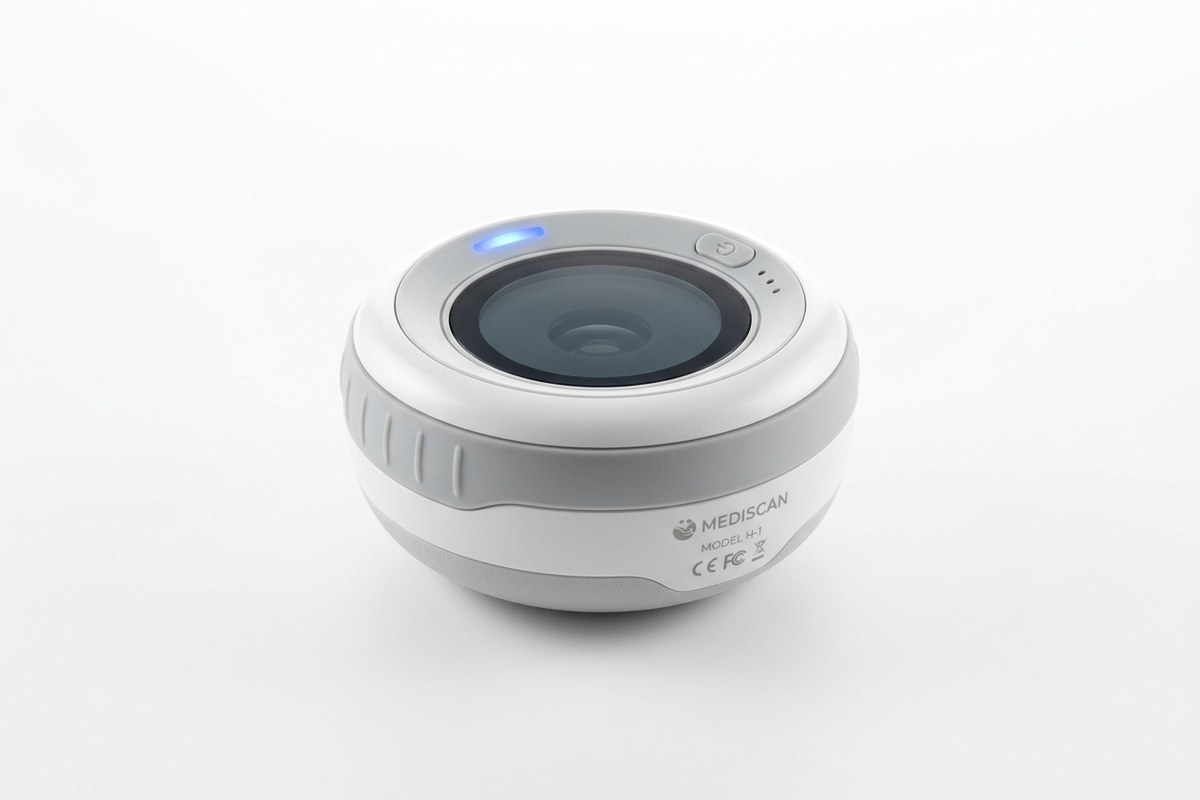
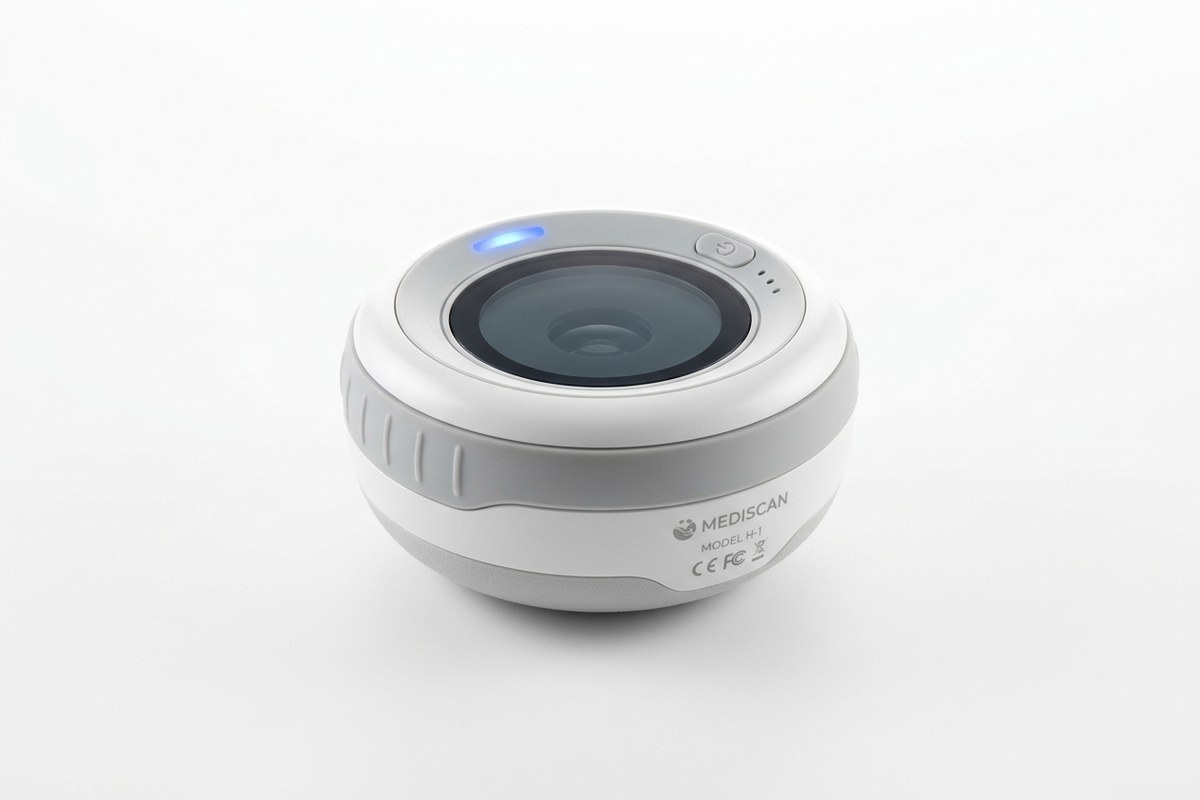
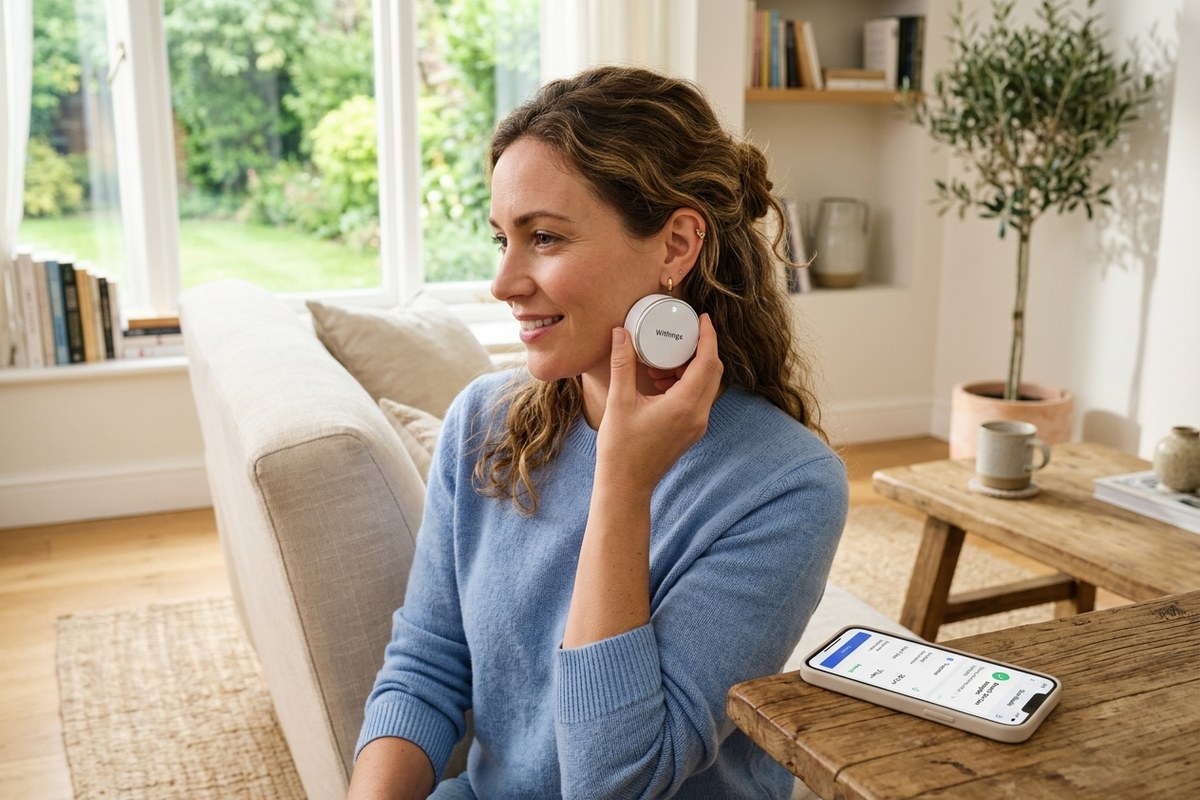
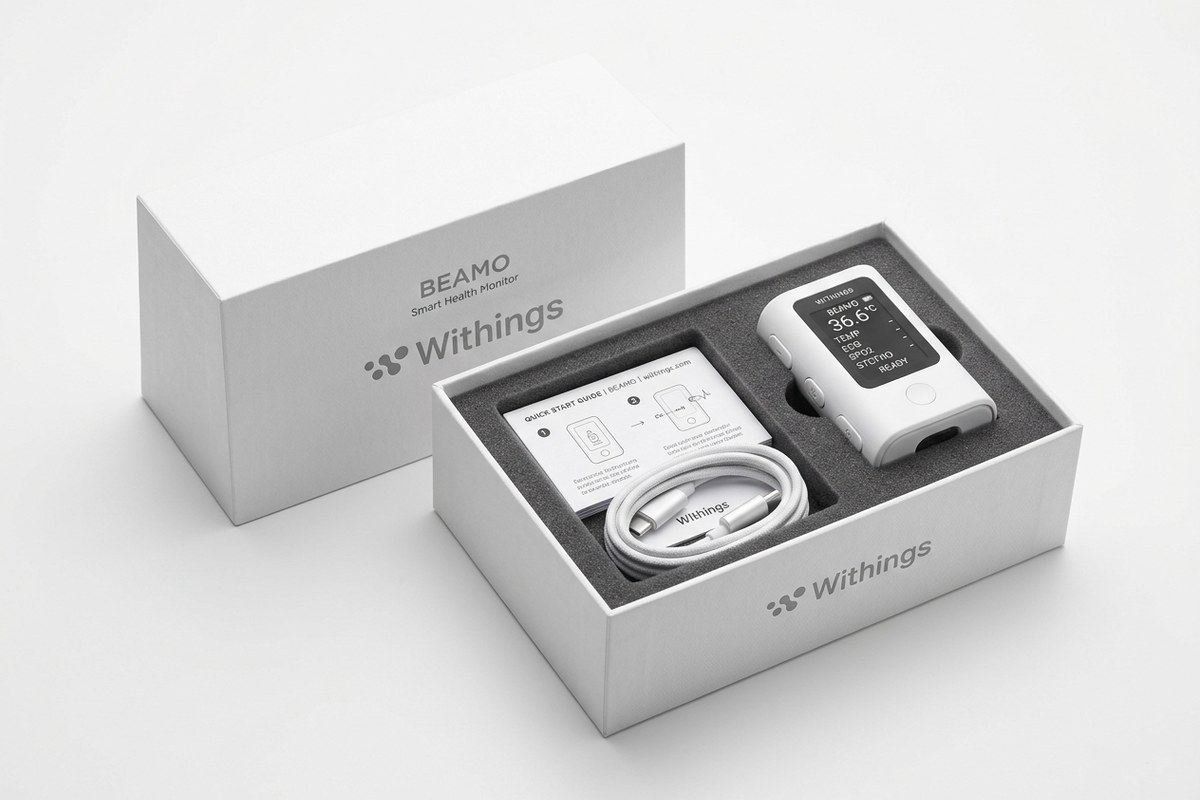
The tricorder in Star Trek (1966) is a handheld scanning device that Dr. McCoy points at a patient, waits approximately two seconds, and then delivers a comprehensive diagnosis. It does not require calibration, connectivity, or a companion app. It does not have a noise floor. The tricorder represents medicine as a solved problem, which is the genre’s traditional shorthand for saying that the interesting parts of the story are happening elsewhere. The Withings BeamO is not a tricorder. It is, however, a single device that combines an ECG, a pulse oximeter, an infrared thermometer, and a digital stethoscope into 88 grams of matte plastic — which is closer than the medical device market has come before.
The BeamO sits at the intersection of consumer wellness and clinical utility, a neighbourhood that tends to produce products that are either overconfident or overly cautious. Withings has managed to occupy a narrower band: the device carries FDA 510(k) clearance and CE marking, which means the underlying measurements have been validated against clinical standards to a degree that consumer wellness wearables rarely achieve. What it cannot do, and does not pretend to do, is replace a clinical examination. The gap between those two statements is where the BeamO lives.
What It Is
The BeamO is a wand-shaped device — roughly the dimensions of a thick marker — with two dry ECG electrodes on the grip end, an infrared thermometer window, an SpO2 sensor, and a digital stethoscope microphone. A single device captures: a 30-second single-lead ECG capable of AFib detection; blood oxygen saturation via pulse oximetry; body temperature in the range of 32 to 42.2 degrees Celsius; and lung and heart sounds via the digital stethoscope output.
All four functions are accessed through the Withings Health Mate app on iOS or Android, which handles data display, trend tracking, and — in the case of the ECG — algorithmic analysis. Bluetooth 5.0 handles the connection. Battery life is rated at approximately six months of standby, with a charge cycle required after a number of active scans that Withings quantifies as several months of regular use.
At 88 grams, the BeamO is genuinely pocketable. The build quality suggests a product that has thought about the clinical credibility of its physical presentation, which matters for a device that users will be holding against their skin in moments of health concern.
In Practice
The single-lead ECG is the BeamO’s most significant functional qualification, and it deserves a direct statement. A single-lead ECG captures the electrical signal between two points — in this case, both hands on the grip. It can detect atrial fibrillation and assess rhythm. It cannot produce the spatial picture of cardiac electrical activity that a 12-lead clinical ECG provides, cannot assess ST segments across vectors, and cannot replace a cardiology appointment for anyone with existing cardiac concerns. The BeamO’s ECG is a rhythm screening tool, and it is a good one. It is not a cardiac assessment tool.
The stethoscope function produces audio that Withings routes through the app for playback and, in some markets, for remote consultation. The noise floor is higher than a clinical acoustic stethoscope in the hands of a practised clinician. It is sufficient for monitoring trends over time — the question of whether your breath sounds have changed since last week is answerable with the BeamO. The question of whether a subtle finding requires immediate referral is best left to a clinician with better equipment and a reason to care about the distinction.
The thermometer and SpO2 functions are the least qualified. Infrared forehead-to-ear thermometry in this range is well-validated technology, and Withings’ implementation is consistent with clinical standards. The pulse oximeter performs within expected tolerances for consumer devices.
| ECG | 1-lead, AFib detection, 30-second capture |
| SpO2 | Pulse oximeter |
| Thermometer | Infrared, 32–42.2°C |
| Stethoscope | Digital, via app |
| Weight | 88g |
| Connectivity | Bluetooth 5.0 |
| Compatibility | iOS, Android |
| Battery | ~6 months standby |
| Clearance | FDA 510(k), CE marked |
Available through Meridian Outfitters with standard shipping; the device arrives calibrated and requires only the Withings Health Mate app to operate.
- Four instruments in one device at 88 grams
- Regulatory clearance (FDA/CE) validates underlying measurements
- Trend tracking via app adds longitudinal value
- Compact and well-built for clinical credibility
- Single-lead ECG limited to rhythm screening, not full cardiac assessment
- No 12-lead capability
- Stethoscope audio has higher noise floor than clinical equipment
- All functions require app, no standalone display
Dr. McCoy’s tricorder, in the hands of a competent script department, never exceeded its brief — it delivered exactly the information the plot required at the moment it required it. The BeamO is more honest than that: it tells you what it can measure, discloses what the measurements mean and do not mean, and leaves the interpretation to a system of apps and, ultimately, clinicians who have access to better equipment and the context to use it. That is not a limitation unique to Withings. It is the current state of medicine as a consumer product. The BeamO is a credible position within those constraints, and at US$250 with FDA clearance, it represents four device categories consolidated into one purchase rather than four.